

If you follow the Beyond Africa section of AFRICA.ROCKS, As Pestis Records should already be a familiar name. The UK label handled distribution for Noctivagum and is also producing the band’s new record. At its core, the idea came from a common underground problem: strong songs can still end up badly served by the way they are recorded, finished, released, and pushed.
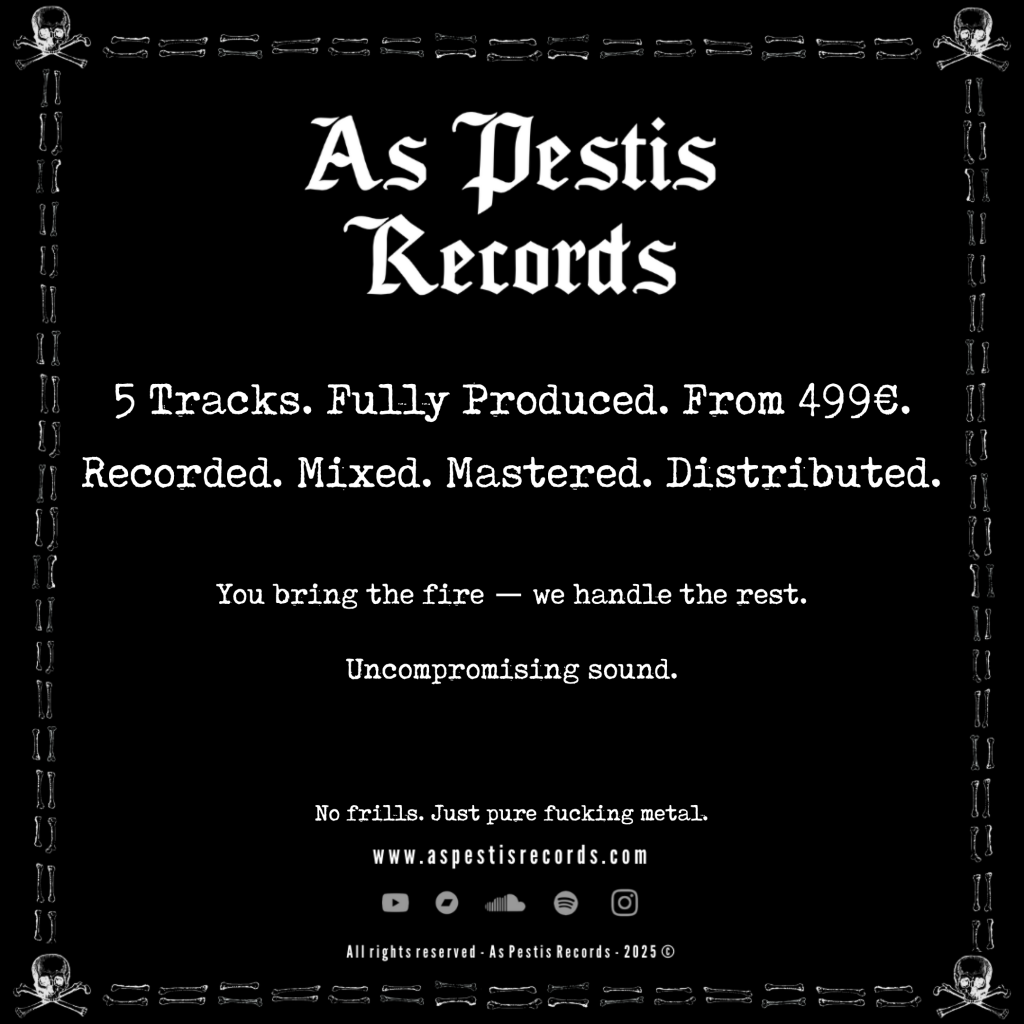
Founded by Vincent, As Pestis works as both a black metal label and a production studio. Mixing, mastering, distribution, and promotion are part of the same process, with the band keeping its identity, sound, royalties, and rights. We spoke about why As Pestis uses a flat-fee model, where underground releases often lose shape before they reach listeners, how long-term work with bands like Dreich and Consolatio has changed the process, and what would need to be in place for a collaboration with a band from an African scene.
“Bands can have strong songs, even great ideas, but things start to fall apart at the production stage.”
As Pestis is built around a flat-fee model where the band keeps its royalties. What made you build the label around that structure from the start?
Honestly, it came from seeing how frustrating both extremes are. On one side, you have traditional label contracts where bands give up percentages or rights, sometimes for very little support. On the other side, you have full DIY, where bands keep everything but are completely on their own, and the result often doesn’t go as far as it could. I didn’t want to sit in either of those.
The flat-fee model keeps things very clear: I get paid for the work I do, and the band keeps everything else. No hidden splits, no long-term ownership. It removes a lot of the tension and lets both sides focus on doing things properly.
A lot of underground bands can handle writing the music but get stuck when it comes to mixing, mastering, distribution, and promotion. Where do you usually see the process breaking down for bands before they come to you?
It usually goes wrong in the transition from writing to releasing. Bands can have strong songs, even great ideas, but things start to fall apart at the production stage. The sound doesn’t do justice to the material, and what should feel powerful ends up flat or inconsistent.
From there, they try to push that same unfinished result everywhere at once: uploading to every platform, chasing visibility, hoping to get picked up by a few gatekept channels where very few bands actually make it. At the same time, some still rely on a very old-school approach, like pressing CDs or tapes only, without adapting to how most people discover music now.
So they end up doing a bit of everything, without a clear direction. It gets messy, and it pulls them away from what actually matters: writing music and building as a band. In the end, you get releases that could have had impact but just disappear. What I do is step into that gap and bring structure to the process. I don’t change their identity. I make sure the final result reflects the strength of the material and take that weight off their shoulders so they can focus on creating and playing live.
You are open to working with bands from anywhere in the world. When artists come from different local scenes, countries, or recording conditions, what changes in the way you approach the production side?
The starting point changes. Each band has its own direction and an idea of the result they want, and I help them get there. Some bands come with clean, well-organized recordings. Others are working with rough setups, different environments, or incomplete sessions. So technically, the approach has to adapt; sometimes it’s refinement, sometimes it’s closer to rebuilding parts of the sound.
Beyond that, it’s about understanding what the band is aiming for and not forcing everything into the same mold. I’m not trying to standardize bands. I’m trying to make their sound work at its best level.
Some releases started with distribution only and then turned into full production relationships on the next record. What tells you a band is someone you want to keep building with beyond a single release?
It’s a mix of things, and it’s rarely just about the music..I look for consistency in their vision and how they approach the process. The bands worth building with know what they’re trying to express and take the release seriously, not just writing music and handing it over. The relationship also matters. Even if we’re miles apart, I try to recreate a working atmosphere close to being in the studio together. We set up calls, exchange a lot of messages, and I keep them updated on every step of the production. Those interactions and moments of progress are key if you want to build something long term instead of working on a single project and moving on.
“I almost became a silent member of the band.”
You already have projects like Dreich and Consolatio moving into second records with you. What have those longer working relationships taught you about what bands actually need from an underground label in 2026?
What I’ve learned is that bands don’t just need services. They need continuity and real support. When you work across multiple releases, you’re not starting from zero every time. You refine the sound, strengthen the identity, and avoid a lot of the mistakes that happen when everything is fragmented.
With Dreich, for example, I almost became a silent member of the band. I followed them while they were touring in Eastern Europe, getting updates as they went. When a band trusts what you do and comes to you for advice, that’s when it works. A lot of underground black metal bands handle everything themselves. That gives them freedom, but it often leads to inconsistency. What they need is someone who can bring structure and keep things aligned over time, without taking control away from them.
If a band from an African scene approached you tomorrow, what would they need from your side for that collaboration to work properly?
It starts the same way as with any band: understanding what they have and where they want to go. From my side, what matters is having access to their material in a workable format. Once we agree on the direction, it comes down to clear communication throughout the process.
With that in place, I can handle the rest: shaping the sound, organizing the release, and pushing it through the right channels. Working with bands from less exposed scenes makes that role even more important. It’s not just about finishing the record. It’s about making sure it actually gets heard beyond its local environment. That’s exactly why I created As Pestis Records.
Follow As Pestis Records for releases, production work, and label updates.