


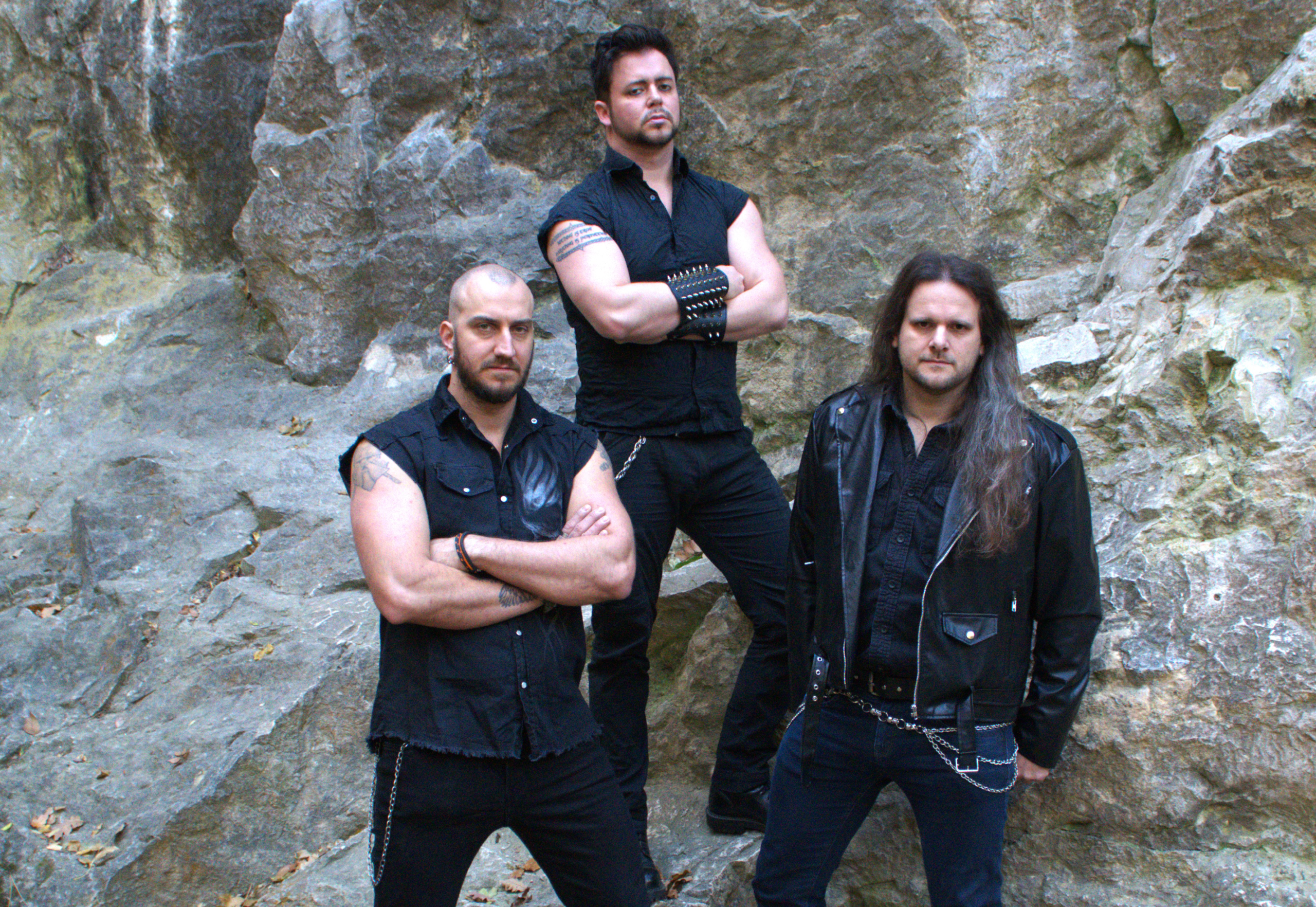
SESQUIPEDALIOPHOBIA formed in the summer of 2025, then wasted little time putting its first statement into the world. The Gospel of Profanum arrived digitally in December 2025, with the CD edition following in February 2026, and from the start it made clear that this was never going to be a band interested in staying inside neat genre lines.
The music is built on contrast. Symphonic scale, cinematic atmosphere, and classical influence sit against black metal force, deathcore aggression, and flashes of heavy and power metal melody. For Ardorifer, the shape of the band comes from the concept inside each song. If a track needs grandeur, it gets grandeur. If it needs violence, it gets stripped down to that.
That same approach runs through the lyrics. The Gospel of Profanum keeps returning to subjects many people still treat as off-limits, especially where intimacy, repression, symbolism, and public judgment meet. What matters here is not easy provocation but the question underneath it: why some things draw instant condemnation while others pass almost untouched. That tension sits at the centre of this conversation.
The Gospel of Profanum feels like a very deliberate first statement. Why was this the right record to introduce SESQUIPEDALIOPHOBIA with?
Ardorifer: These themes were there from the start, and they carry ideas we will keep returning to. Consensual intimacy, meaning sex in any form, is central for us. It is treated as taboo today, even though violence is far more accepted in this world.
Another important point is the way many ancient symbols have had their meaning distorted over time and turned into something people misunderstand now. We reject that. There are also subjects, including historical events, that simply interest us, and that is why we set them to music.
All of that shapes what people can expect from us going forward, as much as anything can be predicted. Who knows what will come out of us next. But these themes will remain part of the foundation.
When did that title lock in, and what did it open up in the writing once you had it?
For us, The Gospel of Profanum works as an ironic mirror. It may provoke, but only enough to make people look at themselves and ask why a natural subject such as intimacy disturbs them, while far less natural themes can be discussed without hesitation. It reflects the tension between what gets labelled sacred and what gets labelled profane, and it asks who defines those boundaries in the first place.
“I do not accept the idea that certain things, things that are natural and positive, cannot be discussed without immediate judgment.”
A lot of this record circles desire, taboo, repression, and self-revelation. What drew you to that territory in the first place?
I do not accept the idea that certain things, things that are natural and positive, cannot be discussed without immediate judgment, while violence and war barely provoke more than a resigned sigh.
Sometimes it feels as if we are living in The Hunger Games. If people are not the ones inside the arena, they watch violence and conflict as entertainment. Yet the moment sexuality is mentioned, eyes widen and judgment appears instantly, even though everyone is drawn to it in private.
There is a clear contradiction there. Someone may condemn a porn actor in public while consuming the same content behind closed doors. So which is more natural: experiencing pleasure and intimacy together, or destroying one another? We are not afraid to confront that tension in our work.
“Reverse” was the first track people heard. Why was that the right first door into the record?
“Reverse” is a more direct song. It gets in people’s faces immediately. If someone is not pushed away by it, there is a good chance they will connect with the rest of the material as well.
It is fast and aggressive, but melody is still there. The lyrics refer to ancient writings, but we deliberately twist them slightly. There is humour in it, yet the underlying theme is serious: many ancient symbols have been turned upside down over time, and today they cannot be used without being misunderstood by the average person.
Take two examples: the pentagram and the inverted cross. When people see them, they often react instantly and attach them to something without taking the time to look into their historical meaning. If we actually examine these symbols, we understand not only history more clearly, but the modern world as well.
At the same time, we cannot always resist adding a touch of irony. One of my favourite quotes from an old friend sums it up perfectly: “What you do, take seriously, but never take yourself seriously.”
“For us, the most important thing is that the music serves the message and the lyrics.”
This record leans into symphonic weight, but it still needs to feel harsh and alive. Where did you have to be careful not to overload it?
No one ever said we would never overdo things. In fact, we are already writing songs where we are not aiming for balance at all. Sometimes we deliberately push the music further in one direction, more monumental, more melodic, more aggressive, faster, slower, wherever it needs to go.
For us, the most important thing is that the music serves the message and the lyrics. That is the core principle. Some songs need balance. Others demand excess. If the concept calls for restraint, we hold back. If it calls for extremity, we go all the way.
The symphonic weight should never suffocate the raw energy, but rawness should not limit the scope either. The tension between those elements is what keeps the music alive.
Boris the Savage mixed and mastered the record, and he also appears on “A Torn Page from Someone’s 69th Letter.” What changed once he entered the picture?
In a way, nothing really changed once Boris got involved, because I wrote the song from the start knowing he would be part of it.
He is a longtime friend of ours and someone who feels completely at home in the more extreme genres. We have worked together before on other projects, and I specifically wanted him to bring both his voice and his guitar playing into this song. It became more like a unified force, first with me, then with Istar, our guitarist. A shared statement delivered together.
That gave the song an extra level of brutality exactly where it needed it, while the softer sections and orchestral elements provide contrast. Working with him was a great experience, and there is a strong chance we will collaborate again.
That closing track has a title people will remember. What was the idea behind that song, and why did it have to be on this release?
The title is as expressive as the EP title itself. It contains references to ancient writings, but also other layers that listeners may or may not recognise straight away.
The song brings one of our central tensions into its clearest form: sexuality versus violence. Here that contrast becomes unmistakable. It addresses the subject directly, but the irony we have already talked about is still there under the surface.
It had to be part of this release, and it had to close it, because it captures the core of what this band represents, both musically and thematically.
“Beyond metal, I have also drawn a great deal from theatre.”
Budapest has a long metal history, but every band enters that history from its own angle. What does the local scene give you at this stage?
There are bands in the local scene that I appreciate. Stylistically, Forest Silence is one example that resonates with certain aspects of what I do.
At the same time, my influences are not limited to one scene. They come from different eras and styles, including extreme metal, but also the spirit of the 1980s and the melodic strength of classic power metal. That sense of grandeur and drama has always mattered to me.
Beyond metal, I have also drawn a great deal from theatre. My background there strongly affects the way I approach music, structure, atmosphere, and concept.
“we are not trying to be ‘trve’”’ in the way some people define it. We are trying to be loyal to ourselves.”
AFRICA.ROCKS spends a lot of time with scenes that build outside the usual centres of attention. From where you stand, how do you see underground metal travelling between overlooked places?
I believe there are real treasures to be found once you look beyond the usual centres of attention. The same genre can be understood differently depending on the culture it grows in. Each region adds its own flavour, and that keeps the perspective from becoming narrow.
We have our foundations too, but because of our influences, we do not want to recreate what someone else did 20 or 30 years ago. There is a base, and then we add something of our own. That slight difference is what keeps music alive.
For example, if you listen to bands rooted in classic black metal but coming from different regions, Northern Europe, the United States, Hungary, or the Far East, you can usually hear distinct character in each of them. That individuality is what allows underground metal to travel. It does not stay still. It expands through cultural exchange.
That is why we are not trying to be “trve” in the way some people define it. We are trying to be loyal to ourselves. In our view, that is what makes music genuinely authentic.
After hearing this record, what do you hope people understand about SESQUIPEDALIOPHOBIA that they will not get from the name, imagery, or concept alone?
Personally, it matters to me that the message in our lyrics reaches attentive ears and continues to spread. But if someone does not go deeply into the concepts and simply enjoys the music, that still means something in its own way.
In metal, especially extreme metal, aesthetics built around blood, war, and destruction have been treated as normal for decades. Sincere eroticism and sexuality, which represent life, joy, and the deepest human connection, still provoke far more resistance when they are presented artistically in such a raw form. So there is still something to fight for.
One thing, however, is essential to understand: “Desire becomes pure where shame ends.”
Pick up The Gospel of Profanum on Bandcamp.


