


“Whether we like clean vocals or not, the singing on this is remarkably virtuosic.”
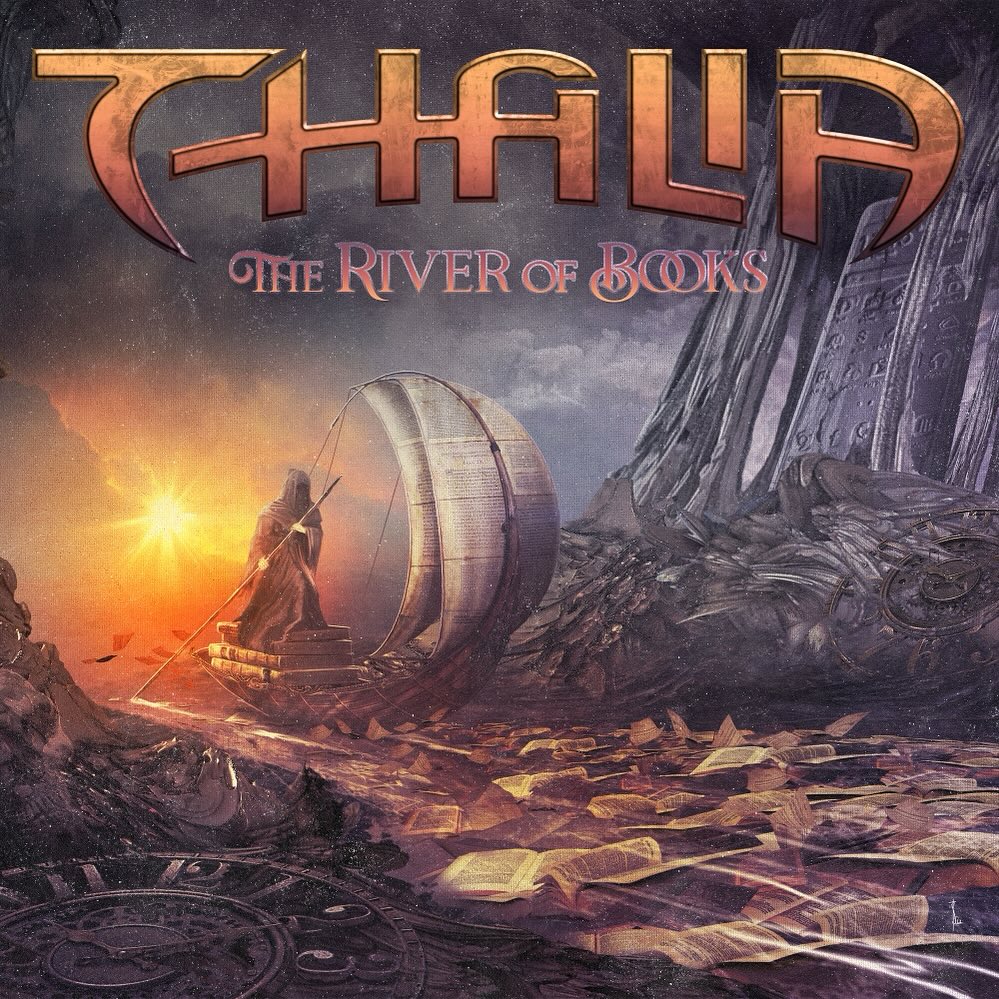
Thalia have really served a journey of an album with The River of Books, one that transports you through different moods, genres and influences, all mixed into a perfect balance with smooth transitions. Funnily enough, the album cover depicts just that: the flow of life transporting you through all sorts of currents.
I highly recommend trying the experience in many settings: focusing solely on the music, while doing daily tasks, while driving… It surely scratches a different itch in each.
To categorise this release would be too reductive, and to list the influences would require a few pages. Instead of “geeking” over the album and getting into the technical intricacies to try and label it, I chose to put it under the very broad term of progressive experimental music. Progressive, because the use of polyrhythms, syncopation, odd time signatures and innovative song structures is a predominant feature regardless of the song. Experimental, because it does push the boundaries of genres and meddles into unexplored territories.
At times you would think you are listening to Monkey3, and a few songs later you are in the clouds listening to reggae. Skip a song and you are listening to some funky riffs. All that with a base of classical metal and hints of 70s psychedelic/prog rock. The technical ability to execute such feats is truly unequalled and hard to parallel. Whether we like clean vocals or not, the singing on this is remarkably virtuosic and perfectly fitting for the artistic product, greatly contributing to this feeling of travelling that carries you throughout the album.
There is not much to say when it comes to the production and sound of this, as it fits perfectly within this genre’s codes and customs. As much as the music is innovative, the production is relatively generic, taking the same formula of 70s prog and mixing it with modern djent/progressive metal releases from the 2020s.
This is not an album for metalheads/rockers only, but more broadly for music lovers and experimentalists.


