


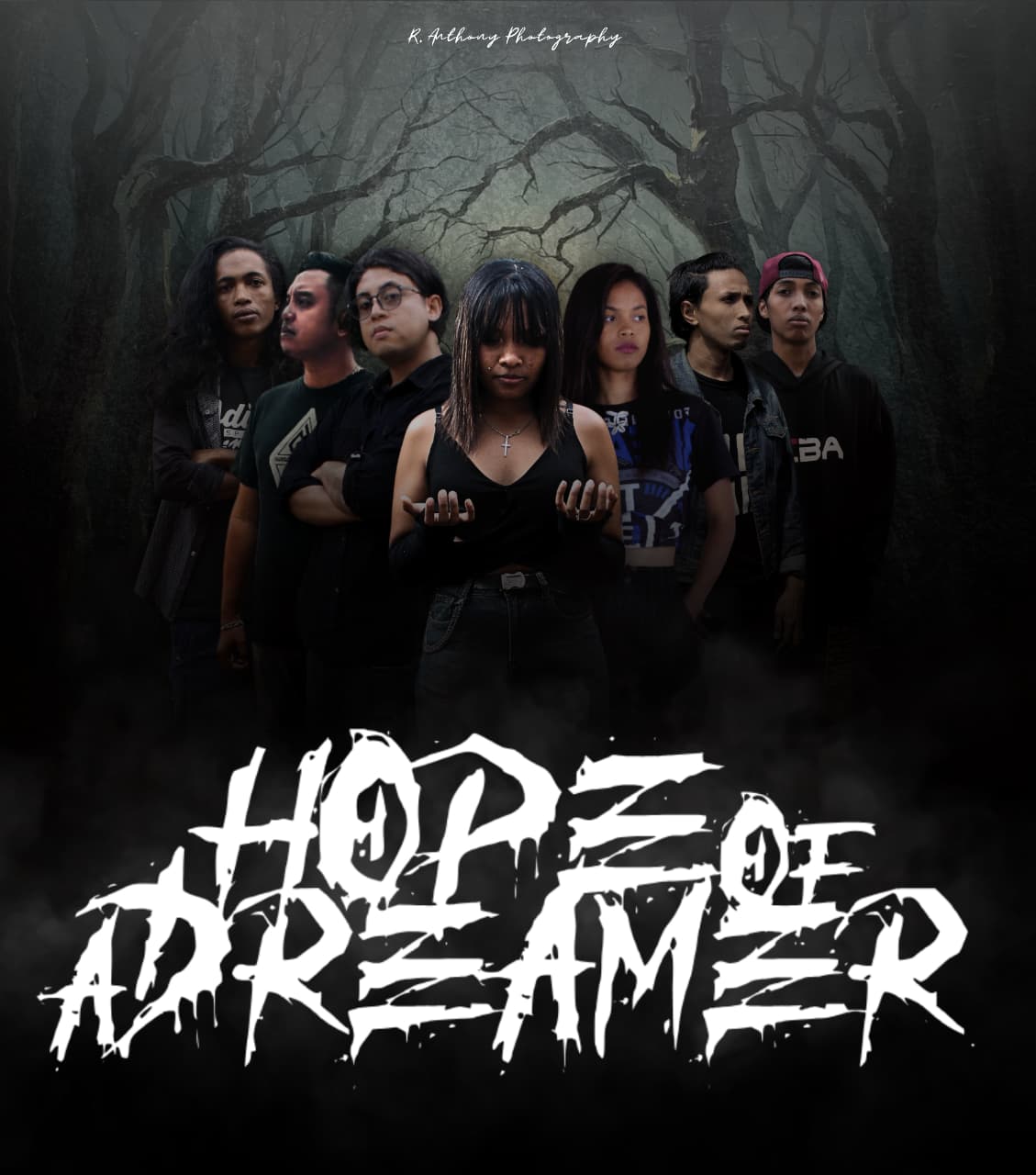
Hope of a Dreamer have been active in Antananarivo since 2015, working in a melodic deathcore style that is still not widely known in Madagascar. The band built their identity around that gap, choosing the genre on purpose and sticking with it.
They are currently preparing a local event, “Live Metal OV Sanctum,” which will bring together bands from across the Malagasy metal and hardcore spectrum. A live studio session with a small invited audience was also recorded recently, and they have an album in progress.
Toky Randriambololonirina, the band’s leader and lead guitarist, speaks to AFRICA.ROCKS about how Hope of a Dreamer started, how they approach their sound, and what it takes to push this kind of music beyond Madagascar.
“The rock and metal scene in Madagascar has evolved a lot. We have good bands, and several genres are starting to emerge.”
What pushed you to start Hope of a Dreamer, and what did you want this band to say from the beginning?
Hope of a Dreamer is, above all, a band that carries the cry of a flourishing youth passionate about deathcore. This genre is still not very well known in the country. That is why we chose it: to bring as much diversity as possible. The meaning of Hope of a Dreamer is the hope of those who are passionate about the genre. One day, we want future metalheads to say there was a band that brought this hope as best they could.
How would you describe the sound of Hope of a Dreamer in your own words?
The sound of Hope of a Dreamer can be described as modern, artistic, and melancholic. Despite the guitar riffs and everything else, we always try to highlight the chorus with the clean vocals of our female singer, to evoke inner feelings and buried emotions. We always try to capture the fans’ attention at the right moment through the chorus.
What is happening in the band right now creatively, and where do these three new songs fit into that moment?
Currently, we are preparing a live show called “Live Metal OV Sanctum,” which will take place in a few months. It brings together new faces from the metal scene in Madagascar while keeping the hardcore spirit that each participating band conveys: metalcore, deathcore, hardcore punk, and more. We are also preparing three new songs: “Yûgen Blood,” “The Prophet,” and “Bleeding Sun.” They will be released before June 2026. Music videos and interviews will also follow.
Tell me about the live studio session you recorded just recently. What made you want to capture the band in that setting?
The live studio session was an event in an intimate setting. We invited only the people who have supported us since the beginning of the adventure. It was very important to start with 25 people in an intimate setting, with a very personal musical approach for everyone, so we could share as well as possible what will soon be shared with the general public.
You also work as a sound engineer at Crack Media. How does that side of your life affect the way you hear your own band?
As a sound engineer at Crack Media, I chose a long time ago to put my knowledge at the service of rock and metal music. Not to be selfish, but to share it as best I can with other bands who also want a clean and modern sound. For the band, it is a blessing because whenever we have inspiration, we record. Besides that, we will release an album soon.
What does the rock and metal scene in Madagascar look like from where you stand today?
The rock and metal scene in Madagascar has evolved a lot. We have good bands, and several genres are starting to emerge. For our part, we try to collaborate with promising bands that align with our way of working seriously in the music world.
What are the biggest challenges for a band like yours when trying to reach listeners beyond Madagascar?
Our biggest obstacle remains the image we convey. Most of us are between 22 and 25 years old. Youth is sometimes misjudged by listeners.
Of course, we still have experience to gain, but our work also deserves respect. That is why we sing mainly in English, to reach as many listeners as possible.
Are there things about Madagascar’s culture, daily life, or atmosphere that naturally find their way into your music?
Yes, especially politics, which is always a desperate case in Madagascar. Between protests and corruption, we sometimes denounce in our songs the downsides of the political and socio-economic situation in Madagascar.
Follow Hope of a Dreamer on Facebook.


