

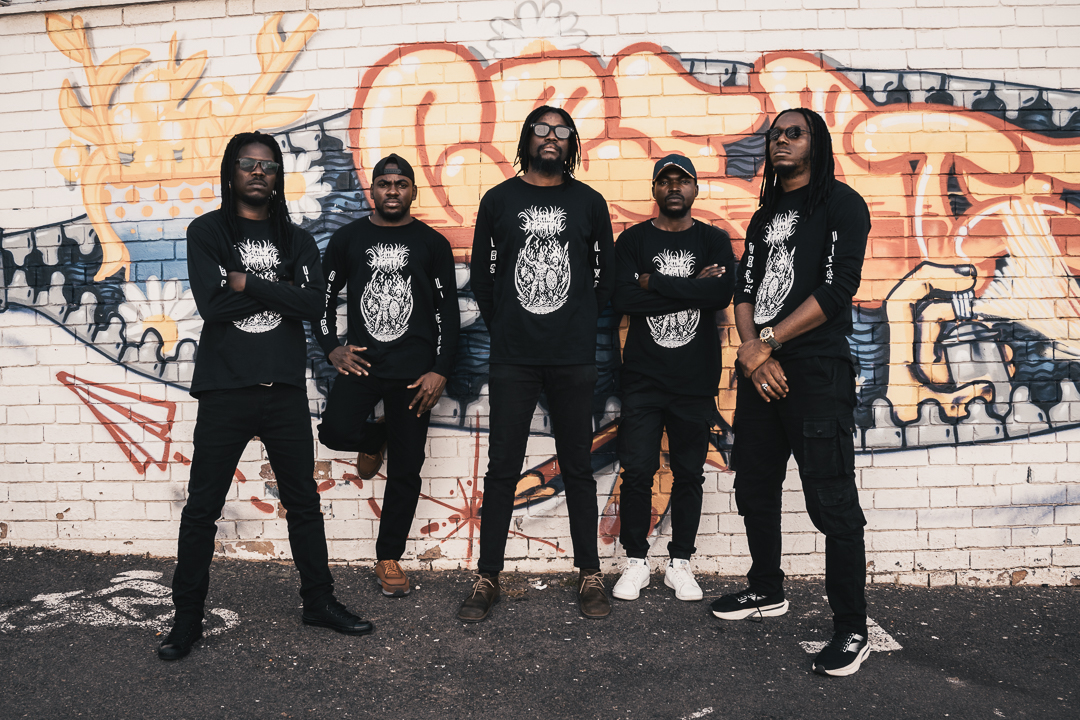
Eternal Katastrophy have spent close to a decade building their place in Angola’s extreme metal scene. Formed in Luanda in 2017, the band have since taken their music beyond the country, competed at the Wacken Metal Battle in Johannesburg and returned to South Africa as headliners in Cape Town.
Their recent work has also pushed the visual side of the band further, including the fully animated video for ‘Lixeiro Obscuro’, while Eternal War has become the clearest statement yet of where they come from and where they want to go.
For AFRICA.ROCKS, Gedeão Soque looks back at the band’s beginnings, the realities of playing extreme metal in Angola, the people who helped keep the local scene alive and Eternal Katastrophy’s plans to take their music further abroad.
“When we started writing Eternal War, we wanted the album to represent not only who we are as a band, but also the reality we live in within our country.”
Eternal Katastrophy formed in 2017. What brought you together at the time, and what was it like trying to form an extreme metal band in Luanda almost ten years ago?
The idea came about after a jam session with some friends, namely Sango Escocês and Noémia Pinto Santos. At the time, there were already some bands in the music scene, but we felt the need to diversify the genres being played and bring in something more aggressive, faster and more harmonic. The idea of forming the band came from that desire to explore new territory within metal.
With ‘Lixeiro Obscuro’, you created a character and an entire universe around him. Is that something you would like to explore in other songs, or was it an idea created specifically for this track?
It was an idea created specifically for this song, but that does not mean it is something we would not explore again in future material. We always want to show that we are creative not only when composing riffs and developing our sound, but also when creating and developing visual concepts.
It was your first fully animated music video. What did you learn from the process? Was there anything you only realised was possible once you started working with animation?
We learned a lot, especially that when we work as a team and respect deadlines, nothing becomes impossible. We had the opportunity to work with new animation talent from our country, and we are very grateful for the dedication, professionalism and commitment they showed throughout the whole process.
Yes, a fairly surreal idea also came up which we may possibly implement in our next music video.
“We want anyone who listens to ‘Eternal War‘ to understand that this record comes from Angola, carries our reality and our experiences, but knows no borders.”
Eternal War occupies an important place in your current work. What did you want the album to say about the band when you began writing it?
When we started writing Eternal War, we wanted the album to represent not only who we are as a band, but also the reality we live in within our country. Making extreme metal in Angola is not an easy path. There are difficulties related to infrastructure, access to equipment, places to play, production, promotion and, often, the resources needed to take a musical project further.
All of that ends up influencing our journey. We often need to create solutions with the means we have, keep going when conditions are not the best and continue working even when the results do not appear immediately. These obstacles are part of our reality and, in a way, they have also helped shape the band’s identity.
Eternal War speaks about those battles, but not only about the difficulties. It also speaks about the ability to resist, adapt and keep moving forward. We want to show that, despite the limitations, Angola has the talent, creativity and determination to produce extreme music with its own identity and take it beyond our borders.
That is why this album represents a continuous struggle, a war that never ends, but it also represents our persistence. It is the result of years of work, mistakes, learning, sacrifice and dedication. We want anyone who listens to Eternal War to understand that this record comes from Angola, carries our reality and our experiences, but knows no borders.
You have spoken about the difficulties of accessing equipment, finding places to play and securing opportunities outside Angola. Which of those problems remains the hardest to solve in the band’s day-to-day life?
I think the hardest part continues to be access to opportunities and the possibility of taking our work outside Angola. We have the talent, the determination and the ability to produce music, but the challenge is often creating bridges with other markets, making contacts, taking part in festivals and finding opportunities that allow us to show our work to a wider audience.
Equipment and places to play are also difficulties we face, but we have managed to find ways around some of them. International expansion requires a bigger structure, investment, contacts and, often, support from people or organisations that believe in our work.
That is why we continue working to create those opportunities ourselves. Every concert outside Angola, every collaboration and every person who discovers our music represents an important step. We want Eternal Katastrophy to be a band that was born in Angola but is able to build a truly international career.
In 2025, you played in South Africa. What did it feel like to present Eternal Katastrophy outside Angola, and what did you find different about the South African scene?
Our experience in South Africa began in 2023, when we took part in the Wacken Metal Battle in Johannesburg and finished in third place. In 2025, we returned to Cape Town as headliners of The Eternal Darkness, an event produced by Slam Dank Productions. These were important experiences in understanding the band’s evolution and seeing how our music is received outside Angola.
Compared with Angola, we found a more structured metal scene in South Africa, with more bands, venues, promoters, regular events and opportunities for musicians. In Angola, the scene is smaller and faces limitations in terms of infrastructure, equipment, venues and access to the international circuit. However, we do not believe there is any lack of talent or passion. The determination and creativity are there.
For us, these experiences showed that it is possible to build bridges between the two scenes. Representing Angola outside the country and then returning two years later as headliners was a very significant achievement for the band.
“there is an increasing desire to grow the Angolan scene.”
This year, you took part as guests at Wacken Metal Battle Angola. Do you feel there is more activity, more bands and a bigger audience for Angolan metal today than when you started?
Yes, we feel there is more activity today than when we started. When Eternal Katastrophy emerged in 2017, the scene was considerably smaller, and there were fewer bands, events and spaces dedicated to metal. Today, we see more projects appearing, different styles within metal and an audience that is more interested and involved.
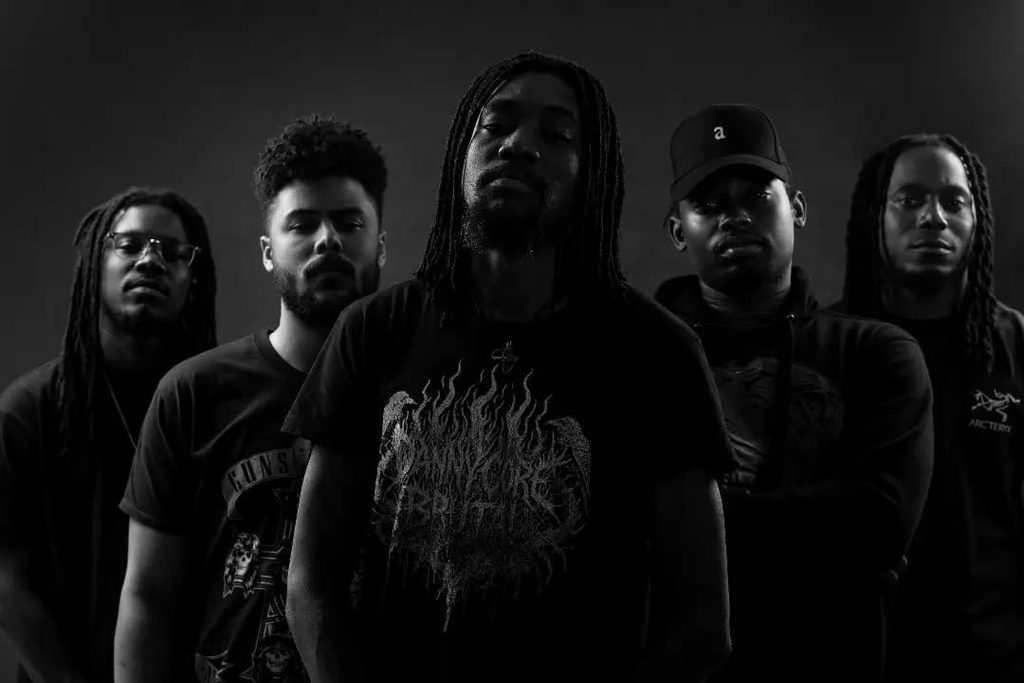
Taking part as guests at Wacken Metal Battle Angola this year was particularly meaningful for us because it allowed us to see a new generation of bands up close and realise that there is an increasing desire to grow the Angolan scene.
It is also important for bands to support each other because the growth of Angolan metal depends on all of us.
When someone outside the country thinks about Angolan music, extreme metal is unlikely to be the first thing that comes to mind. Does that weigh on you in any way, or does it make you even more determined to show that this music exists in Angola too?
For us, it has never been about competing with other genres, but about adding another voice to the country’s musical diversity. We want to show that Angola also produces heavy, aggressive and contemporary music, and that there are musicians and bands doing it.
Eternal Katastrophy was born in Angola, and that is an important part of our identity. Taking our metal to other countries is also a way of creating space for other Angolan bands to be discovered.
If someone hears our music and thinks, “This comes from Angola?”, then we have already managed to create some curiosity. That is exactly the kind of curiosity we want to turn into new opportunities for Angolan metal.
Over the years, which bands, promoters or people have done the most to keep the metal scene alive in Angola when there were barely any conditions for it to exist?
Over the years, we have been fortunate to meet people and projects that believed in Angolan metal even when conditions were very limited.
It would be difficult to mention everyone because the scene was built through the efforts of many people, but there are names who have played an important role along the way, such as Manel Kavalera (Kishi, Porta Magna, Kavalera Entertainment), Jairo Cardoso (Dor Fantasma), Sónia Ferreira and Wilker Flores (Orlei, an annual rock/metal festival), Beuk Santos (Dead Zone, event promoters), Tiago Oliveira (Estúdio 2), Toque Toquim (Submarino Amarelo, media), and Luis Fernandes (Volume Dez and Rock Marginal, media).
“our next major goal is to take Eternal Katastrophy to Europe.”
You have said that you want to take Eternal Katastrophy into other territories. After your experience in South Africa, where would you really like to play next, and what do you need to do to get there?
After the experience we had in South Africa, our next major goal is to take Eternal Katastrophy to Europe. We want to use the release of Eternal War to look for opportunities at festivals, venues and within metal circuits, while building contacts with European promoters, bands and agents.
We know that reaching Europe requires preparation, investment and good partnerships, particularly because of travel, logistics and organisation. That is why we are working to present the band in an increasingly professional way, strengthen our digital presence and use the album as a gateway into that market.
Eternal War is available now on all major streaming platforms.


