


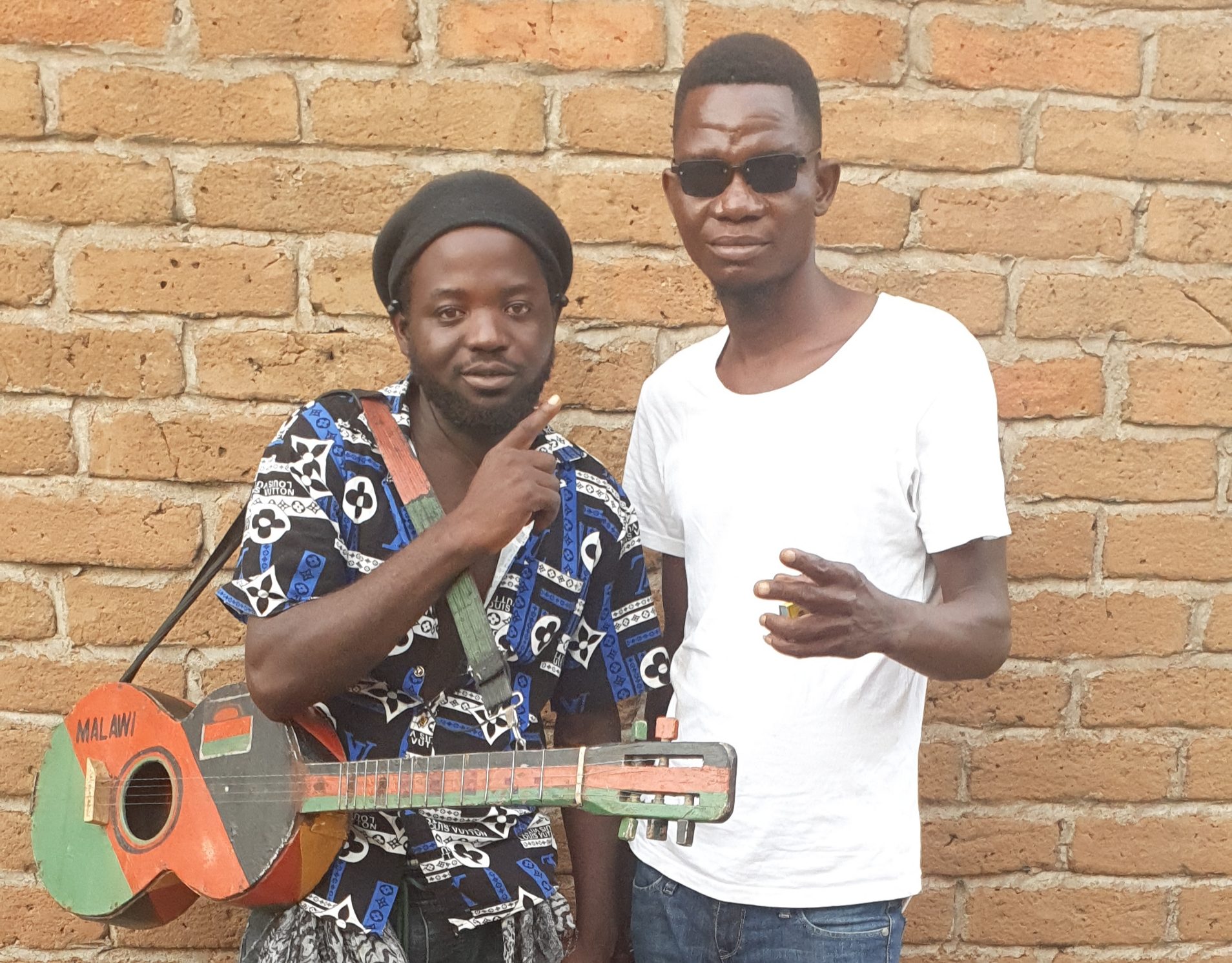
“California became a symbol for me, a place where dreams are chased and where people try to build something new.”
The song “California” begins with a dream that is still far away. Acton Chisoni has not stood there yet. He has carried the name for years, since high school, when a friend started calling him “Californian youth” whenever he did something bold or creative. At first, the place itself was almost abstract. The word stayed with him before the geography did: “California first entered my imagination in high school. My best friend started calling me ‘Californian youth’ whenever I did something he thought was bold or creative. At the time, I did not know much about the place, but the name stuck. It sounded good, open, full of possibility. Later, I had a Facebook friend from California who told me another name for California is the ‘Golden State’. That is why you hear ‘Golden State’ in the song. When I understood it was a real place far from Malawi, that distance made it more powerful in my mind. California became a symbol for me, a place where dreams are chased and where people try to build something new. When I sing ‘California’, I am singing about that feeling of possibility. It represents my dream place, the place of my heart.”
That distance is part of the song. Malawi and California are far apart, in geography, daily life and cultural image. The track does not pretend otherwise. It comes from Phalombe, where the outside world is often seen through cinemas, magazines, newspapers, the internet and the small windows people use to imagine places they have never visited: “I wanted the song to feel like a bridge. My reality in Phalombe, Malawi, is in the lyrics too: the watching, the listening, the hoping. I mention cinemas, magazines, the internet and newspapers because that is how we see the outside world here. We consume California through screens before we ever step on the land. The connection is in the longing and the belief. Even though I am in Phalombe, the same hope that drives someone in LA drives me. Musically, I kept it in reggae and dancehall because that is my root, but the message is universal: if you dream it and work for it, distance does not stop you.”
When Acton imagines finally reaching California, he does not start with the usual landmarks. He thinks first about the moment of arrival itself, standing there and knowing the place is no longer just something seen from Malawi through screens, magazines and stories. After that, he wants to hear music in the streets, meet people, and walk among the redwood trees he has pictured from far away: “The first thing I would want to feel is the ground under my feet, just to know I am actually there. After that, I would want to hear live music on the streets, especially reggae. For me, music is how I read a place. I would also want to see the redwood trees and walk through that quiet, tall forest. Malawi does not have forests like that, so it is something unique I have always imagined. And I would want to meet people and hear their stories. The song is about possibility, so the first human connection would mean more than any landmark.”
Nakaka Vibration Band are rooted in reggae, and Acton describes that sound in Malawi as alive, even if it is not the dominant urban music of the moment. International reggae artists still appear at larger events from time to time, and those shows help keep the connection visible. Most of the real work happens elsewhere: community radio, youth spaces, sound systems and live bands. “Reggae in Malawi is alive, but it is not like the urban music that is taking over right now. We do have big festivals once in a while where international reggae artists are invited, and those moments keep the fire burning. Outside of that, it is mostly underground: community radio, youth spaces, sound systems and live bands. Nakaka Vibration Band is part of keeping that alive. What keeps people connected is the message. Reggae speaks about struggle, hope, God, love and unity.” “In Malawi, people face daily challenges, so the music feels real to them. It does not feel imported. It feels like a language for what we live.”
“The struggle is the background, but the message is always about rising above it.”
Malawi is often called “the warm heart of Africa”. Acton does not reject that phrase. He says the warmth is real, especially in the way people support one another. The songs also carry the harder parts of daily life: “The warmth is real”, he says. “People here are hospitable, and that shows in how we support each other. But the harder realities are also in the music: economic struggle, youth unemployment, power cuts, water issues, and the pressure to leave the country to find opportunity. I do not write to complain. I write to reflect and to give hope. So you will hear both sides in my songs. The struggle is the background, but the message is always about rising above it.”
Before Acton became a songwriter, reggae gave him a way to understand himself: “Before I wrote, reggae gave me identity and calm. It was the music my elders played, and it taught me about respect, about God, and about standing firm. Bob Marley, Lucky Dube and Peter Tosh, their songs felt like elders speaking to me. It also gave me a sense that my voice meant something. Even when I was not singing yet, I felt that if I had something to say, reggae was the place to say it.”
The name Nakaka also comes from Acton’s own life in Phalombe. It is tied to a local well, stones, memory and the place where he grew up.“Nakaka means gravel stones. When I was young, around my home village in Phalombe, Malawi, there was a well where people drew water. In that well were stones we call Nagaga in our vernacular. In Lomwe, one of the sub-languages here, we say nakaka. Because of those stones, people named the area Nakaka. That is why our band is called Nakaka. The name is right for us because we help to keep the memories of Nakaka alive. We praise our area, and we are proud of this name. I actually started using Nakaka Vibration when I was young, before the band even formed.”
The songs can begin in different ways. “Sometimes I start with any of those things. When I am with a friend playing guitar, I catch the tune first and the melody comes, then the words follow. But when I am alone, I reflect on situations around me and make a song from that. I can also start with a melody and compose about what I see or imagine. The important thing is that the song has truth in it.”
Reggae gives Acton a way to speak about frustration without leaving people stuck inside it. In Malawi, where young people face unemployment, corruption and broken systems, he sees the music as a place to be honest and still point towards action: “I feel responsible for telling the truth as I see it, but without losing hope. Young people in Malawi listen, and I do not want to give them music that makes them feel stuck. So even when I talk about frustration, unemployment, corruption, broken systems, I try to point towards action, unity and faith. My role is to be a voice for people who feel unheard, and to remind them they have the power to change their own story.”
For now, Nakaka Vibration Band have songs written, but they remain a live band without recorded material: “Right now, Nakaka Vibration Band has many written songs, but we only do live music. We have not started recording yet because we do not have access to a proper studio and we lack financial support. Our goal is to have our own live band entertainment set-up and to record our music properly. To reach more listeners outside Malawi, we need management that understands our music and can work with us. We also need support for production, touring and getting our sound onto the right platforms. The songs and the live energy are there. We just need the right support to share them wider.”
“California” is a song about a place Acton has not reached yet, but it is also about the route between imagination and life. From Phalombe, the Golden State is distant enough to become a symbol. The song keeps that distance in view and turns it into reggae: a dream carried through Malawi, written from where Acton stands, and still looking across the water.
Originally published in the June 2026 issue of AFRICA.ROCKS Digital Magazine.


