


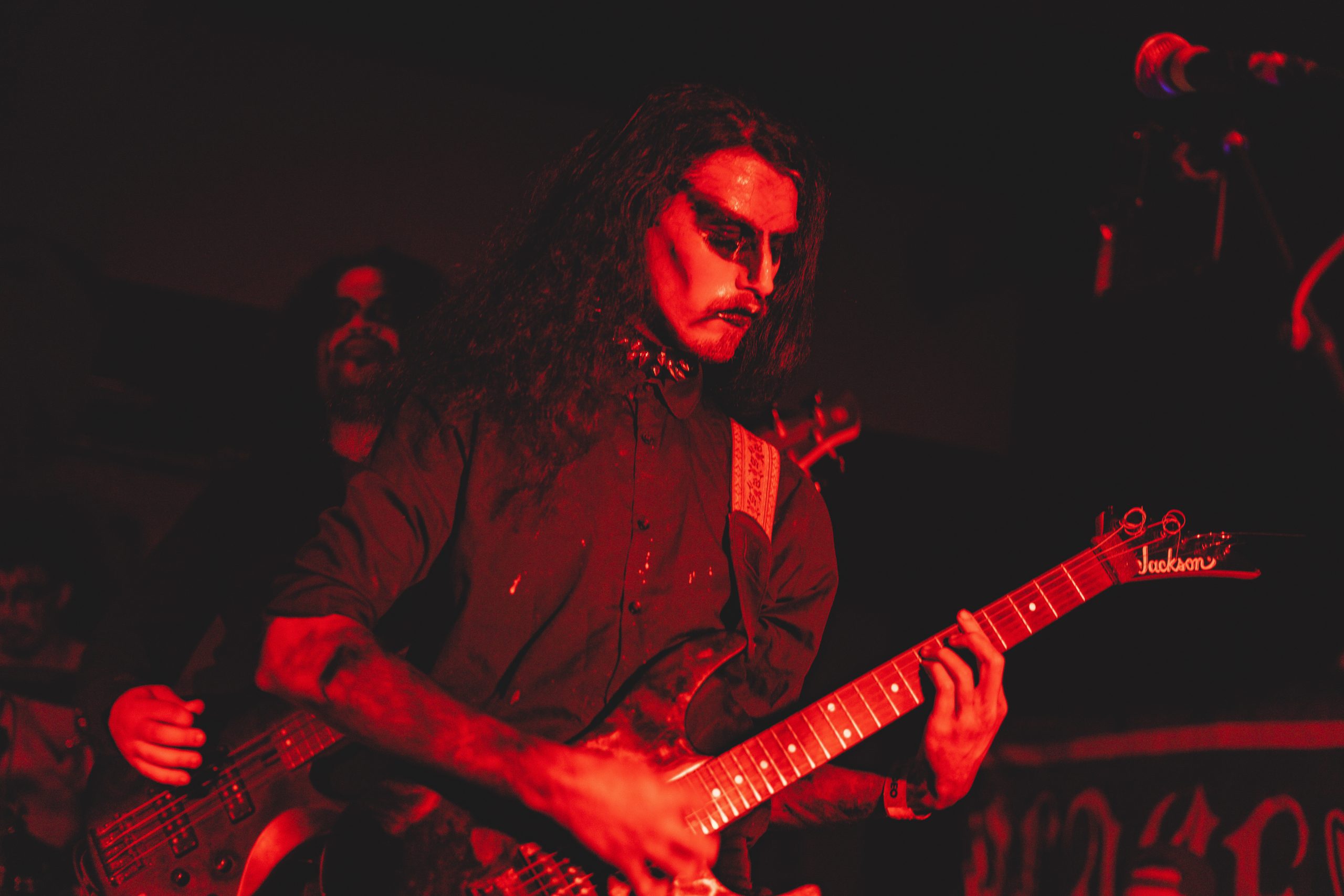
For Raven S. E. of Pagan Ulver, the path into music started before he ever picked up a guitar. It started with a sound he wanted to get closer to.
Growing up in Settat, Morocco, he found alternative music through videogames around 2009 or 2010. He kept digging from there, following that sound for years until the urge to play something himself finally took over. Bass came first, then guitar, then keyboards, but guitar ended up staying at the centre.
“I started listening to alternative music when I was a kid, probably around 2009 or 2010, when I discovered this kind of music through videogames. Since then, I kept searching and evolving, trying to reach the atmosphere I was looking for in alternative music, which, as we know, is rich in genres. After a decade, I started thinking it was time to pick up an instrument, so I started first with bass, then guitar, and keyboard. However, in my band, I’m a full-time guitarist.”
He still talks about gear in that same way. Not like someone who found one thing and stuck with it, but like someone still figuring out what feels right. His story with instruments is full of borrowed gear, rare finds, and guitars that came close without quite being the one.
“As I mentioned, I play different instruments, but my main one is guitar for sure. During these six years of playing, I’ve used a few guitars, starting with one that I used to borrow, an Eko Kiwi ’70 Les Paul made in Italy, which I believe is a super rare item. By switching back and forth between guitar and bass, I also used a Fender Jazz Bass Special ’80, another very good vintage and rare item. I’m 100% sure it was the best bass I’ve ever played. I may never find one as good as that Fender.
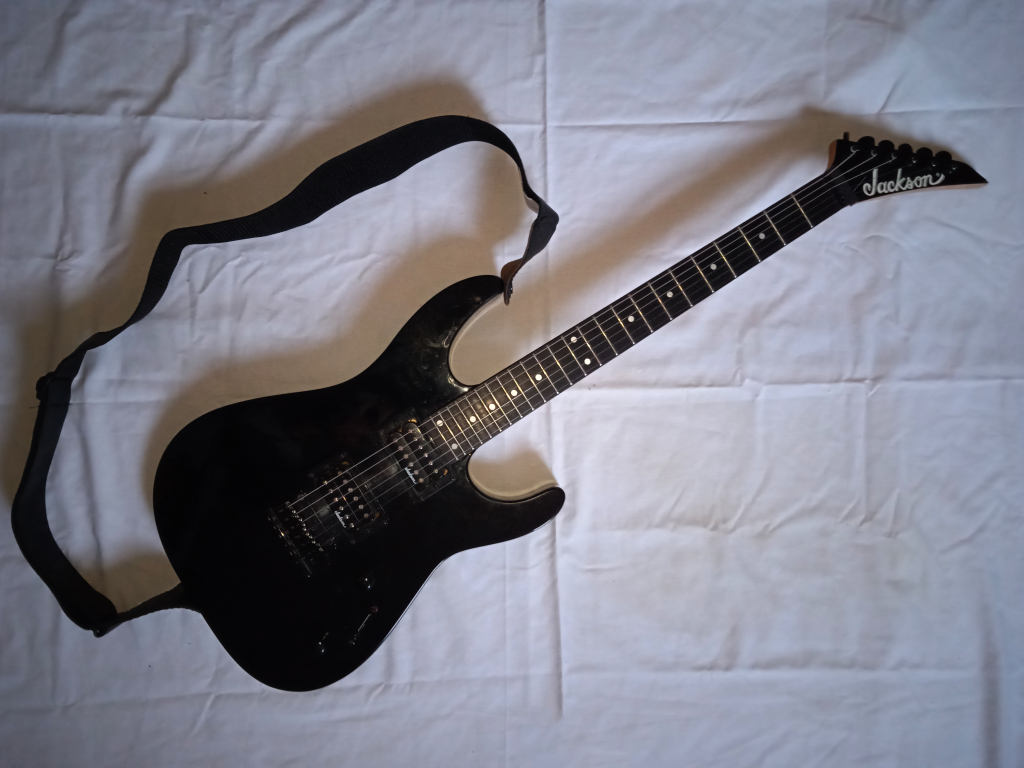
“Later on, I bought my first guitar, which was a Jackson Dinky JS12. It was a good starting point. Even though I had already started using more advanced gear before the ‘amateur’ one, I still found that Jackson good in terms of neck feel and playability. I keep playing different guitars to find the exact model I’m looking for, something that fits my style of playing and feels comfortable in my hands. I used an LTD EC-500S a few months back in 2024, and it was the best feel I remember, a solid guitar that I fell in love with, but yeah, it wasn’t mine. At some point I was still looking for more, and I used an Ibanez, though I forgot the series number, but I still wasn’t satisfied. Nowadays, I’m aiming for the Explorer body shape, and I think I might get the Schecter E-1 SLS Evil Twin SBK. It just feels like the right one for me, with the body, fretboard, and electronics, and it will surely fit the style I play.”
That same restlessness carries into his sound. Pagan Ulver play symphonic melodic black metal, but Raven is not boxed in by that. He wants weight, but he also wants space. He wants gain, but he also wants clean parts that keep some air in them.
“My sound isn’t fixed to a certain genre. Even though we play symphonic melodic black metal, I always try to keep my sound varied. I like the punchy gain of Opeth, and I melt into the sound of post-metal and post-black metal cleans such as Alcest, which is my favourite band, and Heretoir, which has a great guitar sound whether it’s clean or distorted. So yeah, I guess that’s how I would describe my sound: something between dreamy and aggressive, to fuel the nostalgia in me.”
Once he gets into pedals, that side of him comes out even more clearly. This is the part where he sounds like someone who genuinely enjoys trying things out, keeping what works, and chasing a sound until it feels right. The pedalboard is where a lot of that happens.
“I’m a huge mad scientist maniac when it comes to pedals.”
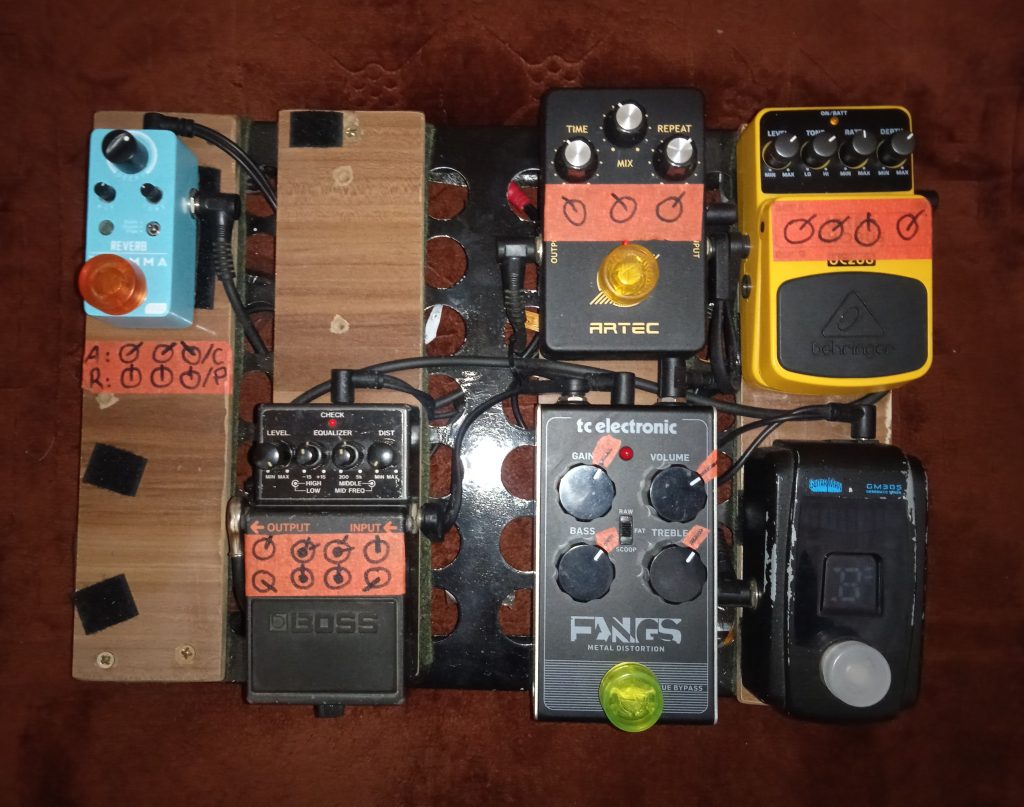
“I’m a huge mad scientist maniac when it comes to pedals. I just adore pedals and the experiments I do with them to reach a specific sound. In my main pedalboard I use a tuner, how original [he laughs]. It’s a cheap one I got from Facebook Marketplace, a replica of the Joyo JT-305. It’s not a bad one. It does its job perfectly.
“From there I go straight into a TC Electronic Fangs Metal Distortion, which I use as my main drive pedal, and I also use the infamous and most famous pedal as a booster, and sometimes as the main drive if the right amp calls for it, which is the BOSS MT-2 Metal Zone Distortion. It’s great, believe me. If it’s used the right way, it just sounds amazing.
“When it comes to modulation, and like I said, I melt into the clean shoegaze sound, and there’s no good wavy sound without a chorus. I believe I can get the sound I want either from the MXR M234 Analog Chorus or the Walrus Audio Julia or Walrus Audio Julianna Chorus. I also love that name. It reminds me of a movie called Flipped that I watched when I was young. However, I currently use a good clone of the BOSS CH-1 Chorus, which is the Behringer UC200. It’s cheap, but effective and identical.
“For delay, I use the Artec Analog Delay SE-ADL. Sometimes I used the great MXR M169 Carbon Copy, but I’m willing to get the TC Electronic Flashback 2 Delay. When it comes to reverb, I want to use two pedals, one for the tone and one for the spacey sound. I already use the Flamma FC02 Reverb. It’s tiny, small, but effective, with various settings, because size doesn’t matter [he laughs]. There are many pedals I’ve used, such as the Mooer 008 Cali MK3, which is a great preamp recreation of the Mesa Boogie Dual Rectifier.”
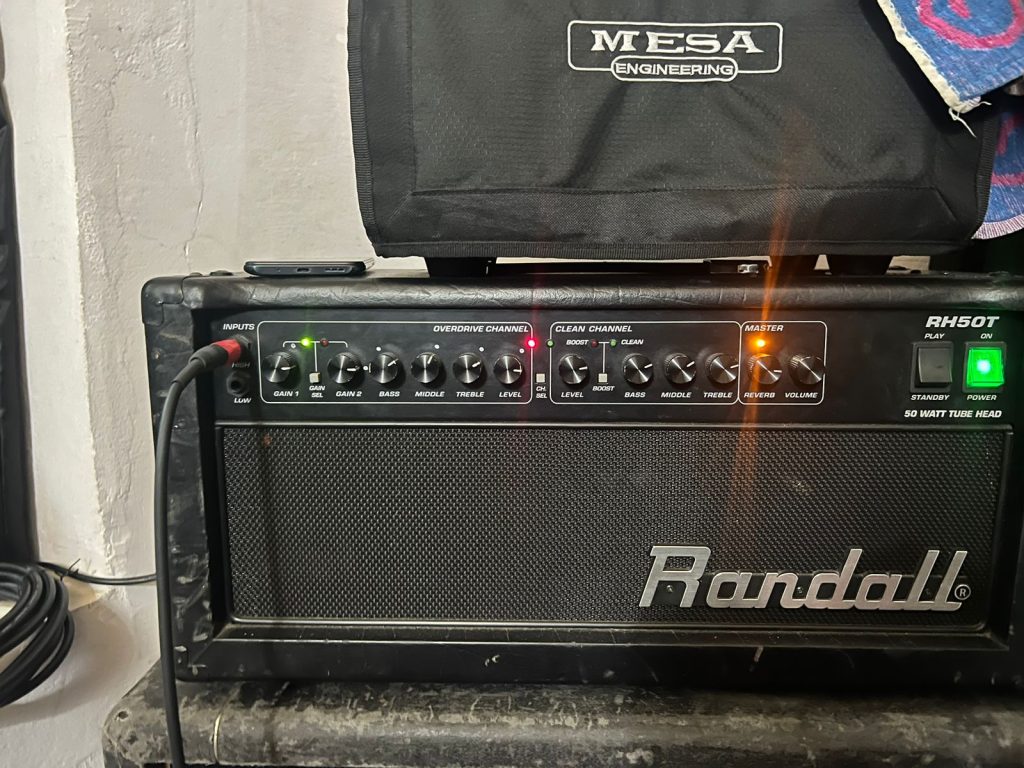
He talks about amps in much the same way. For him, they are there to serve the tuning, the feel, and the kind of punch he wants from the guitar.
“When it comes to amps, I’ve always loved bass-heavy amps, actually. I love bass in guitar amps. I’ve used so many, but the best one I remember playing was the Randall RH50T. It had a great punchy sound for the tuning we use, which is Standard D with Ernie Ball 2221 Regular Slinky strings.”
By then, another side of the picture is already there. Raven is not only the guitarist in Pagan Ulver. A lot of the band’s direction runs through him too, from the writing to the atmosphere to the work that keeps things moving behind the scenes.
“Many ideas begin when I’m alone with a guitar, exploring melodies and moods until something captures the spirit of what Pagan Ulver is meant to represent.”
“Pagan Ulver is primarily a band project, but the core vision behind it comes largely from me. I write most of the riffs, shape the concepts, and develop the atmosphere that defines the sound. Many ideas begin when I’m alone with a guitar, exploring melodies and moods until something captures the spirit of what Pagan Ulver is meant to represent. From there, those ideas are brought into the band environment, where they evolve through collaboration.
“On stage, I perform as a guitarist and as one of the driving forces behind the band’s presence. For me, playing live is not just about executing the songs. It’s about channelling the essence behind them. Black metal is deeply atmospheric, so I try to embody that energy when we perform. The stage becomes almost ritualistic, a space where the music transforms from something written and rehearsed into something raw and alive.
“During rehearsals, things become much more focused and technical. That’s where we refine the compositions, tighten the structure of the songs, and make sure the transitions and dynamics feel natural. Even though many of the foundations of the songs come from me, rehearsal is where the band collectively shapes them into their final form.
“I enjoy building layers of guitars, experimenting with tones, and focusing on the small details that give the music its atmosphere.”
“In the studio, I feel particularly at home. Recording is where the sonic identity of Pagan Ulver truly takes shape. I enjoy building layers of guitars, experimenting with tones, and focusing on the small details that give the music its atmosphere. The studio allows us to sculpt the sound carefully so that every element contributes to the overall feeling we want the listener to experience. SakadoYa Studios is the home for rehearsing and recording.
“Aside from my role as a musician, I also handle the managerial side of Pagan Ulver. That means organising the band’s activities, managing releases, coordinating with platforms, handling communication, and making sure the project moves forward in a structured way. It’s a lot of work behind the scenes, but it allows the project to remain independent and fully aligned with the vision we have for it. So my role within Pagan Ulver shifts constantly. I’m a composer when ideas are forming, a musician when performing or rehearsing, a producer-like figure in the studio, and a manager working behind the scenes to keep everything moving. In the end, all of these roles serve the same purpose: to build and maintain the identity and spirit of Pagan Ulver.”
That is really the thread running through the whole piece. Raven can talk about guitars, pedals and amps all day, but the gear never feels separate from the band itself. It all feeds the same world he has in his head.
“I think the most important thing I would want people to know is that Pagan Ulver is not just a band for me. It’s a long-term vision and a form of expression that goes beyond simply releasing music. Every song and every visual element connected to the band is part of a larger atmosphere and identity that I’ve been building over time, meant to connect with people who share an attraction to darkness, nature, solitude, and the raw spirit of black metal.
“If I could say something to young bands and musicians, it would be this: follow your passion, but also try to approach music in a professional way. Take your craft seriously, practise, learn about sound, learn about production, and respect the work behind the scenes as much as the performance itself. Passion is the fuel, but discipline and professionalism are what allow a band to grow and last over time. In the end, what matters most is sincerity. As long as the music comes from a genuine place and you stay true to your vision, people will feel it.”
Pagan Ulver’s debut full-length album, Obsidian Flame of Thy Offering, was released on 29 August 2025 and is available digitally and on digipak CD.
Check out the gear mentioned in this article through our affiliate links and have a look at Thomann’s 2026 Spring Sale, on from 18 March to 8 April with discounts of up to 60%.


