


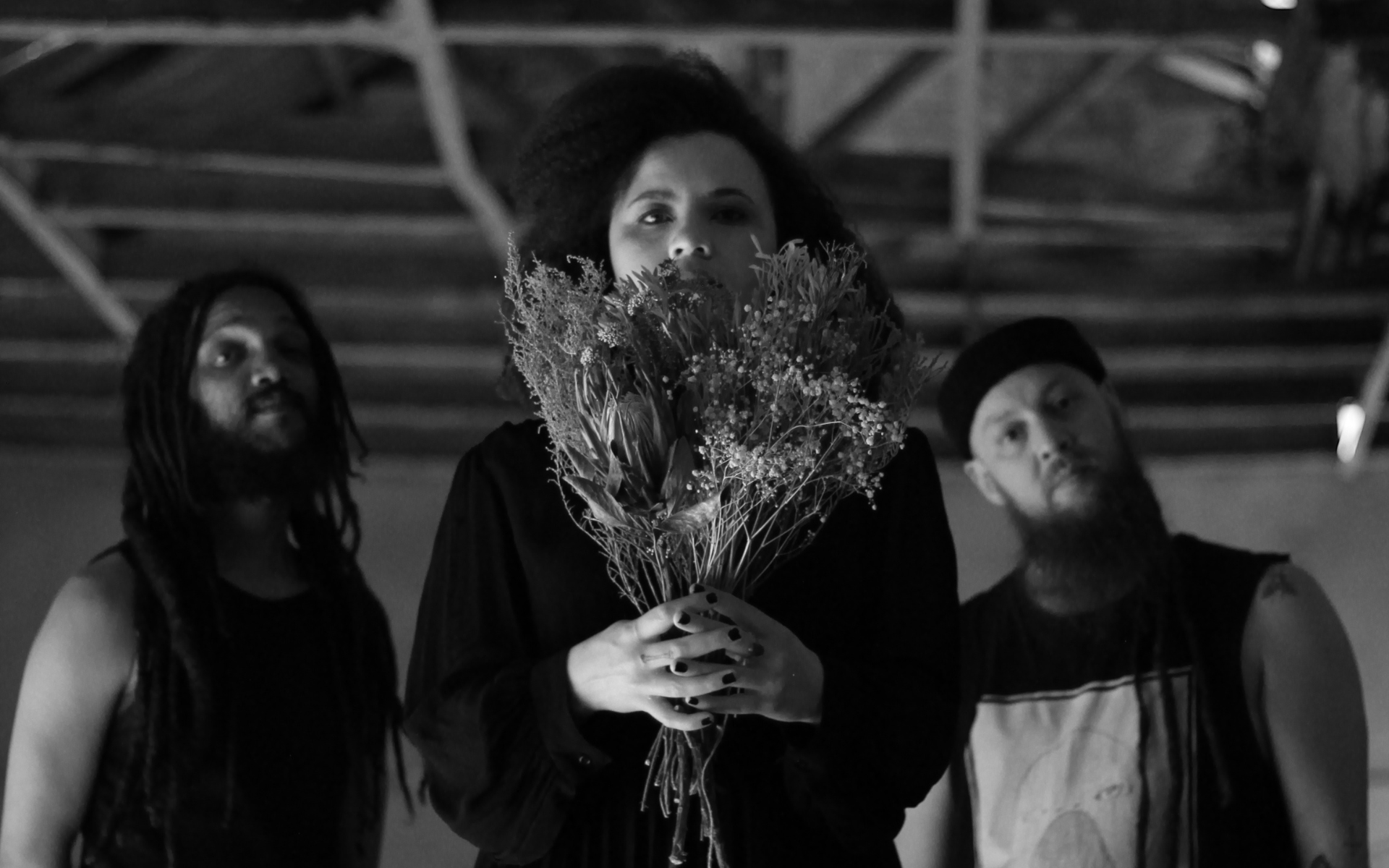
P+A+G+E+S began in Cape Town as Morning Pages, a post-rock project that kept getting slower and heavier until doom, drone, sludge and noise stopped being an influence and became the core of the band.
Their debut album, No More Can Be Done, sits in a very specific South African reality. They talk about wealth disparity that traces back to segregation and apartheid-era planning, a conservative Cape Town where minorities, migrants, working-class communities and the LGBTQI+ community often take the hardest hits, and neighbourhoods that were historically allocated to “non-whites” that still lack basic water infrastructure, even while politicians sit among the country’s richest people.
Below, P+A+G+E+S break down why they write the way they do, and how they see South Africa’s heavy ecosystem trying to hold itself together while looking outward to the rest of the continent.
P+A+G+E+S rose from the ashes of Morning Pages, a post‑rock project that gradually sank into doom, drone, sludge and noise. What pushed you to make that definitive leap into heaviness and slowness, and what still survives today from the Morning Pages era in how you compose and think as a band?
We always loved slow, heavy, noisy music such as Godspeed You! Black Emperor, Burning Witch, Khanate, Pale Horse (UK), and Sunn O))), and decided to evolve our sound to reflect a state of grief triggered by loss, and by the discussions we had about lived experiences and justice. We still keep the core idea of longer, droning songs that build throughout, as well as the atmospheric and noise elements. As members left over time, we had to work out how to maintain the same weight and fullness of sound with just the three of us. Another aspect that we continue to incorporate is the dark, moody, monochromatic visual language that we create internally for live show projections and to support our form of storytelling.
Your debut album, No More Can Be Done, confronts existential anxiety, geopolitical despair, environmental decay and perseverance in a collapsing, increasingly fascist world. How do these big ideas grow from concrete day‑to‑day experiences in Cape Town and South Africa, and was there a specific moment that crystallised the title in your heads?
Our country has a huge degree of wealth disparity as a result of past segregation laws, which makes it hard to climb out of poverty. You don’t have to look far to notice it. South African culture is very wrapped up in classism and trying to keep the trauma of apartheid’s legacy at arm’s length. Cape Town is still a very conservative city as well, where minorities, migrants, the working class and the LGBTQI+ community bear the brunt of this. In Cape Town, there are areas that were allocated for “non-whites” (an old Apartheid term for people of colour) which still don’t have water infrastructure and remain part of the lowest income bracket – if there is any income at all – while some politicians are among the richest people. This type of gap created by our history makes it almost impossible for most people coming from that background to be able to get out of that economic situation. Corporate culture and hyper-consumerism are used to create a mirage of progress, separating us from the fear of being stereotyped as the ‘other’, both interpersonally and on a global level. As part of the Global South, we experience neglect from the West, there is always an anxiety to prove we are developed but that is within strict ideas of wider geopolitics of being treated as a source of resources for mining and a dumping ground for waste for the West, but we are rarely considered an equal in global decision-making or power.
“Sometimes, just existing in your own integrity in a world that does not value it is an act of resistance in itself.”
We saw the album’s title in the way an encouraging loved one might speak to you in your lowest moments: pick yourself up and keep going. No More Can Be Done is like saying: if you’re doing your best but it still feels hopeless, don’t give up. Sometimes, just existing in your own integrity in a world that does not value it is an act of resistance in itself. This had an influence on the title.
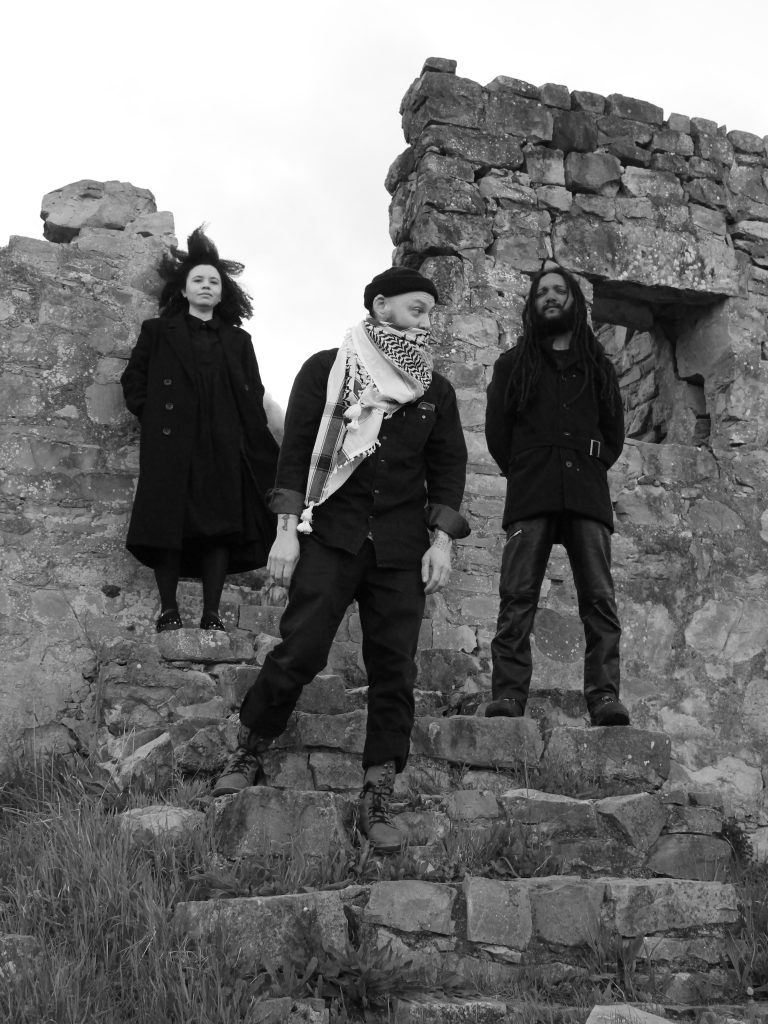
On tracks like “Devastation Junkie”, you don’t shy away from words like “imperial fascist” or a direct critique of racism, colonialism and state violence, and you take a clear stance defending BIPOC people, women, LGBTQI+ communities, human rights and animals. How do you balance the necessary anger to say these things with the responsibility not to oversimplify such complex issues, and how does the local audience react to a doom/post‑metal band that is this explicitly political?
These are actually some of the oldest overlapping issues that we know of, where unjustified power, privilege, supremacy, imperialism, exploitation and colonialism have been the driving forces behind capitalism. This renders some people more expendable than others, based on how useful they are seen to be in maintaining this structure and most people know it, even if it’s implicit. These issues aren’t complicated, but they are hard to resolve, and it’s even harder for some to feel they have the power to change anything. Some of these issues relate to lived experiences, so just existing and speaking about them from a direct, simplified point of view is part of the concept to show that these issues aren’t complicated, and that we over-theorise things that are just simply wrong.
“We are not explicitly political but we do have strong beliefs.”
So far, we have had a good reception from the local audience. We are not explicitly political but we do have strong beliefs. We are not politicians. We are making music for those who feel the same as us and for them to not feel alone.
In what way did working in the studio with Simon Ratcliffe at Sound and Motion help sculpt the weight and spatiality of the record?
His ability to do what he does created a very calm and encouraging environment that allowed us to just focus on the performances. He had set up the room from amp and mic placement in a way that helped capture the huge feeling of space we wanted to achieve. We did single takes of the full band to get the raw live feeling of us playing together instead of starting with the drums and layering everything else over it. We wanted the album to reflect what it feels like to see us live as a three-piece band and Simon made that possible. It was a huge learning experience and we’ve taken some of these lessons with us on this journey.
Both the album cover and the “Shine On” video show that P+A+G+E+S think about the visual side with the same care as the sound. How do these visual concepts emerge? And to what extent do you feel the image lets you push your political message even further?
The ideas for the visual side of things are always offshoots of the music, to create something that speaks for it. We consider the visual side of things a lot in the hope of immersing someone within the cinematic landscape of the project. Music with a strong visual language always stirs emotion and this is what we strive to achieve. We are all visual artists in the group, so this seemed like the most natural thing for us to do.
When we discuss the creation and planning of the visuals and graphic dimensions around sound, we consider it from a poetic and symbolic lens. For our album cover, we wanted to contrast our heavy music with something gentle and resilient, which made us think of plants and nature. The dandelion is a misunderstood plant. It’s seen as a weed, but it has many health benefits when ingested and it can spread its seeds easily with the wind. To us, this represents a community.
“Music with a strong visual language always stirs emotion and this is what we strive to achieve.”
We love thriller/mystery/horror films, so creating imagery that is otherworldly to depict reality via metaphor is a headspace we like to work from. At the planning stage of the ‘Shine On’ music video, we initially discussed the historical fascist tool of book burning and finding a way to portray this oppression in reverse, where we could burn the books of living or contemporary writers who are unsafe: homophobic, transphobic, sexual predators, and racist. We wanted to diminish their chokehold over the creative industry to make way for suppressed voices as a kind of phoenix. We thought that was too on-the-nose, and also, we didn’t want to get sued by those scary authors down the line. We continued to work with the idea of fire, burning and ritual as a metaphorical act. We had the idea of witches who live out in nature, who wear natural materials, who do rituals with creative movement, burning indigenous flowers and handmade dolls adorned with dry plant matter that symbolically embody the souls of oppressors as a way to usher in a better future. We planned with the director of photography, Oscar O’Ryan, to film it during a full moon. For our music video, we had the wonderful opportunity to work with Louise Coetzer (creative advisor), Marcel Maassen (first AD), Abu Mohamed (gaffer), Josh Botes (photographer), and dancers Tamysn Pretorius, Zandile and Zanele Salukazana.
How do you see the heavy music ecosystem in South Africa and across the continent today? Are there real support networks between bands, venues and labels? And looking ahead, what excites you most?
There are many talented bands locally, so there is no shortage of acts going around. There are some key organisers and promoters that help keep things moving like SENSA (Sonic Exploration Network Southern Africa), Foul Play, Planet Karavan, Emalyth Events and Metal4Africa, to name a few. Also, there are many independently organised shows put on by artists themselves. The infrastructure for getting signed to a label for doing independent, underground heavy music and touring are not as robust as in certain parts of Europe or America, but we will continue to pour our hearts into what we do. We really appreciate the hard work that Warren Gibson of Mongrel Records (PR as Plug Music Agency) and Rouleaux van der Merwe of Permanent Records do to help cultivate and maintain the ecosystem of the South African music scene. What excites us is the chance to reach a wider audience and build relationships with other musicians and artists. From what we can see online, thanks to the African Metal Photo Archive, countries like Botswana, Morocco, and Kenya have visible heavy music scenes, and slowly, African bands are beginning to become aware of each other’s releases and shows via social media. We’re really happy about this kind of camaraderie and seeing the local scene become more inclusive.
P+A+G+E+S have mapped out a run of Cape Town dates for early 2026, beginning with their No More Can Be Done album release show on February 7 at the Masque Theatre in Muizenberg. The band will share the night with Emmaleen Tangleweed with Lliezel Ellick, alongside Constellatia. More local shows will be announced soon via their Instagram.
No More Can Be Done is available as a 180g 12″ black vinyl.


