


The musical and cultural phenomenon now known as “metal,” in all of its branches, styles, and possible combinations began as the result of coincidences and the natural evolution of music in very specific areas of the world, particularly the United Kingdom and the United States. However, this sociocultural phenomenon gradually spread across all corners of the globe, achieving the status of “World Music,” not as a concrete sonic style but rather as an abstract musical concept, becoming a global heritage.
To simplify what I am trying to convey, metal now belongs to everyone, not just specific scenes of the distant past. Every culture in every country where there is or has been a metal band of any style unconsciously imprinted a distinctive mark of its own identity, unknowingly making metal their own. Thanks to this entire process, bands can be found in practically every corner of the planet, and, in this case, I found metal in a place as remote and exotic (from my perspective) as Kenya. Incredible, isn’t it? How the passion for this music knows no borders or cultural limitations.
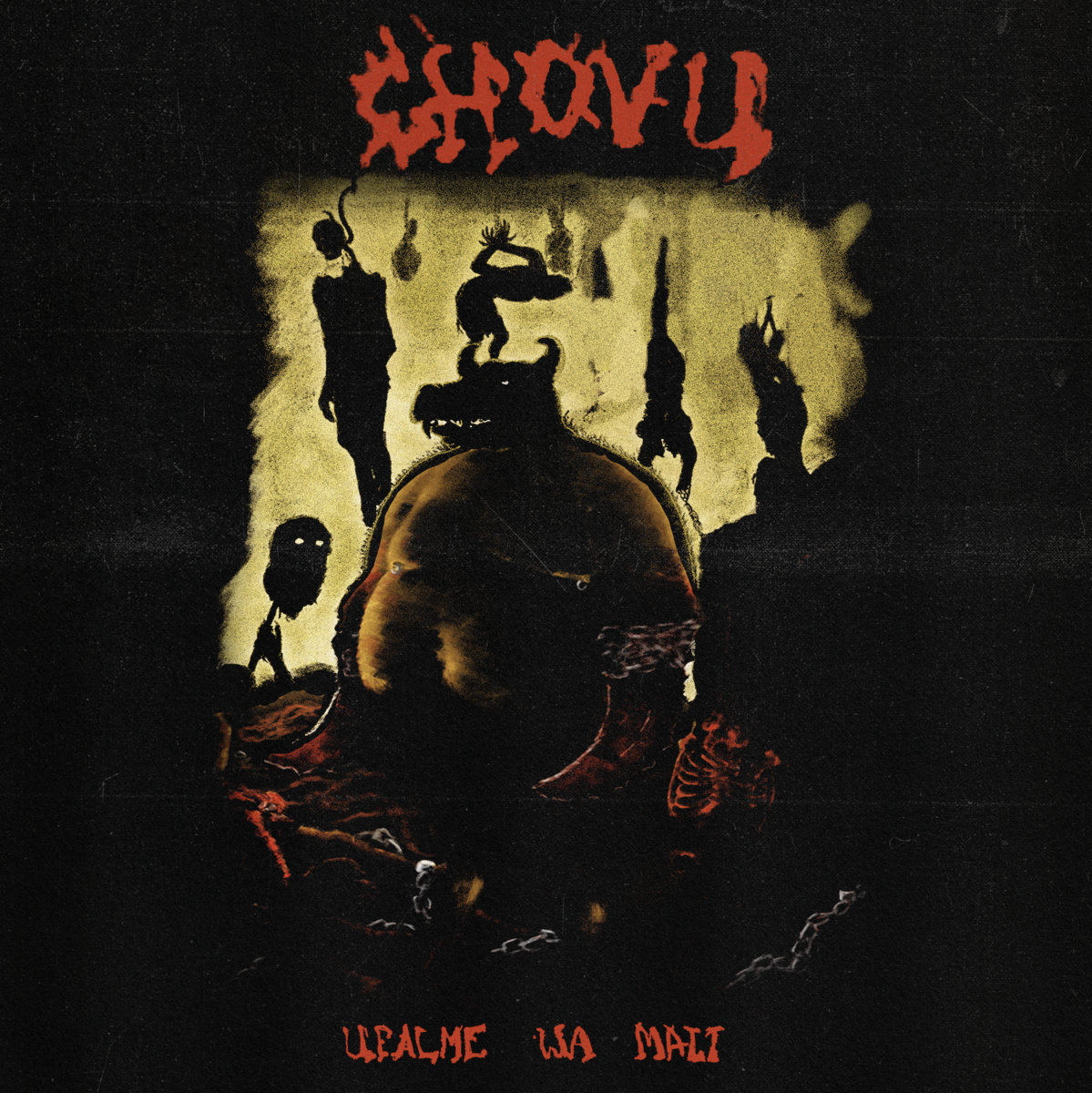
Chovu is a Kenyan band labeled as post-black metal. However, to trained ears, that label can feel somewhat ambiguous and even blurred, since on this album, titled Ufalme Wa Mali, I found many elements that differ considerably from that description. On this record, I heard very interesting folk and tribal sounds that serve as embellishments while greatly enriching the album as a whole. I also noticed nuances and passages that come very close to doom metal, or even sludge-like moments, perhaps as a consequence of the production, seemingly in an unintentional way. The vocal performance is raw, giving the songs a certain punkish touch, while the compositions themselves have rather unconventional structures, or at least that is how they seemed to me. As a result, the album feels unorthodox and unpredictable, keeping me in suspense and constantly wondering what would happen next.
I quite liked the drum sound; it was very organic, providing solid rhythms with occasional syncopated touches, adding even more mystical aura to this work. While it’s not groundbreaking or innovative, it managed to capture my attention enough to warrant this review.
Something very curious is that at times my brain made a rather unusual connection: at certain points in the album, the sound of Greek black metal reached my ears. Listening to a song like “Ogalo,” I couldn’t help but think of the early works of Rotting Christ or Varathron, which is quite bizarre considering that the band most likely didn’t have those influences during the songwriting process (or perhaps they did).
In conclusion, I would say that metal has become as rich and diverse in concepts and sounds as the planet we live on. You never know what you might find in the infinite ocean of bands and projects out there. A very interesting album that has opened the doors of curiosity to truly subversive musical scenes.


