


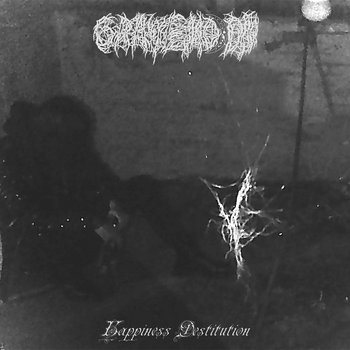
With their second album, arriving just four months after their debut Death. Serrated. Be. Mine., the Maryland duo offer a record without additives which, much like the depression running through this style of black metal, comes out of nowhere, without us even realising we have slipped into the deep black hole of self-isolation, fertile ground for sowing the dangerous idea of self-inflicted death. Put on “Fugue Familiarity” and you will understand exactly what I mean; there is no intro or any element at all to give us even the slightest sense of familiarity, and I think that is precisely the point. The listener feels lost, as if suddenly struck by the idea that our place in the world is in doubt and that we are, in fact, as the title suggests, stripped of any joy.
And yet, for someone able to place themselves from another perspective, songs such as “Solitary Confinement for the Soul” are skilful in achieving the opposite of what this duo set out to express lyrically, and it is just as well they do. To be alive and able to hear these icy, treble-heavy guitars, with drums thudding away in the background, almost lifeless in the mix but still present, and vocals recorded in a raw manner, makes us enjoy it, appreciate it, and ask for more. “Garden of Death” continues the downward spiral into the abyss, which we move through imagining cemeteries, craters on the moon as though they were our grave. And however happy or safe we may feel, Happiness Destitution produces a chemical reaction. We find ourselves hemmed in by the compressed walls of its creators, which close in with every song. Even the guitar monologue heard in the two minutes of “If You Smile… Your Face Might Crack” gives us that false sense of comfort we find in sadness, inviting the listener to close their eyes and sink fully into this record.
“Suicide is Bad for Your Health” is a strong title and a fitting conclusion to this album, even if it is not the closing track. There is a noticeable shift in the atmosphere, in the tone of the guitars, and even in the voice itself, which rises into howling screams of an agony that only those who have lived through it can truly understand.
The end comes in the form of “Victim of Happiness”, another monologue, this time acoustic, with the same two minutes and nine seconds as its counterpart. Coincidence? Perhaps not. Hope can never be a coincidence. Perhaps a different opening would have given the album something more, perhaps not. Perhaps greater consistency across the songs would have given the album more solidity, perhaps not. There is no point dwelling on the what-ifs. What matters is saying that for fans of the depressive/suicidal side of black metal, Happiness Destitution should be received and embraced exactly as it is: raw beauty waiting to swallow you whole.


