


“An album that keeps hinting at something better without ever fully committing to it.”
Africa. I’ll admit it, back when I was a kid, this massive continent was, in my mind, less a mosaic of countries, cultures, and languages and more a single, conveniently labeled geography called “Africa”. Decades (and thankfully, actual travel) later, that childish view has been thoroughly dismantled and ignorance has been replaced with something resembling perspective.
Of course, what reality shows is something far more interesting, as this is a continent bursting with wildly different cultures, contradictions, beauty, chaos and, as it turns out, a metal scene that has been quietly doing its thing while I was busy pretending Scandinavia invented distortion. Digging through my collection now, I found just one obscure black metal act and that’s it. Time to rectify this. Which brings me to my little self-imposed project: a review journey, if you will, through African metal, starting in the south and working my way up. My first stop: South Africa.
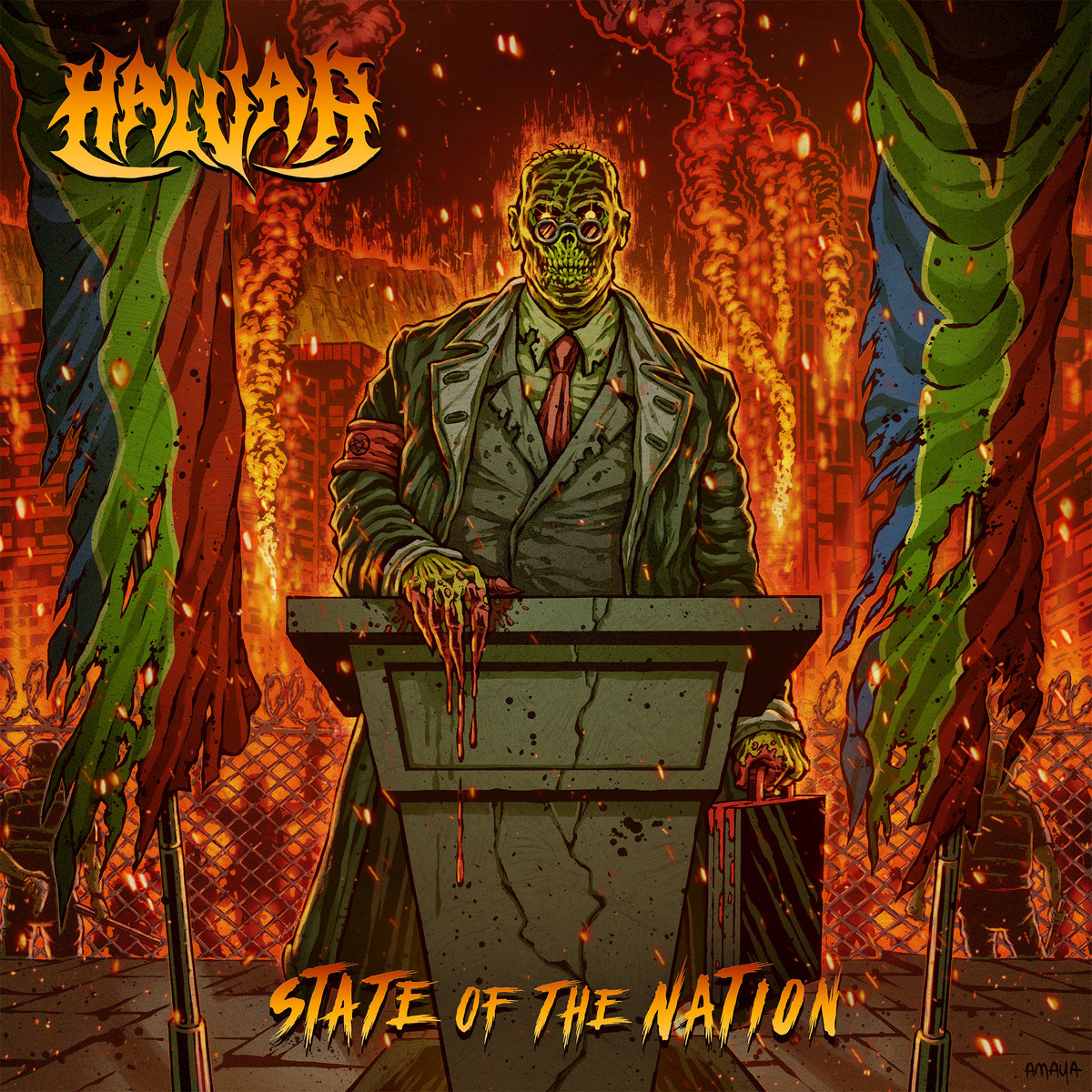
First victim in my crosshairs, uh, subject to be reviewed, is Halvar, hailing from Stellenbosch. Yes, that Stellenbosch. The one with vineyards. Apparently, between wine tastings, someone decided to throw in some thrash metal as well. State of the Nation is the band’s latest work. The album is many things and many things it is not. It is not what the genre tag wants us to believe. If you came here expecting death/thrash because someone told you so, you might want to have a quiet word with that person. Preferably about honesty. Musically this is thrash metal, through and through. It grooves more often than it should, and when it steps outside the genre’s boundaries (very rarely), it leans toward hardcore rather than anything resembling death metal. It often feels as if the band is of the opinion that speed is overrated, much like emotional stability. Lyrically, as the album title suggests, it is an angry, accusatory reflection of the local realities. I found no subtlety here, as this is frustration put into music and that part works.
The production is also solid, so no complaints on that front from my side. Everything sounds crisp, tight, and appropriately pissed off. But, and here comes the inevitable German “but”, three albums in, the band still hasn’t quite figured out that if your songs hover around the four-to-five-minute mark, you need to justify that runtime. Too often, Halvar doesn’t. Riffs loop like they’re stuck in a bureaucratic process and denied progression by some invisible committee. You keep waiting for a twist, a break, a “wait, what just happened?” moment. Sometimes it comes. Often it doesn’t as variation is treated like an optional feature and not a necessity.
The vocals though deserve a special mention. They’re… interesting. Imagine someone who is both furious at the world and deeply regretting last night’s life choices at the bar. It’s not quite a thrash snarl, not quite a hardcore bark. It feels more like a man arguing with reality while nursing a catastrophic hangover. Unique? Sure. Effective? After repeated listens, I’m still unsure whether this is a genuinely unique touch or just a distraction.
Let me give you some examples which exemplify my issues with this release. The title track and opener takes nearly four minutes until something noteworthy happens. Until then it’s a looped riff marathon in mid-tempo with vocals that flirt dangerously with monotony. Besides the condemning lyrics there is nothing that makes the song stand out. The gang shouts add a bit of flavor, but they can’t fully rescue the track from its own repetitiveness. “One Foot in The Grave” fares slightly better, mainly because it comes to the point quicker and emanates some of that relentless energy the genre is known for, and even throws in a solid solo. That I’ve heard some of the riffs before is forgivable, as after more than forty years of thrash history originality is less a requirement and more a pleasant surprise. However, latest by track number three I could not shed the sneaky suspicion that finding a true standout on this album could be a lost cause and this might be as good as it gets. There’s plenty of groove, plenty of competent playing, but not much that sticks.
A little outlier is “Judgement Exempt” which briefly toys with a more punk-like approach in its opening minute, serving up a more simple and less aggressive riffing. This is a nice change of pace, until the band retreats back into safer, mid-tempo territory, as if afraid of its own ideas. “Unmaterial” is another example of why the album does not work as a cohesive whole. It starts strong, with a simple but memorable riff that actually makes you consider hitting replay later. And then, like a balloon meeting a needle, it bursts your hope and deflates into the familiar groove-heavy approach that dominates much of the album.
“Born in the Gutter” might be the best summary of State of the Nation. There are good moments like a decent chorus and some solid solo work. But they’re surrounded by material that feels padded, generic, and ultimately forgettable. It’s an album that keeps hinting at something better without ever fully committing to it. If I were a thrash metal coach (which I’m not, and let’s be honest, nobody is waiting for my credentials anyhow), I’d recommend Halvar a stronger embrace of the genre’s core strengths, i.e. shorten their songs, let the angry beast out of the cage more often, and heed the first fundamental rule of thrash: speed. Because while mid-tempo chugging can sound heavy, it rarely delivers what thrash does best: giving us that sense of uncontrolled, almost reckless energy. Here, things are just a bit too… comfortable. And comfort is where good thrash goes to quietly die. As a first step into my “African metal journey”, I was hoping for something a bit more striking. Of course, State of the Nation isn’t a disaster, but it’s not exactly a revelation either. For me it is one of those albums you listen to once or twice, nod along to, and then accidentally forget that it exists while you’re looking for something else.


