


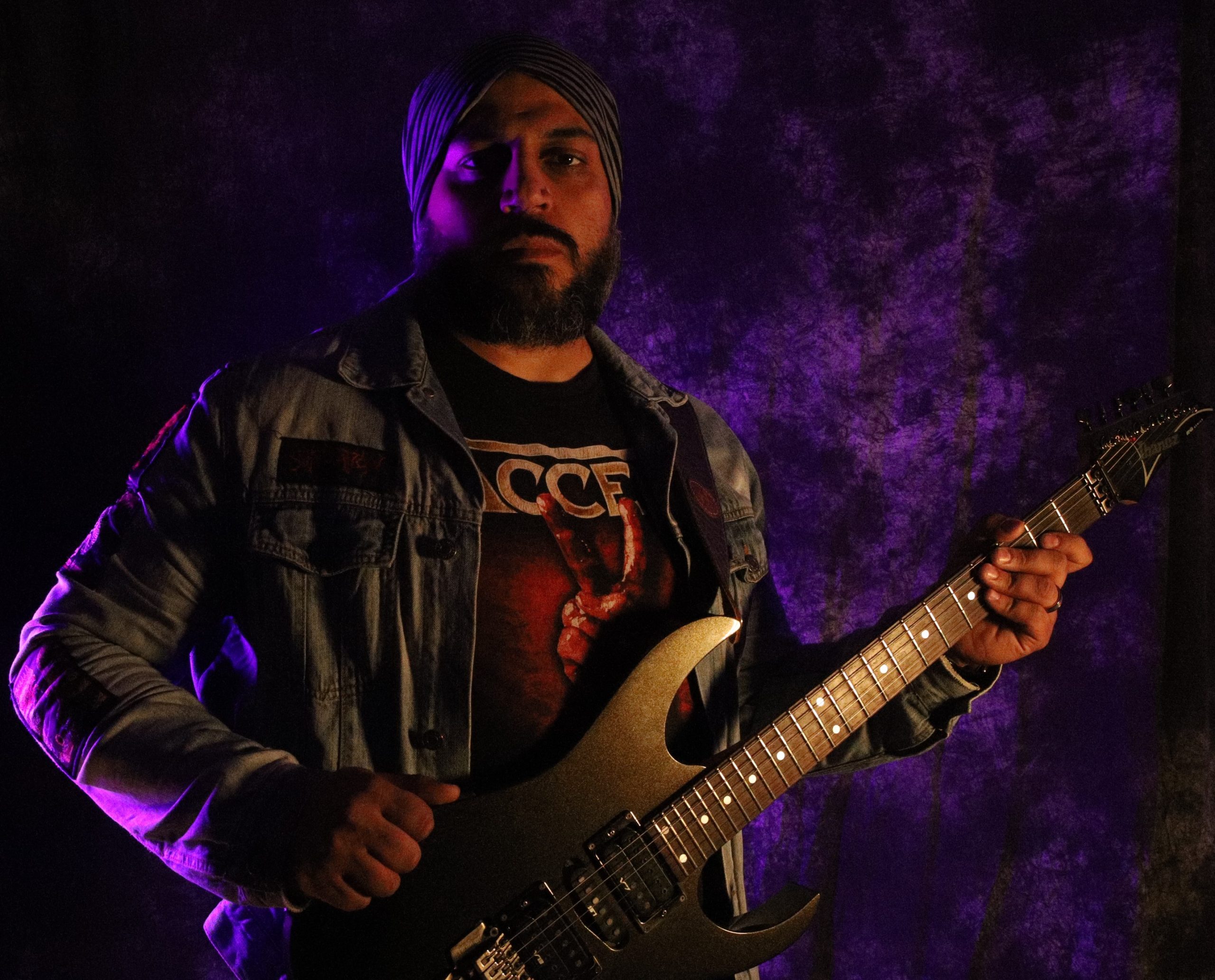
“Sadly, Libya doesn’t have a heavy music scene.”
Since 2014, Libya has been shaped by rival centres of power and recurring instability, with flare-ups of violence and long stretches where everyday life carries on, even as basic services falter and security feels uneven from place to place. For Jonathan Steel, that wider story becomes personal in Benghazi, which turned into one of the conflict’s main front lines that same year. It is also where his own timeline resets, because 2014 is when he was forced to leave behind the first version of his musical life.
“I’m originally from Benghazi. I went to Tripoli in 2014 when there was a war in Benghazi and I had to leave everything behind, guitars, my home studio, everything,” he recalls. “I came back to Benghazi again in January 2021. Before Jonathan Steel became a recording project, I was a session guitarist and I was still learning music recording and production.” In Tripoli, he found the person who helped turn that learning into a method. “When I moved to Tripoli after the war in my hometown, I met my friend and mentor, the composer, guitar player, singer and producer Sohail Alhjaj. He taught me so much about music production and pushed me to write and compose my second release after we made my first record, Misanthrope, which was a six-track EP, more of a heavy metal record.”
“2020, globally and personally, was a heavy period. I was trying to survive mentally by making this record.”
By the time IX Realms Descendant arrived on December 30, 2020, Libya had also entered the COVID-19 era. The country confirmed its first case in March 2020, and Tripoli’s authorities imposed night curfews and restrictions that shaped how people moved and worked. Steel describes that year as a kind of suspended reality, with the album acting as a way to keep his head above water. “When I was working on IX Realms Descendant, everything felt suspended in uncertainty. 2020, globally and personally, was a heavy period. There was isolation, pressure, and everything was collapsing in front of my eyes. I was trying to survive mentally by making this record. I needed this album to process silence and fear.”
The album is organised as nine chapters drawn from Dante’s circles, but Steel treats them as states of mind that you can sink into: “Dante’s circles, or as I called them, realms, appealed to me because they are a psychological map,” he explains. “Each realm represents a state of being, a moral or emotional condition. As we go through each realm or chapter, the music gets heavier. Each one has its own tempo, gravity and heaviness. Some are oppressive and slow, others are violent, uncomfortable and restless. When you reach the final chapter, the music isn’t only heavy, it’s suffocating. Dante gave me the map, but the emotions filled in the terrain.”
That suffocation is tied to tempo. Steel’s pacing stays slow and deliberate, because he wants the weight to be something the listener has to sit inside. “Slow tempo makes heaviness unavoidable,” he says. “You have to endure it. Every note makes the listener feel the album and live in its suffocating atmosphere.”
One of the strongest parts of that atmosphere is the low end, and Steel is blunt about how intentional that choice was. “That is strictly a matter of production, and the question was forwarded to the producer,” he notes, before quoting the reasoning he was given in the studio. “‘It’s because we are in hell. Hell is down there. Heavy breathing, heavy waves. I really wanted it to be below the kick so it stays consistent and makes the listening uncomfortable in terms of feelings. This record is about torture, pain, suffering and madness, so the bass should not disappear behind the low-tuned guitars. That was my choice.’”
The practical reality of making the record in Tripoli, during that period, was shaped by hours on the clock. In March 2020, Tripoli’s authorities ordered a curfew from 6 p.m. to 6 a.m., and variations of that kind of restriction became part of daily life. Steel ties the album’s workflow directly to those limits. “At the time, it was the coronavirus period and it wasn’t easy to rehearse and record. We had lockdown at the beginning, then we had free hours in the morning until 6 p.m., and then lockdown started again. So I had to practise my songs at home on my guitar for a while, then I’d go to my friend’s studio, the producer, and record the songs. The whole album took six days of recording, around six to seven hours a day.”
“I’m already writing a new album. I’m planning to release it this year.”
After the album, the geography of his life shifted again, and the silence around the project has a mundane explanation that will be familiar to anyone who has tried to build art while rebuilding a life. “After the release in 2020, I moved to Benghazi and I was busy building my own apartment and home studio again,” he says. “In 2022 I got married and life got busy after that. I’m already writing a new album. The progress isn’t great, but it’s progress. I’m planning to release it this year.”
Looking back, he does not talk like someone eager to remaster the past. He hears the technical gaps, but he also hears a document of who he was. “I would keep the commitment to slowness and weight,” Steel reflects. “What I’ve outgrown is mainly the technical side of music production, arrangement and frequency management. I would focus more on dynamics and negative space. But the rawness on my album reflects where I was, and honesty is part of its character. It’s a phase engraved in my memory, not something I need to revise.”
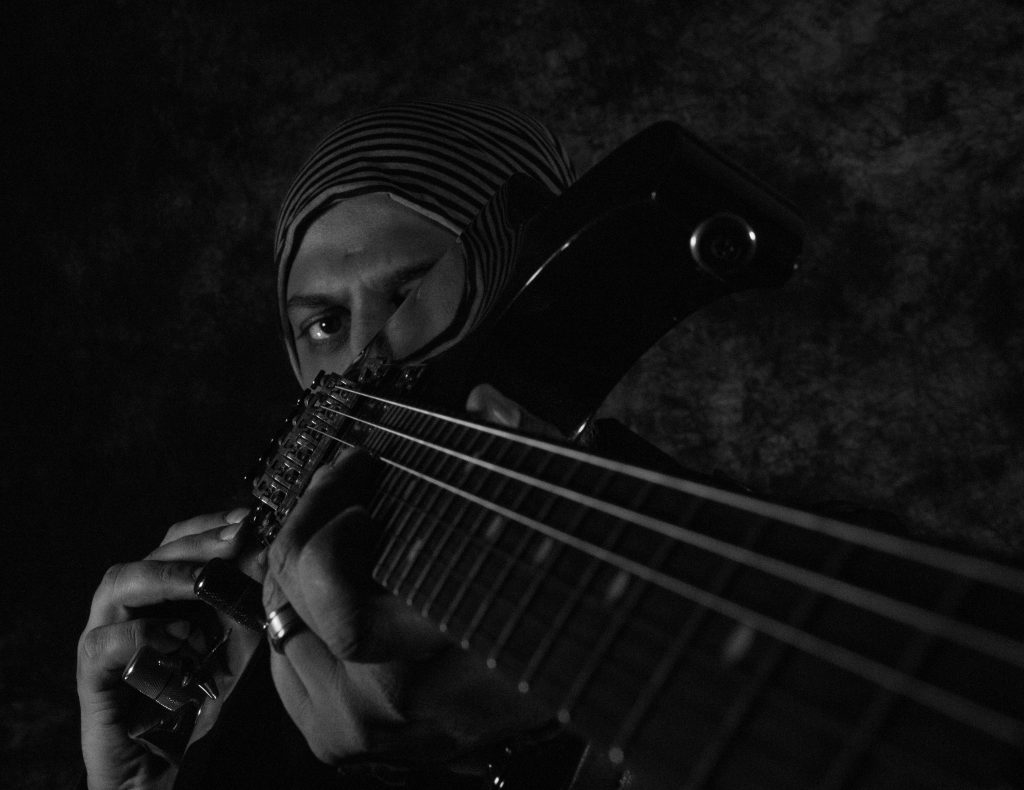
The next chapter, as he describes it, stays in that uneasy territory, with sharper edges in the harmony. “The next chapter is slightly different from the first one,” he says. “It will carry the heaviness, the uneasy feeling, the aggressiveness, with some dissonant vibes.”
Then there is the bigger question, the one that sits behind any story about heavy music in Libya: where the scene is, and what it can realistically become. He describes absence and attrition, and he frames “scene” as something that currently survives online more than anywhere physical. “Sadly, Libya doesn’t have a heavy music scene,” he says. “No one is building it. It lives online, or at least what’s left of it. Changing it is not a simple task. Even guitar players here are quitting the instrument.”
That bleakness is part of why IX Realms Descendant lands the way it does. It is a record made with the clock running, in a city under curfew, by a musician who had already been forced to restart once before. It ends without tying everything up, because the conditions around it never offered neat endings, only chapters you survive long enough to write.


