


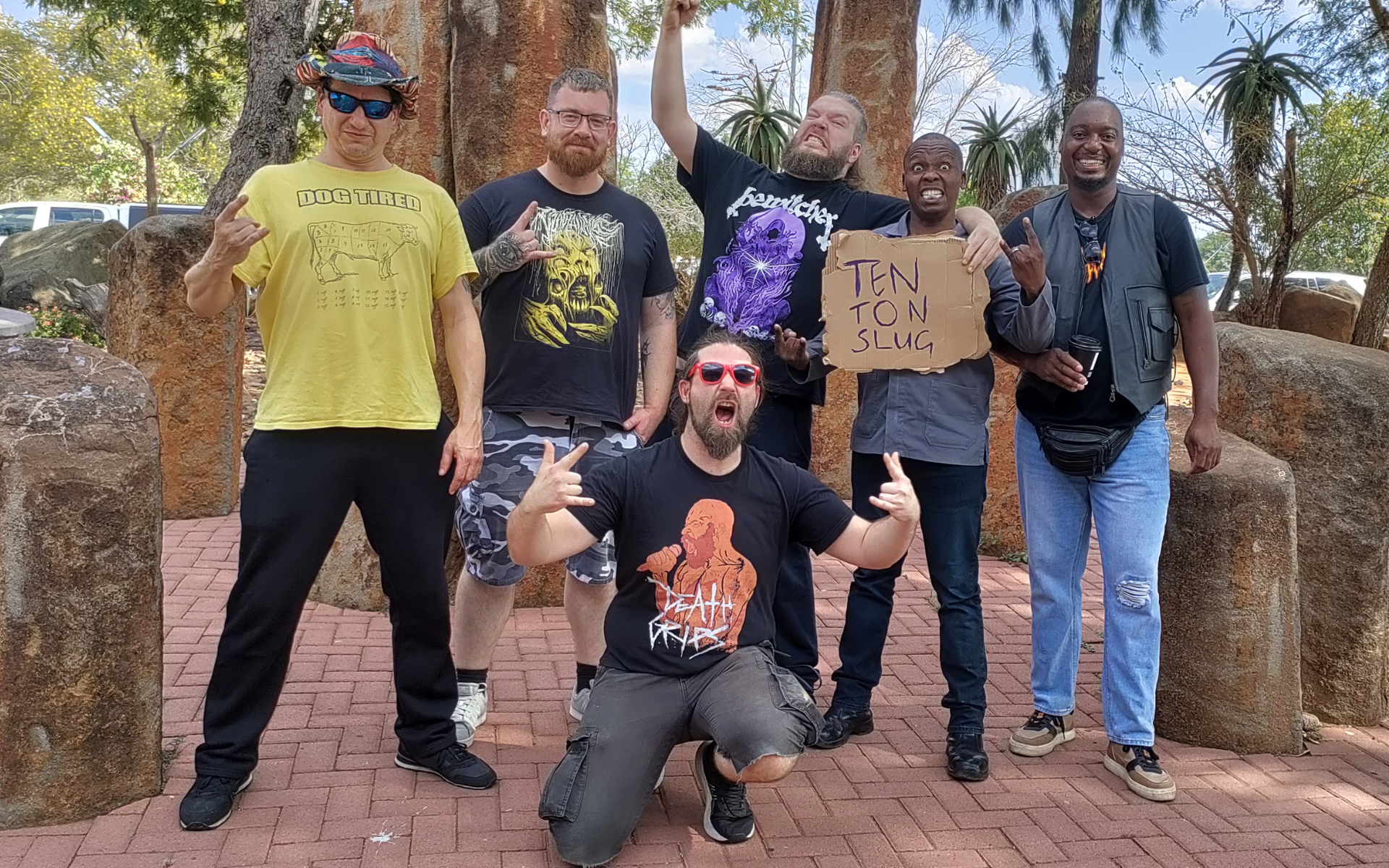
“We were definitely guilty of overlooking a vibrant metal scene on an entire continent due to our assumption that people in that region don’t really listen to metal.”
Ten Ton Slug have been carving out their own corner of sludge and groove metal in Galway, Ireland, since 2013. Their debut full-length, Colossal Oppressor, landed in May 2024, tracked in Limerick and finished in Dublin. In late 2025, a long-haul idea from the lockdown years finally became real: they flew to Botswana to playVulture Thrust Metal Fest in Maun, plus a Halloween warm-up show in Ghanzi, and filmed the whole run as a video log, from the airports to the drives to the late sets. They arrived with curiosity, a lot of unknowns, and the sense that they would “find a way to pull it off”. What they found was a scene that runs on community, late nights, and the universal language of heavy riffs.
Watch the 20-minute video log below:
The seed was planted by accident. “We stumbled upon an article entitled ‘Cowboys of the Kalahari’ that really grabbed us,” the band say, pointing to the way it framed the festival and Botswana’s grassroots metal scene. They reached out, started talking to Tshomarelo Mosaka of Overthrust, and the plan stopped being abstract. “In 2024 we were offered a slot at the festival the following year along with a warm-up gig in Ghanzi on Halloween night. This is really when it became something concrete.”
From there, it was the kind of logistics that makes a band pause and then commit anyway. “It took us a huge amount of travel to reach them, 23 hours of flying (3 flights) and then a full day’s drive across the country from Gaborone. As a tour stop it felt unique and special as the people really appreciated us having come so far to play riffs for them.”
Before landing, they were honest about what they did not know. Botswana being a former British colony helped with basics like language and driving, but the rest was a question mark. “We didn’t really know what we were walking into, if we are totally honest, other than it would be an adventure and that like any other gig we would find a way to pull it off.” The surprises came fast. “Turns out they have amazing steaks. We had at least one a day, sometimes for breakfast. They certainly like their beer and riffs (Carling Black label beer and big groovy riffs to be precise) and surprisingly the heat was actually pretty comfortable. And the people are probably even more friendly and laid-back than at home.”
If Ghanzi was the first hard proof that the trip was real, it came with a vivid first scene. “We arrived by 4×4 at sunset to a dusty parking lot with a razor-wire fence running along the perimeter wall towards the entrance of the bar.” The venue had its own entrance, separate from the main bar, “guarded by security in full tactical gear”. As the night grew later and nearby bars closed, the place filled up. “Eventually the car park was packed, with many staying outside drinking for the night and many others entering the venue for the show or the bar next door.”
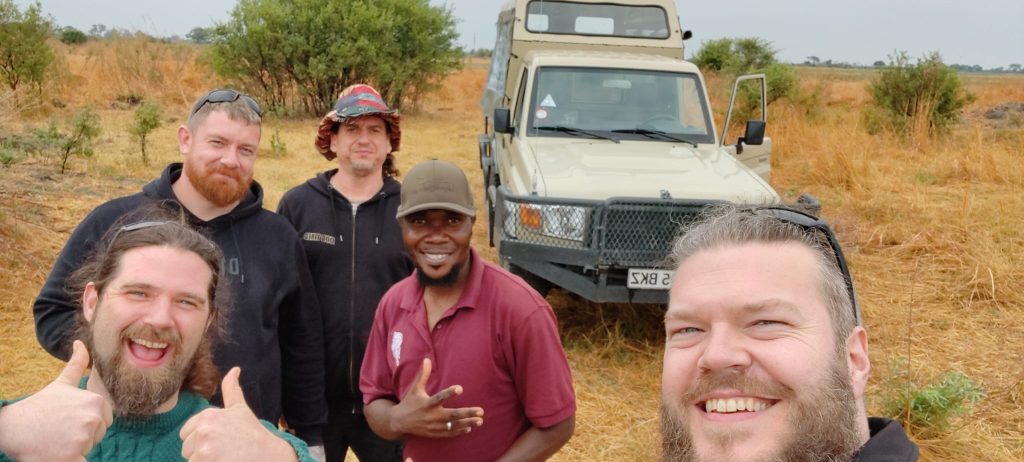
“The events themselves happen a lot later into the night which is unusual for us. We played at 3.30am the first night and 2.30am or so the second night.”
The timing, by European standards, was wild. “The first band took the stage at around midnight and it was 3.30am by the time we played.” Yet the energy never dipped. “The crowd was great, eager for music and full of beer.” One detail has stayed with them more than the hour on the clock: “The ‘hype men’ who took to the stage during our set and spoke to the crowd in between songs to rile them up.”
Maun and Vulture Thrust Metal Fest made the wider shape of the scene clearer. Ten Ton Slug describe it as familiar in spirit, even if the conditions are different. “It works in a very similar way to the underground all-day shows or more grassroots level festivals in Ireland and Europe.” The difference is what Botswana bands have to push through to make it happen. “They are building the scene there from scratch,” they say, pointing to the scarcity of equipment and “interference from local authorities” as added pressures on top of the usual underground obstacles.
And then there is the way the night is allowed to breathe. “The events themselves happen a lot later into the night which is unusual for us. We played at 3.30am the first night and 2.30am or so the second night. The start time is more of a suggestion,” they add, because there is not the same culture of strict performance or noise curfews they associate with many European venues. “This all made it a unique experience.”
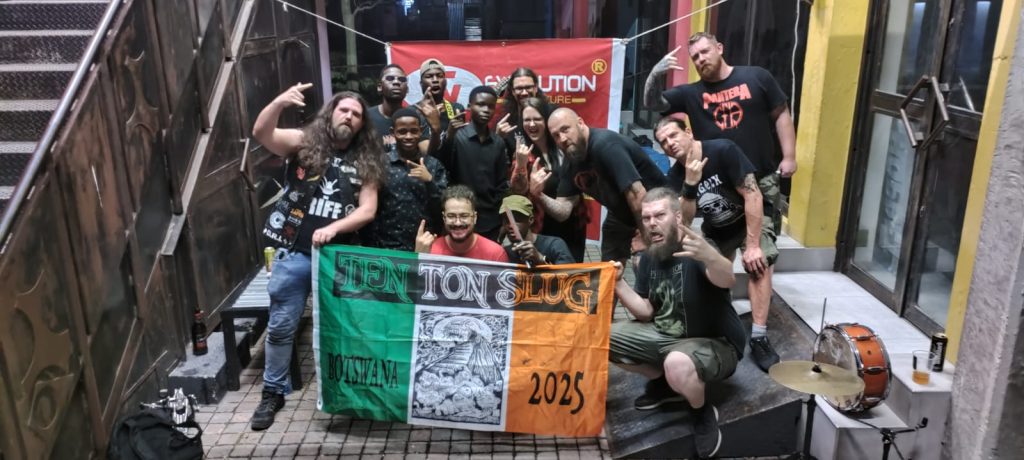
“it takes work, community support, and consistency. It takes people showing up, again and again, until it starts to feel normal.”
Meeting bands and organisers on the ground filled in the map. Overthrust and Skinflint represent Botswana. Hilliker came from South Africa. Those conversations made it clear that “the scenes in the respective countries are very different”, with South Africa more established and Botswana still in the build, “due in no small part to the efforts of Tshomarelo Mosaka.” They frame it the same way they would frame any local scene back home: it takes work, community support, and consistency. It takes people showing up, again and again, until it starts to feel normal.
That shift in perspective is the real takeaway they want to carry back into “western” circuits. “We were definitely guilty of overlooking a vibrant metal scene on an entire continent due to our assumption that people in that region don’t really listen to metal,” they admit. “The true diversity of interests and culture that exists there is rarely shown in the media.” Botswana made them rethink where touring can go, especially when the appreciation is that direct. “It has made us reassess where we tour, especially due to how much people in lesser-visited areas truly appreciate bands who make the effort to visit.”
“We would love to return to Africa again to play South Africa and also Egypt if the opportunity ever arose.”
And they would do it again. “We would love to return to Africa again to play South Africa and also Egypt if the opportunity ever arose.” They end with the most grounded line of the whole trip, the one that explains why a band will fly across the world to play at 3:30 in the morning: “Regardless of nationality or culture, people are just people. And people love riffs.”


