


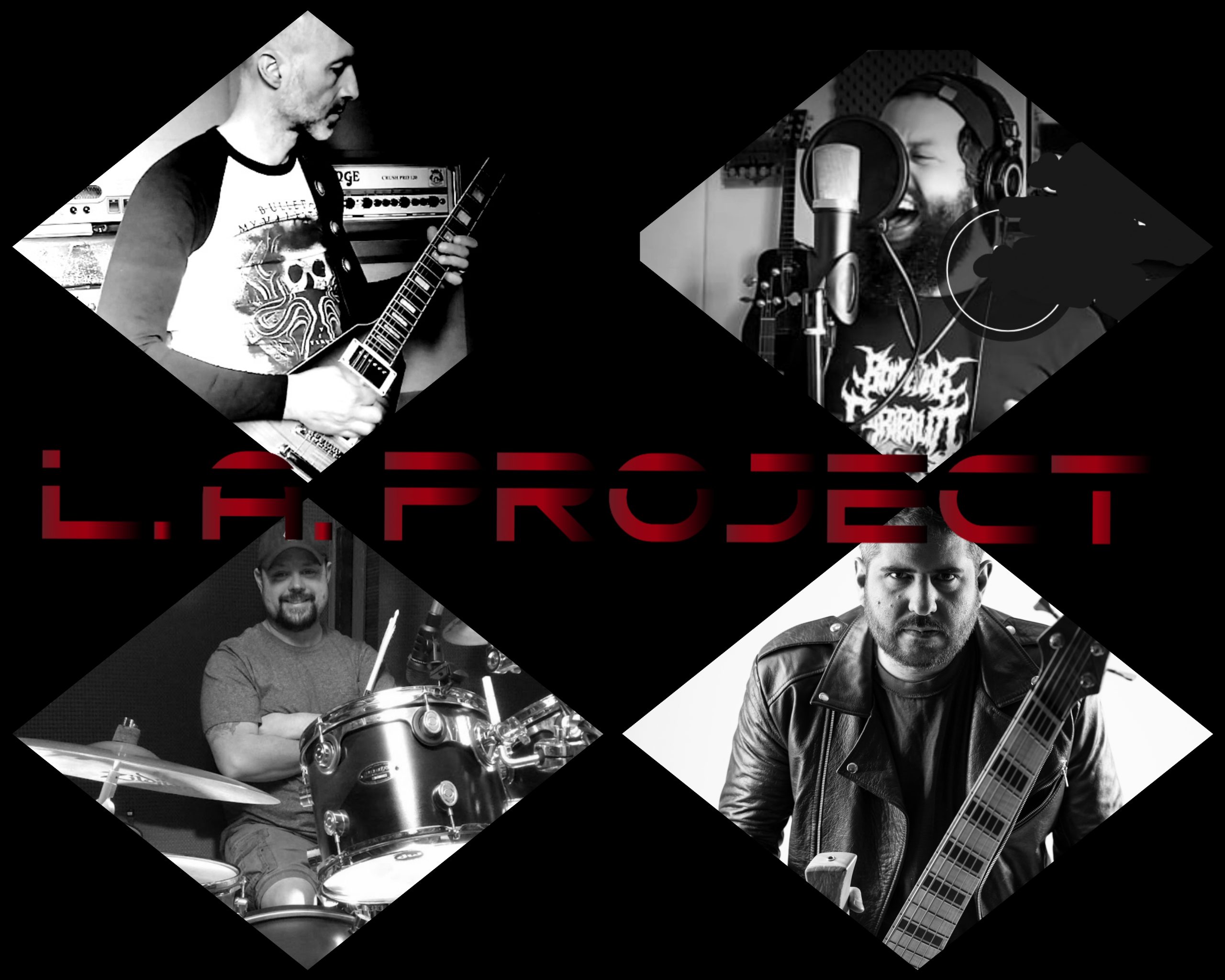
L. A. PROJECT always seemed like a studio-crafted beast, precision-tuned with a singular goal. For 2026, that goal is Space Fuzz: tight, dense, riff-driven, thriving in that sweet spot where heft and vibe dominate. The group’s influences are just as obvious, with Amaro aiming for a fresh twist on vintage Black Sabbath grit, while dropping two additional tracks that veer harder into pure metal.
When you say “space fuzz,” what are you trying to put in the air in terms of atmosphere and intention? What do you want the music to leave with the listener?
Luis Amaro: Space Fuzz is an EP that focuses on the sound and atmosphere of stoner rock. In my approach to this style, I tried to create a rawer sound and production, so the listener feels closer to the band.
How does a track start in your process, and how do you know it’s stopped being a sketch and become “the song”?
My creative process is simple. I record guitar ideas and then I keep working them until I have a full structure, with an intro, verses, a pre-chorus, and a chorus. On some songs it makes sense to skip a guitar solo, or not have a pre-chorus. But everything starts on guitar. To feel the evolution of the song better, I use a Boss drum kit so I can hear the idea with rhythm behind it.
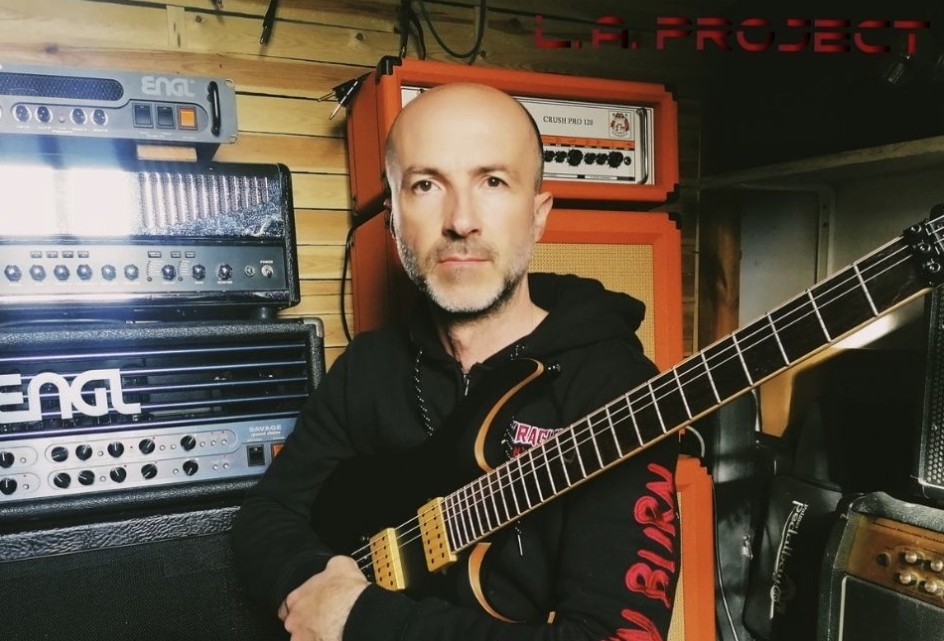
Your sound lives a lot on sonic identity. How do you find the right tone without getting lost in endless testing, and what rules do you set to keep consistency?
L. A. PROJECT is a studio project, so before each EP I decide the sound I want and the musical style. For example, on Electric Life the idea was melodic metal, and the guitars had a lot of chorus and delay with overdrive. On Space Fuzz I chose different sounds, more flanger and phaser with delay and fuzz pedals.
In general, I define the sound before recording. I try to explain the idea to the other members and give them creative freedom, but inside that direction. If I have a reference in mind, I’ll share it. On “Carry On”, for example, I explained that I wanted a bass tone in the Billy Sheehan style.
Your compositions breathe and they lean into tempo. What guides you when you build a structure, manage repetition, and create tension?
Sometimes, when we’re composing and there’s a break in the riff or the rhythm, I try to create something that isn’t very common. In that moment I might add a catchy riff that feels right and brings more dynamics to the song. Repetition is necessary to build dynamics and volume as the track moves forward.
I try not to be too rigid with structure. Usually I aim for intro, verses, pre-chorus, chorus, guitar solo, and a final chorus, but during the process I might put a solo under vocals, or remove the pre-chorus. For me it’s about sensitivity and feeling.
How do you work the dynamics between instruments to keep the weight, but still leave space for the music to open up?
In general, composition starts with guitar. I record a sketch and send it to the drummer to create the rhythm, already with some ideas of what the final track should be. Then the vocalist writes the vocal parts, and bass comes in at the end. Sometimes we have to redo parts, or repeat some riffs more times. Everyone has creative freedom to do their part. Even if I have an idea for bass or drums, each person can approach it the way they feel works best.
In the studio, what do you protect above everything, and what decision is usually the hardest when you’re closing a release?
After everything is recorded, the hardest part is mixing and production. On the first two EPs, I left everything to Ricardo Fernandes at Dynamix Studio. I worked with him to get the sound I had in my head. On this EP, I did the mix and the final production myself.
It’s not easy to balance instruments and vocals. On “On My Way”, the vocal uses effects where the level goes up and down, and that makes it complicated. On this EP, the guitar solos are also more level with the other instruments.
Do you have a connection, or would you like to have one, with scenes and musicians in Africa? If so, what’s a discovery from the continent that’s really stayed with you lately?
I’m a fan of the Tunisian band Myrath. I was really impressed by the track “Believer.”


