


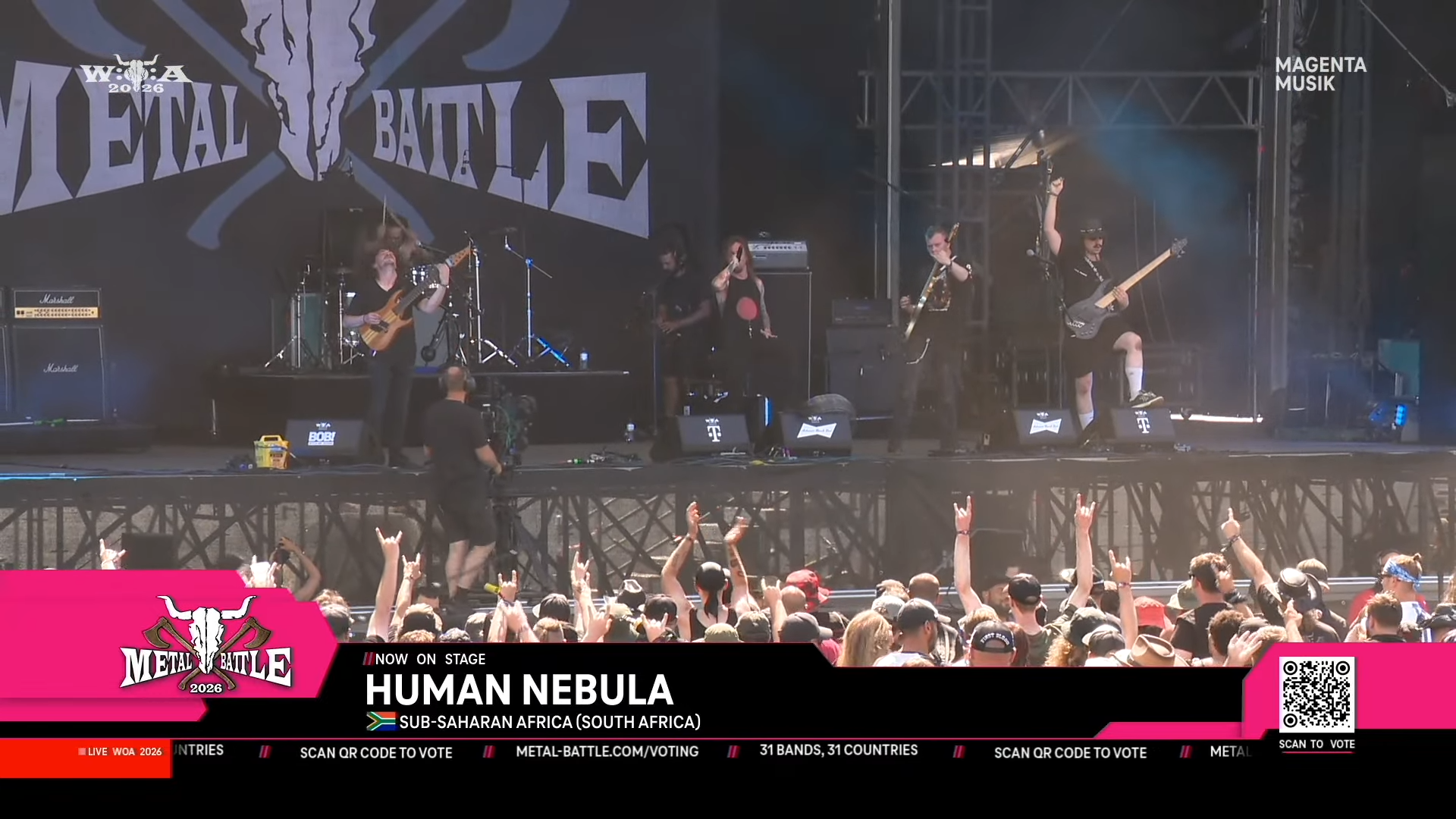
No one outside Africa can fully understand the pride of watching a band from this continent step onto a platform such as the Wacken Metal Battle. It goes beyond liking the band or hoping they win. You know what it took to get there before anyone even boards the plane: limited venues, long and expensive journeys between countries, little industry support and years spent trying to get people outside Africa to pay attention. Today, that band was Human Nebula, representing South Africa and the wider African region at Wacken.
It is also impossible to ignore the disparity between the number of European bands represented at the international Metal Battle and those arriving from other continents. The 2026 competition features 31 bands from five continents, divided between two stages over two days, but the geographical balance remains heavily weighted towards Europe. During the interview shown before Human Nebula’s performance, Alana “Lana” Britz, part of the Emalyth and Wacken Metal Battle Africa organising team, explained the scale of the competition’s Sub-Saharan African region. Its sub-Saharan competition alone covers seven countries: South Africa, Namibia, Botswana, Kenya, Nigeria, Angola and Mozambique. In terms of distance, it is the largest Metal Battle region and the one accommodating the greatest number of heats. That should force a serious discussion about representation. European bands deserve their places, but an international competition cannot properly reflect the global underground when enormous regions must funnel several national scenes into a single finalist. Africa has the bands, the audiences and the promoters. What it needs is room comparable to the scale of the territory and the work being done within it.
This year, that one place belonged to Human Nebula. The Pretoria band, who appeared on the cover of the second edition of AFRICA.ROCKS Digital Magazine, represented South Africa and the wider African region on the Headbangers Stage, and the support was visible long before they appeared. South Africans filled the livestream chat with their flag from the moment it opened, but they were far from alone. People from across the region that had shared the Wacken Metal Battle Africa journey joined them. The African finalists may have competed against Human Nebula in Johannesburg, but at Wacken that competition had become collective support. The flags arrived early, kept coming and quickly caught the attention of viewers from elsewhere. By the time Human Nebula walked onto the stage, people who had never encountered them before were already asking questions and waiting to see what had produced such a response.
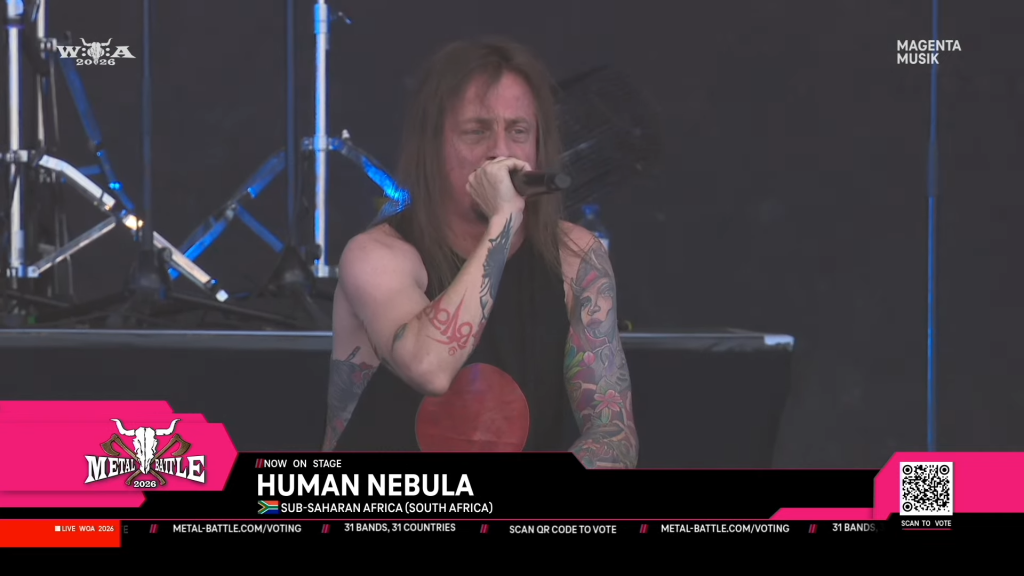
Human Nebula had the bad luck of being placed on the stage whose livestream sound had been causing problems from the start. The mix reaching viewers on computers and phones was poor, and the drums were barely audible when the band opened with the new single “Pantheon of Faces”. None of that was their fault, and thankfully the sound improved as the set went on. The band did not allow the technical problems to disturb the performance. Gareth Reed showed why he is such an effective frontman, speaking clearly to the audience between songs and repeatedly encouraging everyone to enjoy themselves. It was a simple request, and judging by the bodies moving in front of him, one that required very little persuasion.
The livestream chat was less welcoming in places. Keyboard warriors poured out the usual contempt, often reacting before they had given the band any real opportunity. I have spent long enough around metal to know how quickly some of its followers will attack the very genre they claim to love. Too many metal fans seem permanently ready to explain why another band, style or generation is doing everything incorrectly. For every hostile comment, however, there appeared to be another South African flag. The negativity never came close to overwhelming the visible support for Human Nebula.
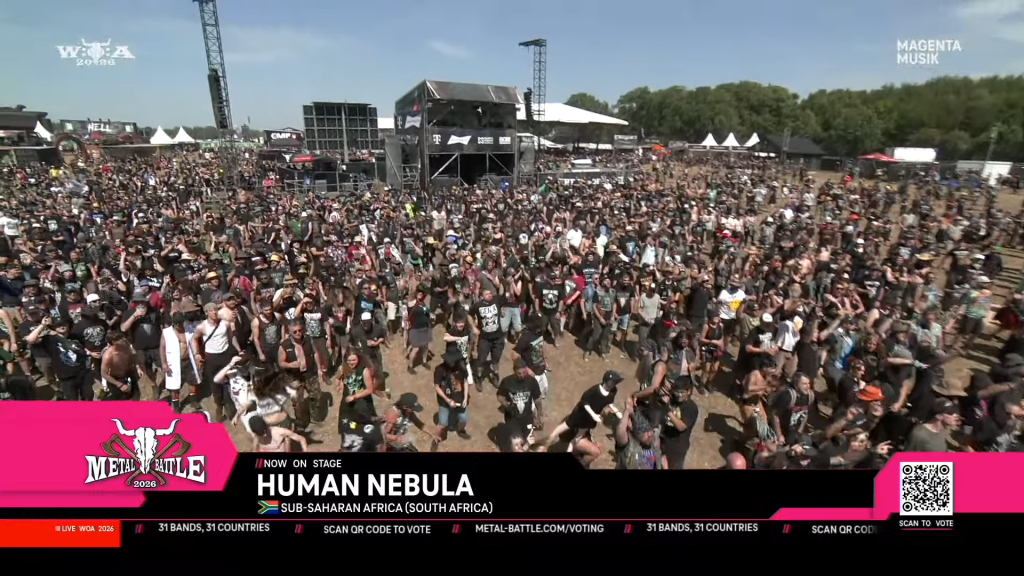
The people inside the venue gave the clearest response. They moved, shouted and entered the circle pits. Among them was Marty du Plessis of MoshMallow, who also shares vocal duties with Gareth Reed in Hiraeth. Marty did what thousands of people watching from Africa wished they could have done. She ran through the pits, screamed until her lungs gave out and supported the band that had travelled from their shared scene to one of the world’s largest metal festivals.
The livestream mix prevented the opening of the set from sounding as powerful as it should have, but it could not conceal the band’s composure or the reaction in front of the stage. Human Nebula looked comfortable there. They communicated, played through the problems and gave the audience enough reason to remain involved until the final seconds.
Africa is extremely well served when it comes to metal. Its scenes may still lack many of the opportunities and resources that other regions take for granted, but they already possess their strongest weapon: an audience that cares deeply and shows up when one of its bands needs support. Human Nebula carried the South African flag at Wacken, but they did not arrive alone. Behind them stood every country in the region, every band that entered a heat and every person who helped push African metal a little further beyond its borders during 2026.
Whatever happens in the final results, we move forward proud of Human Nebula and equally proud of everyone who entered the Wacken Metal Battle Africa this year. They all tried to take a piece of Africa to the rest of the world. For twenty minutes at Wacken, Human Nebula succeeded.
Vote for Human Nebula in the Wacken Metal Battle and support Africa’s 2026 representatives: https://www.metal-battle.com/voting/


