


Kenya is not the first country most outsiders name when they talk about African metal. That alone says more about the way the world looks at heavy music than it says about Kenya. Nairobi has punk, metal, alternative music, street art, experimental scenes, small rooms, self-made shows and artists working with very little infrastructure. Outside the capital, there are older stories too: oral traditions, local languages, folklore, village memory, spiritual practice and the kind of knowledge that was carried long before amplifiers entered the room.
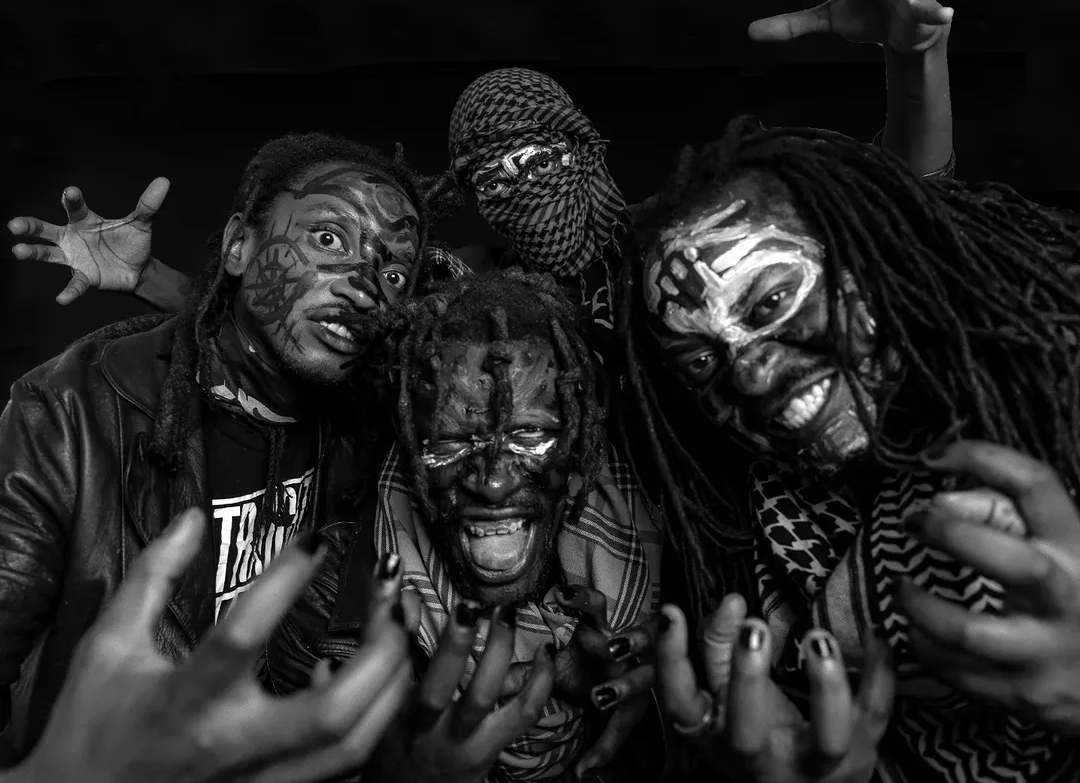
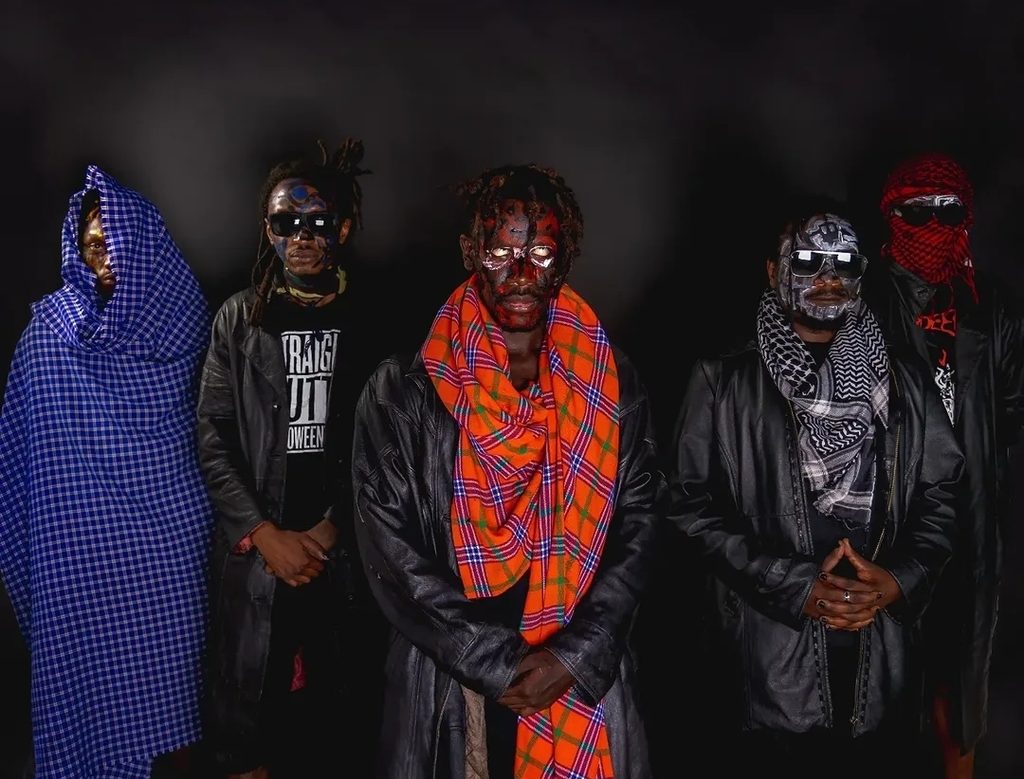
Chovu exist somewhere between those worlds. Their black metal does not come from forests in Scandinavia or the usual European theatre of coldness and ruin. It comes from Kenya, from Kajiado, from Nairobi pressure, from folklore, from the need to make space where none had been prepared for them. The band call it shamanic black metal, although that phrase only goes so far. In their world, the ritual is physical, social and political. It is there in the corpse paint, in the chants, in the local words, in the anger, in the stories, and in the fact that a band like this has to build almost everything by hand.
For this AFRICA.ROCKS cover feature, Preston Samanda Madoo, also known as The Fell Nyawawa of the Boreal Valley, spoke about Ufalme Wa Mali, Kenya, black metal, youth revolt, language, struggle, and the people behind Chovu.
“Chovu represents the forgotten tales, the lore in what shapes a typical Kenyan community. Growing up, lessons and lectures were given through storytelling and folklore. Nothing stood as just entertainment. It was all basically a lesson to learn. We try our level best to use this technique to give our sound a stand in the current world, while also giving us a platform to pioneer a new feel about Kenyan metal music.”
That sense of invention runs through the band because there was no ready-made structure waiting for them. Extreme metal in Kenya is still a small space, and black metal carries an even heavier set of assumptions. For Chovu, the lack of a path became part of the sound.
“The whole art exists under struggle, if I can be honest. If there existed a space in Kenya where extreme metal was the norm, then we would not have become what we are. It took aggression, fear and being misunderstood to shape who we are. It is funny to think that our themes are discredited by colonisation, and we exist in an era where the world wants to eat the tyrants, but we still cannot belong. The journey has proven to be equally heavy even to the members involved in the project. It is something greater than us that needs our lives as the catalyst for its growth.”
“This album had no budget, just a dream and a call for help, and more than 50 people made it happen”
Ufalme Wa Mali sounds like a record made through many hands. Preston does not describe it as a private statement owned only by the band. He speaks about it as something shaped by fans, conversations, supporters and people who gave what they could. Some ideas came from daily encounters. Some came from friends. Some came from the practical generosity of people who lent instruments, donated funds or helped the band rehearse: “This album does not belong to us, the band. It belongs to the fans and the people we interact with, theatrically speaking. A song like ‘Mweka Hazina Ni Nani’ came from words spoken by an Uber driver. The concept behind ‘Majanga’ came from a lady called Cynthia Ruto, who, on the night of recording, insisted on the story of Patrice Lumumba and his struggle. The drums and stringed instruments in ‘Mali’ were borrowed from Maasai Mbili Studio, who let us use their instruments to create. The funds for the album came from individuals like Pasi Toivonen, Michael Grego, Finnish and American supporters. The drums used to rehearse were from Nilla Meri, and plenty more supporters played their role. This album had no budget, just a dream and a call for help, and more than 50 people made it happen. I hope one day to mention all of them. The general concept, though, came from the evolution of the band to date. It was the need to involve more African countries in our theme and the need to grow as a force together.”
Black metal has often drawn from European ideas of darkness, nature, ritual and isolation. Chovu take some of that language and move it elsewhere. Preston is drawn to black metal’s rebellion and provocation, but also to its ability to connect sound with land, death and memory: “We have a lot of sight at the rebellion and provocation of the new world order that black metal brings in terms of the message. Equally, the sound it portrays connects the listener to the land and the dead memories of the soil. We appreciate the dark spiritual nature it holds.”

“No one expects Africans to make metal”
Outside Africa, metal from the continent is still too often treated as a surprise. Chovu have no interest in simply proving that Africans can play metal. Preston wants the band to be heard for its method, its sound and its place inside a larger African movement. “No one expects Africans to make metal. No one believes Africans can make metal easily until they experience it. I would love not to prove to them that we can, but to create a sound that does not necessarily define us as metalheads based on our race, but from a distinct technique. A sound that finally puts this continent on the map, because we have so much talent on this continent.”
“If you are yourself in this hellhole, you will emerge stronger and more lethal”
Although Chovu are originally based in Kajiado, Nairobi enters the band through pressure. The city gives and takes. It sharpens people, exhausts them, pushes them towards escape and forces them to adapt. In Preston’s words, Nairobi feeds the band’s anger and its need to break away. “Chovu is originally a band based in Kajiado, but a lot of its creations are influenced by the Nairobi lifestyle of wanting a way out, back to the forest. Nairobi fuels the anger and hate and the need to tear the chains. Nairobi will do justice to any artist and make them resilient, unless you play by its rules of deception. If you are yourself in this hellhole, you will emerge stronger and more lethal.”
Kenya’s recent years have also changed the air around young people. Anger over taxes, corruption, police violence and the cost of living has brought people into the streets. For Chovu, that atmosphere is not separate from the music. Preston sees the current revolt as something that speaks to feelings the band had already been carrying. “Chovu found itself an eccentric existence and an ignored creative creation from way back. This revolution happening speaks a lot about how we have felt for a while. It is sad because these are things we battled and battled, but they did not make sense before. Right now, it is happening in itself, that the masses are tired of the pigs eating at the expense of their blood. But the main root of the problem is deep down in the minds of the tyrants who are still colonised in mind. We stand with the revolution of the youth, and we hope they will not give in.”
“trust me, it is better that the government does not know about us that much”
Heavy music is not yet part of Kenya’s mainstream cultural planning, and Preston is not sure attention from the state would be a gift. For him, the distance from official structures has its own danger and its own protection. “Heavy music still does not have a space in the current Kenyan plans for a brighter future. It should. Heavy music has brought people together, changed lives and given opportunities. But trust me, it is better that the government does not know about us that much. They ban anything that is against their colonial beliefs. They just do not know we exist, and therefore have no part to play in our destruction.”
In metal, anger can easily become performance. For Chovu, the performance is still tied to something lived. The corpse paint, symbols and ritual language are not just decoration. Preston sees them as a way to remove ego and let the band enter a different state on stage. “The corpse paint really helps to remove the human ego boundary. Then all we can do is express ourselves fully. The rage we carry, this band gives a space in its setlist for that rage to bleed out. Existing in this band space allows emotions to occupy the room and allows the mind to let go of what it knows and to learn step by step.”
“We literally live in villages or among the tribes that we borrow our concept from”
The spiritual side of Chovu is matched by a very physical sound. The band do not approach ritual as something distant or aesthetic. Preston says they live close to the villages and tribes whose stories and sounds they borrow from, which makes the work feel closer to possession than performance: “We create based on experiences and sounds we have been through. We literally live in villages or among the tribes that we borrow our concept from. It is more like possession than anything. It gives us a chance not to pretend, but to let the body imitate what it has learned. It is powerful and lethal, because you can lose yourself in the midst, but we love what we do and we respect who we are.”
Language is part of that ritual. English can explain certain things, but local words carry sound, depth and force differently. For Chovu, using local language means entering the story more fully and giving the music another kind of weight. “The local language makes the whole ritual complete. You feel every word with its pronunciation, depth and aura. The words seem alive, and thus our artistic sides awaken. Learning the local language for the project allows us to be part of the community as we borrow one of their tales. It gives us a bridge to fill the gap, so both sides can see.”
Chovu are part of a wider African metal map where bands often know about one another from a distance before they ever share a stage. Preston points to Botswana with admiration, and also to the Kenyan scene itself, which he sees as promising despite its limits: “The Botswana metal scene is very admirable. I like their unique approach, which bleeds into the fans, who are also very brilliant. I love the Kenyan scene, which shows promise despite the shortcomings. The southern side of Africa has so much talent. People just have to see it to know what it is.”
Kenya’s place in that story is still under-recognised. International attention around African metal often goes first to South Africa, Botswana or North Africa: “Kenyan metal is alive. It just needs more foreign bands playing there to challenge the existing scene, plus more Kenyan bands travelling. More resources and support for the scene, plus a community that will keep all of us together, a deep, almost occultic community. There is talent and promise, just a foundation left to solve.”

“We cannot sell an idea without seeming like a religious sect”
Keeping a band active in Kenya is hard in practical terms. Shows are scarce. Bands often have to organise their own events. Studios can be unwilling to host them. People can be afraid of association because of what the art appears to represent. The financial side is just as difficult, so Chovu have had to think about the band as a brand without letting that replace the art. “If you want to survive in Kenya easily, do not do black metal. We do not get shows, we make them ourselves. We cannot sell an idea without seeming like a religious sect. Studios will refuse to let you practise in their space even if you have the money. Friends will be afraid to associate with you because of what your art stands for or portrays. Shows do not pay well. If they do, it may not happen again, maybe only once. It is fun to struggle. The worst part is to expect. It is more about self-growth. For money, focusing on the brand allows us to think in terms of generating merch in all forms.”
The local response is complicated. Preston says people outside Kenya sometimes seem more open to Chovu than people at home, although he also makes clear that the Kenyan scene has open-minded people. The band’s theatrical side can draw in even non-metal audiences, but the music itself can still scare people away.
“Another sad thing is that people who are not from Kenya seem to like it more than the locals. It is not about the scene here, because the scene has a lot of open-minded people too, but colonisation found its way. It is literally everything that moves and breathes. Our theatrical approach tends to give us a higher-up scenario, since anyone, even non-metalheads, gets to enjoy every bit of the narration. But when the songs start, they want to leave. It scares them and makes the theatrics feel more haunting.”
Behind the corpse paint, the symbols and the stage force, Chovu are made of people with ordinary obsessions and strange humour. Preston lists nerds, gamers, cinephiles, anthropology enthusiasts and readers. The darkness is real in the art, but it is not the whole of the people making it. “This band has a lot of nerds, gamers, cinephiles, anthropology enthusiasts, readers… Most of the so-called evil behind the sound is the goofiest, most lovely character ever. People who do not bury their inner child, but let it exist among the ruins of adulthood.”
“A lot is left to be conquered, but most important is to master an original sound and theme for the future of Kenya and Africa”
After Ufalme Wa Mali, Chovu have proved something to themselves. The album pushed the band’s borders outward, both in concept and in collaboration. Preston sees more to do: another record, touring, and the long work of mastering an original sound for Kenya and Africa. “Ufalme Wa Mali proved that borders need to be pushed. Ideas need to come from all over, with no boundary included. Our plan is to record another masterpiece and tour until our toes bleed. A lot is left to be conquered, but most important is to master an original sound and theme for the future of Kenya and Africa.”
Chovu are not asking for permission to exist inside black metal. They are already doing the work, with the resources they can gather, the stories they can carry, and the people willing to stand near the noise. The rest is distance, stubbornness and time.
Originally published in the June 2026 issue of AFRICA.ROCKS Digital Magazine.


