

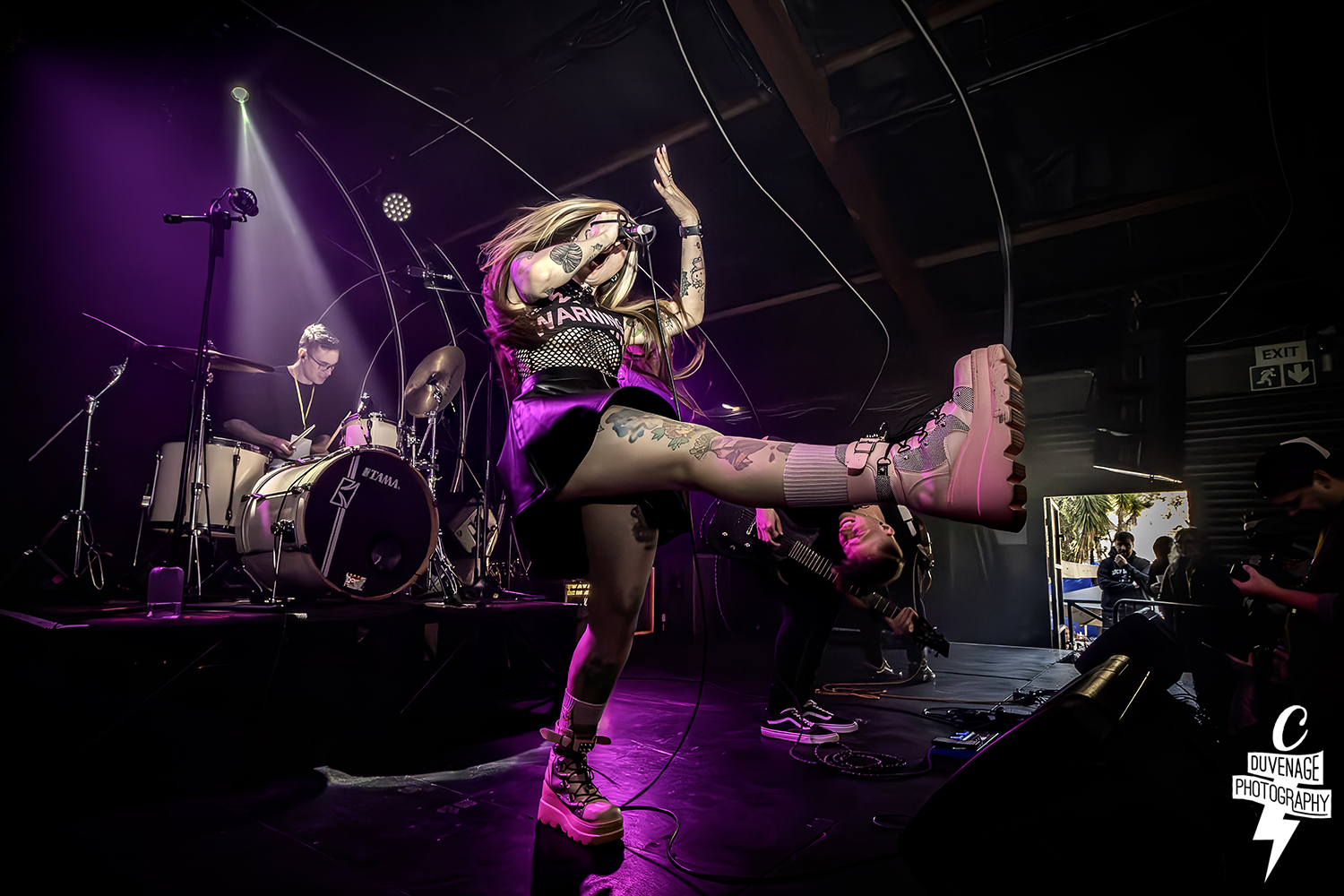
MoshMallow have had a busy 2026. The Pretoria metalcore band won the Wacken Metal Battle Pretoria heat at Railways Cafe and went on to the Africa final at Sognage, while ‘Hey, Little Rotting Rat’ arrived during the same period.
AFRICA.ROCKS caught up with vocalist Marty du Plessis to look back at how the band came together, the year they have just had and where she wants to take MoshMallow next.
“I’m like a fucking wild horse; you can’t tame me, and I will never allow myself to stagnate.”
Before MoshMallow, who was Marty, and what experiences led you to start this band?
Before MoshMallow, Marty was just another standard clean vocalist for our band, Hiraeth. I love that band and we’re still active. It fulfils a different part of me, but it didn’t fully fulfil me. For a long time, I felt incredibly out of place in the metal scene. I’m fully aware that much of that came from my own insecurities rather than necessarily reflecting how anyone else perceived me, but the feeling of not quite belonging was very real.
I knew that, in order to gain a sense of belonging, I needed to challenge myself. If I had to psychoanalyse myself, I think part of me needed to prove that I could do this independently and that I could build something valuable, something meaningful and something worth fighting for. Somewhere I could exist unapologetically as myself, feminine and all.
“I always felt like I had to mimic masculinity in order to be respected, and I just didn’t want to.”
You created MoshMallow as a space where femininity could exist openly alongside heavy music and harsher vocals. What were you unable to express in your previous musical experiences?
I felt like I couldn’t fully express my femininity. I always felt like I had to mimic masculinity in order to be respected, and I just didn’t want to. When I don’t want to do something, I simply won’t. I’m stubborn like that and will almost certainly always do the opposite of what I am told.
We are constantly pitted against our male peers and measured against masculinity, male perspectives, male bodies and male capabilities, to the point that we forget that femininity is powerful too. Often, people equate femininity with weakness, and it’s such a bizarre perspective to have. I want to help change and reshape that perspective.
MoshMallow have described their music through terms such as ‘pinkcore’ and ‘girlypop metal’. What do those descriptions mean to you beyond the visual side of the band?
On a technical level, I use ‘girlypop’ to describe a kind of vocal delivery that isn’t quite melodic singing but isn’t quite rapping either. It’s definitely not extreme; it sits somewhere closer to spoken word, but with a lot of attitude and character. That’s something I often incorporate into my songs.
Metaphorically, ‘girlypop’ is the realm we find ourselves in: a world glittered in pink, filled with unicorns, candy floss and all these hyper-feminine, almost surreal elements. It’s not simply about me wearing pink on stage or creating pink and girly visuals. It’s a literal realm I step into through the music, one that exists beyond the reach of most people.
“I was looking for an all-girl line-up, but unfortunately that is extremely difficult to achieve simply because metal music is still very male-dominated.”
How did the current line-up come together, and what did each member bring that helped turn your original idea into a functioning band?
The current line-up came together because I needed to find like-minded musicians who would understand what I was asking of them. If I’m honest with you, I was looking for an all-girl line-up, but unfortunately that is extremely difficult to achieve simply because metal music is still very male-dominated. However, I did find the best dudes to do this with, and they fully embrace and understand the brief!
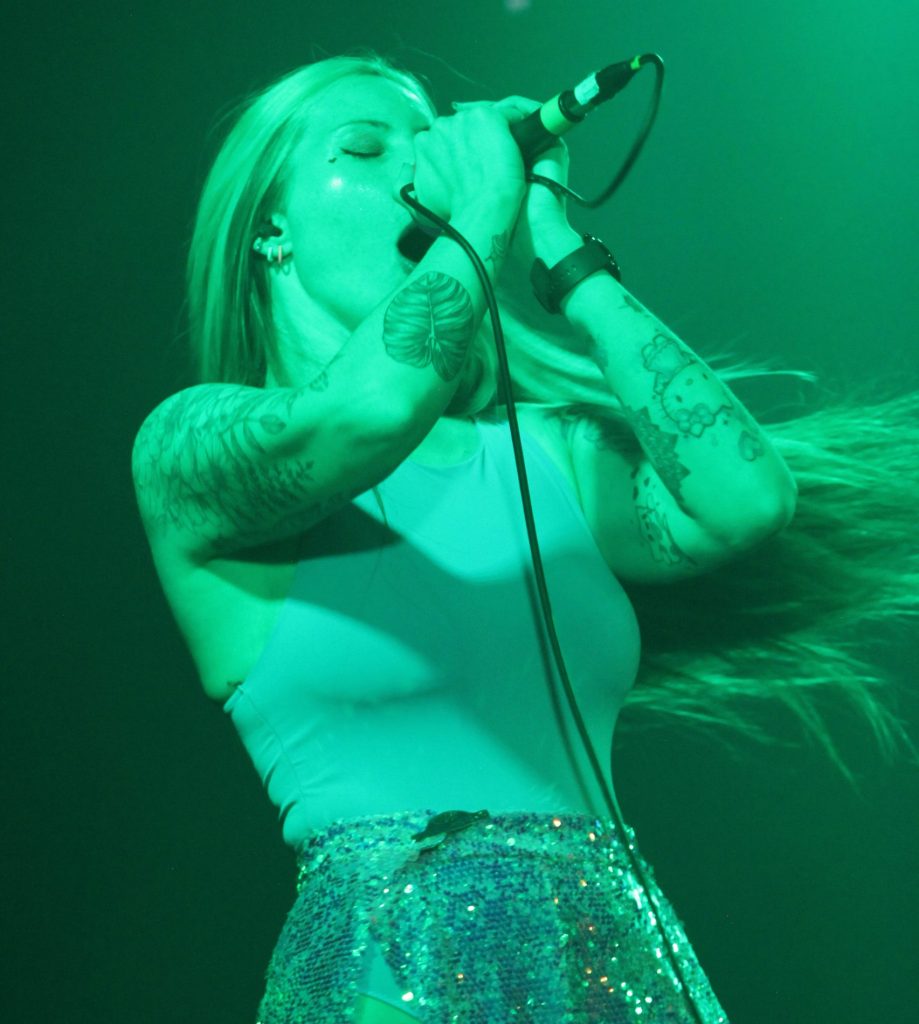
Part of starting the band involved developing your harsh vocals. How did you approach that process, and what have you learned about your voice since MoshMallow began?
I have a Type A personality! This means that I am efficient, effective, admin-orientated, punctual and extremely competitive and determined. Therefore, if I decide I want to do something, I’m going to fucking die trying. That’s what the process felt like, and still feels like, in my extreme vocal journey.
Because I had already been properly trained in clean vocals for many, many years, learning extreme vocals wasn’t necessarily difficult from a technical or anatomical perspective. I understand the mechanics and logistics of the voice, so learning to growl came relatively naturally. However, in the same breath, I’m really struggling to get my brain and body to understand false cord screaming.
It’s almost as though the clean-vocalist part of my brain is desperately trying to stop me from high screaming because it goes against everything I’ve spent years learning about how the voice should work. I need to learn how to compartmentalise the two and trust the technique, switch off that survival instinct and allow my body to understand that this is a different form of vocal production.
I know how to approach extreme vocals safely without damaging my voice, but I don’t think my body fully trusts me yet after years of being trained to prioritise clean vocal technique. It’s a journey, for sure.
What is ‘Hey, Little Rotting Rat’ about, and why did it feel like the right song to introduce this stage of the band?
‘Hey, Little Rotting Rat’ is about someone I despise to my core, someone who stole years of happiness from me. This person is neither a family member nor a former lover; the song is instead rooted in the experience of placing your trust in someone who never deserved it in the first place.
It explores the betrayal that comes from offering someone your hand when they are hanging from a cliff, only for them to use your kindness against you: throwing you over the edge, climbing to safety themselves and walking away without a second thought.
It was the right song to introduce this stage of the band because, visually, I could be very playful with it, but its meaning is not soft at all. Exactly like MoshMallow!
The video places the band’s bright, playful visual identity beside something much uglier and more aggressive. How did you develop that contrast, and how closely does it reflect the meaning of the song?
That’s exactly what I wanted to portray with the music video! I wanted it to feel playful, fun and silly, and I wanted to emphasise that I am practically infantilising this individual. However, lyrically and musically, I am much more straightforward and brutally honest about my feelings.
There are a lot of Easter eggs and metaphors hidden in the music video as well. Even having Gareth feature as a guest vocalist on the song has a deeper meaning, because this same person dug their rotten little claws into him pretty badly too.
‘Hey, Little Rotting Rat’ was released immediately before the Wacken Metal Battle Pretoria heat. Did that deadline affect how the song and video were completed?
Not at all. We filmed the video in January 2026 and were well prepared to release it strategically before our Wacken heat.
“it was important to me to prove to the boys, and to everyone else, that girls can fuck shit up just as much.”
Take us through the night at Railways when MoshMallow won the Pretoria heat. At what point did you realise that the audience had fully connected with the performance?
That was certainly a night to remember. Every band brought their A-game, and I’m incredibly glad we won because it was important to me to prove to the boys, and to everyone else, that girls can fuck shit up just as much.
Seeing all the stage dives and feeling the incredible energy from the crowd put me in a state of pure euphoria. I was feeding off their energy and giving it right back to them, creating this incredible push-and-pull between the band and the audience.
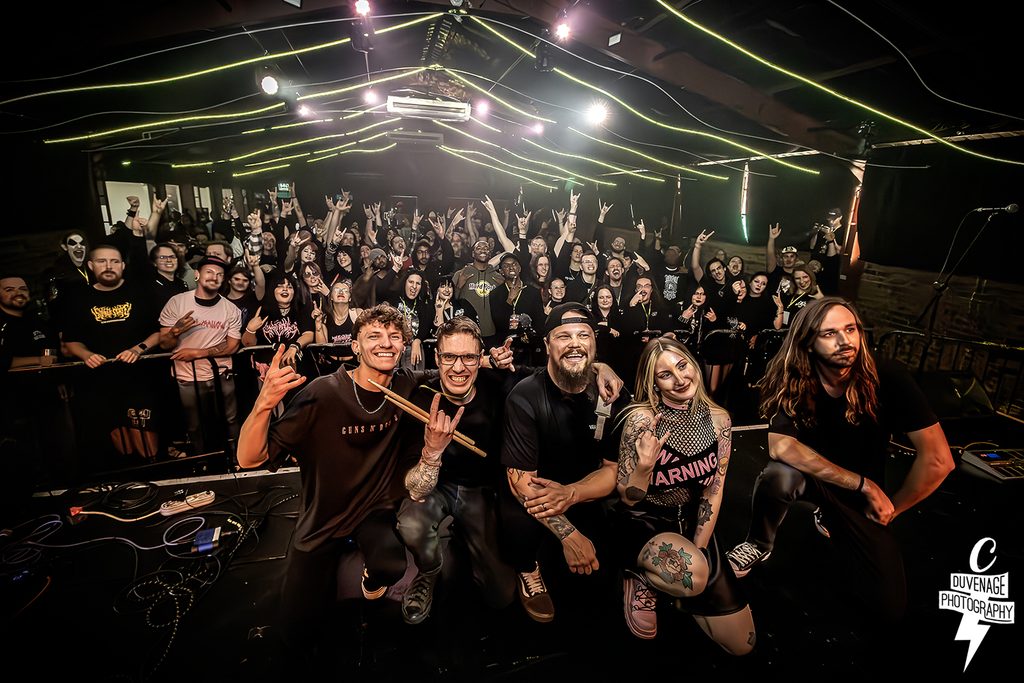
MoshMallow opened the Africa final against bands arriving from several countries and very different metal traditions. What did that night show you about the wider African scene?
It was a powerful reminder that Africa’s wider metal scene is vibrant, diverse and thriving. It also showed that metal from all kinds of traditions, cultures and perspectives can come together as one, united by a shared passion for the music and a celebration of the continent’s incredible talent. It truly felt like a continental feast of metal.
Although Human Nebula ultimately won the competition, what did MoshMallow take away from reaching the final, both musically and as a band?
Because Human Nebula are essentially our brother band, we had always wanted them to win and were rooting for them. However, as a band, we collectively learned that day that we could draw the very first slot and, instead of allowing disappointment and fear to take over, we could come together, embrace the moment and make a commitment to have the most fun we’d ever had and give it absolutely everything we had.
“women can dilate 10 cm and shit out a human being, but heavy music is where y’all draw the line about our capabilities? Okay.”
Do people ever underestimate the heaviness of the band because of its name, colours or presentation? How do you respond when the visual identity is treated as more important than the music?
Absolutely. This stretches far beyond MoshMallow. Just being a woman means you will most certainly be underestimated in various contexts.
People often respond with something like, ‘Wow! I didn’t know girls could even do that,’ and I usually think to myself, ‘Yeah, well, women can dilate 10 cm and shit out a human being, but heavy music is where y’all draw the line about our capabilities? Okay.’
Our visual identity is important to us too, but it doesn’t determine how heavy we are or what we’re capable of musically.
“I love this community, but loving it doesn’t mean I’m going to excuse its problems.”
What have your own experiences taught you about how women are treated within the South African scene?
Even though the metal scene is ten times better and safer than most other musical scenes, misogyny and discrimination against women and minorities are very much alive. I’m not naive, and I’m never blind to it. I certainly always notice. I. Always. Notice. I love this community, but loving it doesn’t mean I’m going to excuse its problems.
What are you currently working towards?
A larger run of live performances! More songs! Heavier songs! And always a cheeky music video concept brewing in the back of my mind.
When you imagine MoshMallow several years from now, which parts of the band’s current identity must remain, and which parts are you interested in pushing somewhere new?
The aesthetic of the band should definitely remain, but I’m completely open to exploring and evolving musically, whatever that may look like.
I’m open to experimenting with different genres, leaning into heavier roots, incorporating more modern metal elements or pursuing whatever else we discover along the way and genuinely want to create.
I’m like a fucking wild horse; you can’t tame me, and I will never allow myself to stagnate.


