


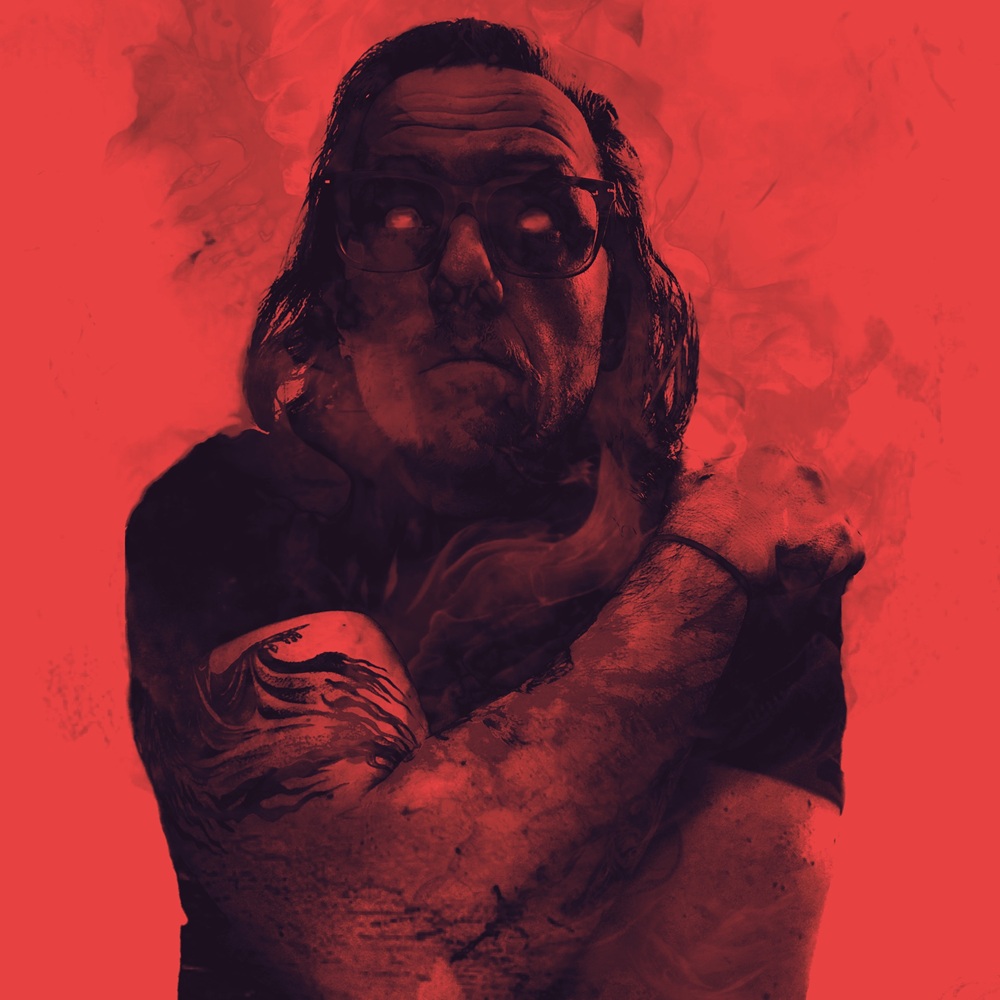
Abitha began after a rupture. In 2021, Rob Shomaker’s relationship with faith changed completely, forcing him to confront the religious structure that had shaped much of his life. What followed was not a neat reinvention, but a long process of pulling apart old certainties and finding a way to speak without them.
Based in Lehi, Utah (USA), Shomaker created Abitha as a one-man project, handling the writing, recording, mixing and mastering himself. The debut EP, Songs of Perdition, carries the weight of that private upheaval through heavy riffs, melodic hooks and a clear interest in bands that challenge religion, including Ghost, Behemoth, Iron Maiden and Bad Religion.
The songs move through belief, doubt, doctrine, corruption and release, with Shomaker using metal as a way to say things that had no place in his former life.
“Abitha would not exist without the faith crisis that came before it.”
Abitha comes from a very personal break with organised faith. When you started writing Songs of Perdition, how much of it felt like looking back at what you had left behind, and how much felt like building a language for who you are now?
Abitha would not exist without the faith crisis that came before it. My high-demand religious upbringing conditioned me to think in only one way. Once all of that unravelled, I needed a way to express this massive change in my life, and music became that outlet.
You describe 2021 as the year when your view of faith changed completely. What was the first song or riff that made you feel music could carry that story properly?
The first song I wrote is actually on the EP. It is called “Great Men”. It was originally called “The Prophet”, and it was about Joseph Smith. I later changed the lyrics to include examples of other men who are corrupt and terrible. The riff in the chorus was the very first metal riff I wrote.
The project is built around heavy riffs, melody and hooks, with Ghost mentioned as an influence. What did you learn from that balance between dark subject matter and songs that still stay in the listener’s head?
One of my favourite horror movies is Drag Me To Hell. It does a great job of keeping things light while dealing with the idea of impending damnation. That balance is how I want to approach my music.
I think that when you are singing about death, corruption and subjects like that, catchiness helps make it memorable. Also, I am a very funny person at my core and I love to joke, so I could never write songs that are completely serious all the time.
You recorded, mixed and mastered the EP yourself at home. How did that affect the way Abitha sounds, especially when the songs are tied to such a private part of your life?
It was a massive learning curve. Honestly, all I can say is that I am glad it turned out to be listenable. I do not think I was experienced enough at mixing to add any intentional emotion through that side of the process. I was too focused on learning how to do it.
“Anyone who is still devoutly religious will never understand why I left religion and wrote songs like this. In their eyes, Satan got me.”
The songs deal with belief, doubt, old doctrine and liberation. Looking back at the finished EP, what part of that personal journey is still hardest to put into words, even through metal?
Anyone who is still devoutly religious will never understand why I left religion and wrote songs like this. In their eyes, Satan got me. I hate that. I hate that it is still so surface-level for them. I wish I could write a song that makes them see. Thanks for letting me do this. I also want to give Globmetal Promotions a massive shoutout for allowing me these opportunities. They are incredible. Check them out.
Buy/Stream Songs of Perdition on Bandcamp.


