

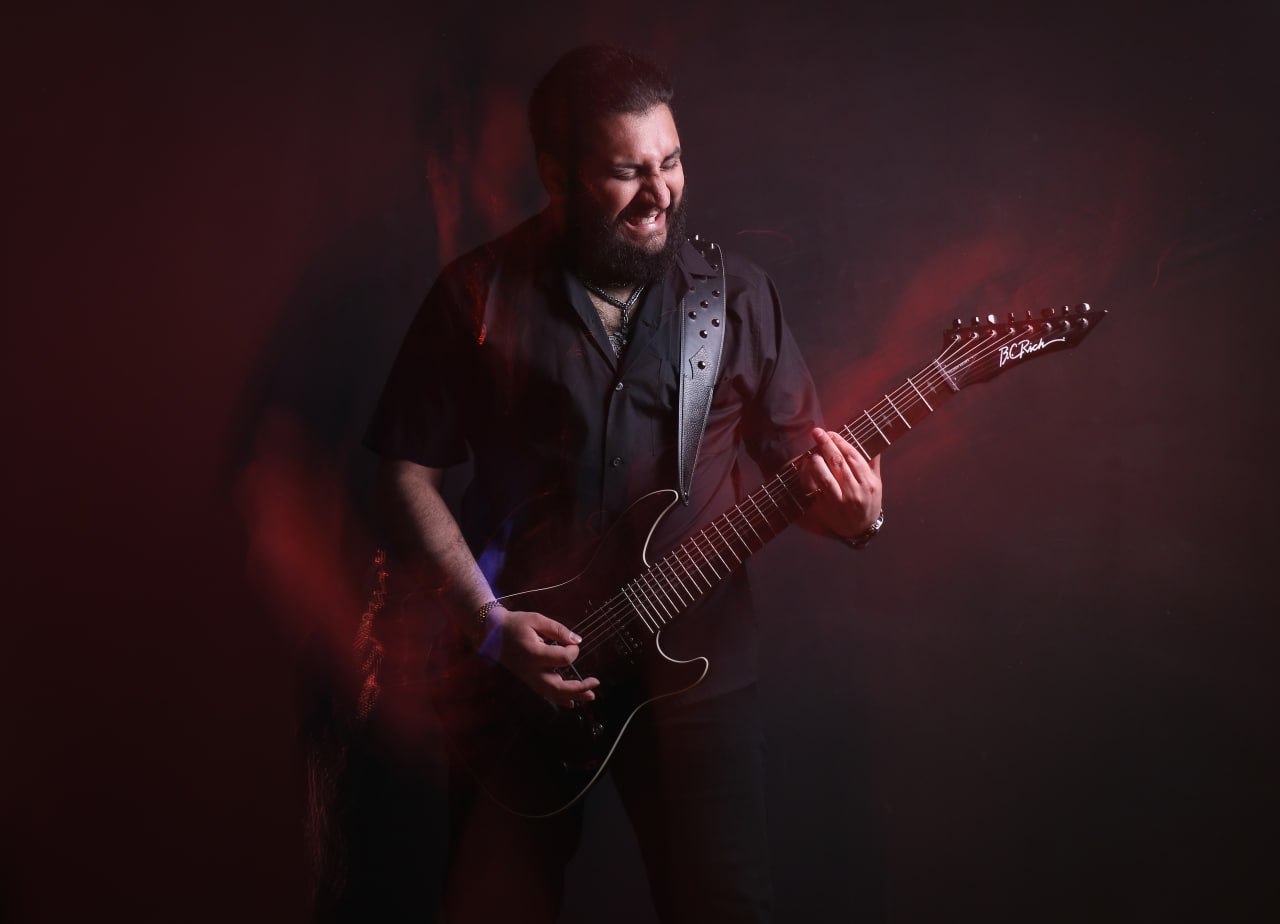
Pooyan Ahmadi keeps several projects active at once. Depreciation leans into decay and introspection, Bloody Sadism is rawer and more aggressive, and his solo work gives him room for more personal and experimental ideas. Around all of it, Pooyan Records Productions keeps the work in his own hands.
In Iran, that control sits inside a much harder reality. Visibility, distribution and daily life all come with limits that many outside the country only understand from a distance. Ahmadi does not romanticise that reality. He speaks carefully, and only as far as he can. For him, the restrictions are real, but so is the commitment of the people who still live through metal there.
In this interview, Ahmadi talks about choosing the right project for each piece of music, the link between sound and artwork, the effect of instability on his creative life, and where Depreciation is heading next.
“Instability changes how you create, how you think and how you prioritise your energy.”
Metal Archives has you down as “everything” across a lot of projects, and you also run Pooyan Records Productions. How do you split your time, and what part of the work do you take the most seriously?
I have never really separated roles in a traditional way. Everything I do is part of the same vision, whether it is composing, producing or running Pooyan Records Productions. Time management becomes more about urgency than scheduling. Whatever feels most essential to express at a given moment gets priority. That said, I take the creative core, writing and shaping sound, the most seriously, because everything else grows out of that.
You have distinct outlets like Bloody Sadism, Depreciation and your solo project. When you are writing, how do you know which project a song belongs to?
Each project has its own identity and emotional language. When I write, I do not consciously decide where a track belongs. It reveals itself through its atmosphere and intent. Bloody Sadism is more aggressive and raw, Depreciation leans toward decay and introspection, and my solo work is more personal and experimental. The sound itself dictates the destination.
You handle visuals as well as music. What are you trying to communicate with the artwork, and how do you keep it tied to the sound without turning it into branding?
The visual side is an extension of the same inner world as the music. I try to translate sound into imagery without explaining it too directly. It is not about branding. It is about creating a parallel experience, something that resonates with the music instead of representing it literally. Ambiguity is important.
With Iran under attack and daily life shaken up fast, how has that affected your music life in real terms? Only share what is safe.
It inevitably affects everything, even if indirectly. Instability changes how you create, how you think and how you prioritise your energy. Sometimes it limits possibilities, but it also intensifies expression. I try to focus on what can still be done and keep creating within those boundaries.
What is it like trying to live metal in Iran, as someone making it, releasing it and also existing as a fan? What do people outside Iran usually misunderstand about that reality?
Living metal in Iran comes with constant limitations, especially when it comes to visibility and distribution. But it also creates a different kind of dedication. People who are into it are deeply committed. Outside Iran, many assume it does not exist, or that it is purely underground in a romanticised way. The reality is more complex and often more restrictive.
What are you working towards right now, and what do you want people to understand about where your sound is going next?
Right now, I am working toward refining the essence of my sound, stripping away anything unnecessary and pushing the emotional intensity further. The next phase is less about expanding outward and more about going deeper. I want people to feel that shift, something more focused, more honest and more extreme in its own way.
Buy/Stream Depreciation’s music on Bandcamp.


