


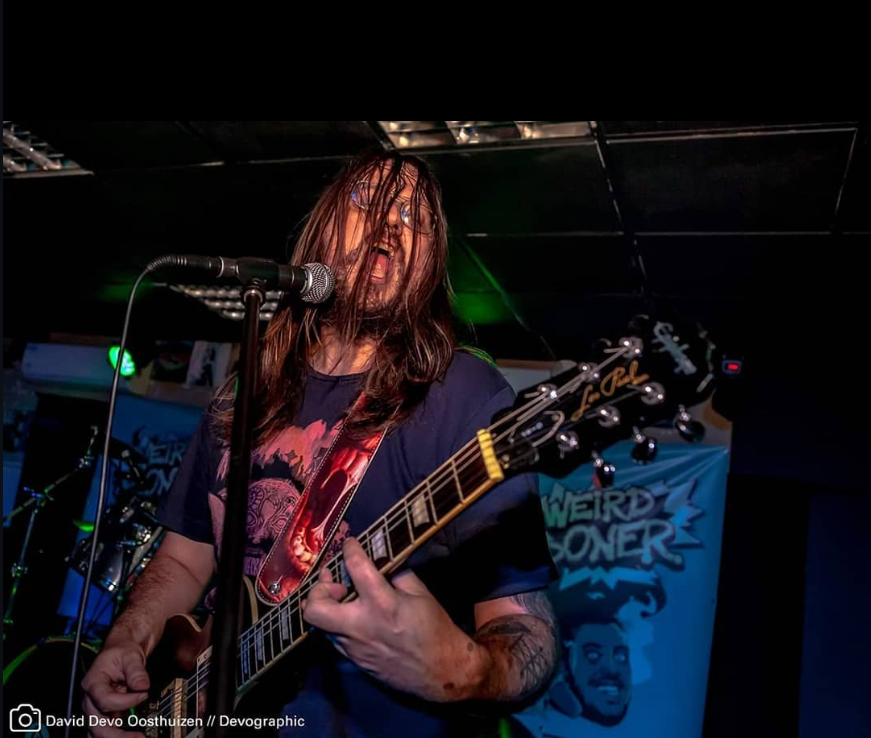
Tim Harbour did not begin as a guitarist. He began as a singer, and the instrument came in when he wanted to accompany himself. That path eventually led him into composition, performance, teaching, recording and a long list of projects, but it still starts with a simple shift from voice to strings.
“I have been singing and playing guitar since high school. I started as a singer in high school bands, playing covers of bands like Mr. Bungle, Muse, Electric Six and Spineshank. I also sang in school choirs, which got me excited to pursue singing lessons and perform solo gigs. I decided to pick up guitar shortly after so I could accompany myself. I went on to study classical singing at Wits from 2005 to 2008, taking guitar as a second instrument and majoring in both performance and composition. I later went on to study my master’s in music composition, also at Wits, between 2013 and 2016.”
His current setup in Mad God is split across three guitars, with two of them living in C standard.
“I currently play an Epiphone Les Paul, black with gold hardware, tuned to C standard for Mad God. I also have a Mexican Fender Roadhouse Strat, sunburst with white Texas Special pickups, which also sounds amazing and is set up for standard tuning. My final electric guitar is a red Ibanez AX6, which is also set up in C standard tuning and was the previous guitar I used for Mad God before I got my Epiphone. I’ve always been a fan of second-hand instruments. My method was to trawl guitar shops for unique instruments that have a great feel and sound.”
“I am a huge fan of lead playing and take an improvisatory approach to my playing.”
His influences reach well beyond one scene, but metal is still where he starts when describing how he plays: “My playing style has been heavily influenced by metal music. As a young kid, I was a huge fan of bands like Iron Maiden and Black Sabbath, but I am also a fan of more extreme styles of music like death, doom and black metal. Bands like Death, Electric Wizard, Dissected, Church of Misery, Sleep, Cannibal Corpse, Atheist, Wolves in the Throne Room, Isis, Cryptopsy, Converge and more have all influenced my playing style in different ways. That said, I have also loved punk music, ska, jazz, blues, funk, classical, prog, fusion and basically anything that pushes technical boundaries in different ways. The aggression of punk bands like The Flatliners or A Wilhelm Scream, the harmonic complexity in bands like Streetlight Manifesto, and the virtuosity of jazz artists such as Miles Davis, John Coltrane, Ornette Coleman, Jaco Pastorius and Pat Metheny have all had a huge influence in developing a variety of styles and feels in the music I have created. I am a huge fan of lead playing and take an improvisatory approach to my playing. I don’t like writing solos, and I always play unique solos in every show and recording I have ever done. I love the freedom and uncertainty of never quite knowing what I am going to play, which also makes the experience unique every time we perform.”
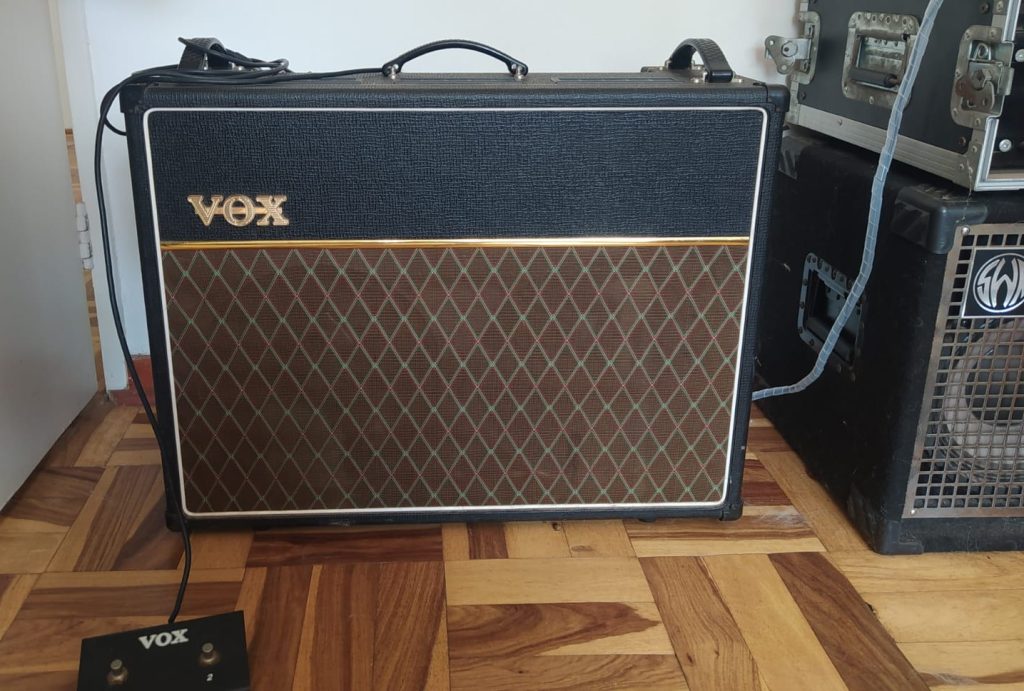
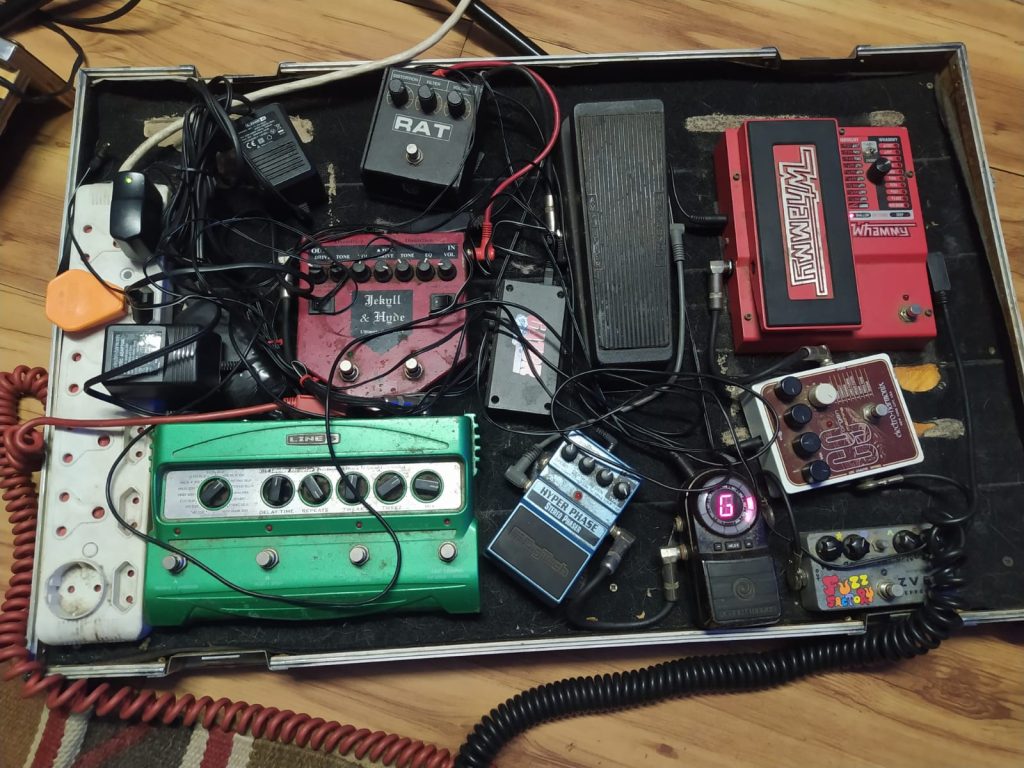
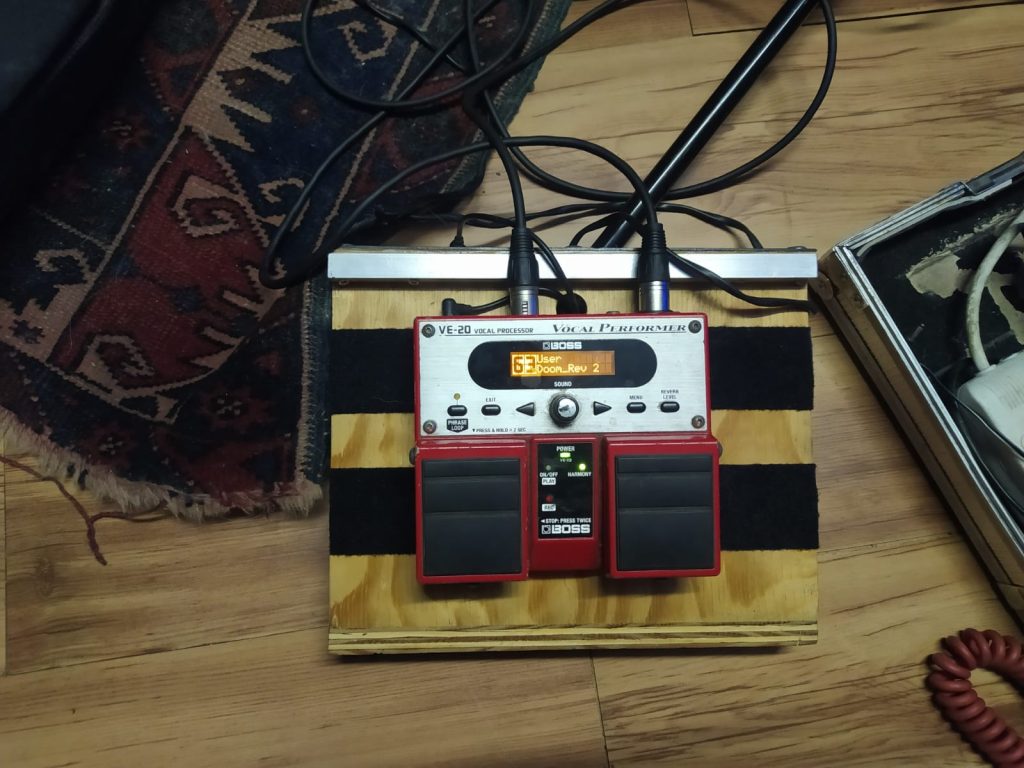
That same mix of directness and variety carries into the rest of his rig: “I use a Vox AC30 as my amp, but I have also made use of a Marshall, and I also played a Marshall JCM 900 on the latest recording. I have a variety of pedals for my guitars. The most commonly used ones are the Proco Rat 2 and the Line 6 DL-4 digital delay unit. I also use a Dunlop Cry Baby Wah alongside a Digitech Whammy, an Electro-Harmonix C9, a Zvex Fuzz Factory, an Ibanez Hyper Phase and a Planet Waves floor tuner. I also have a Jekyll and Hyde Distortion pedal, which gets less use in Mad God, but it’s still a great pedal. I also use a vocal effects pedal in Mad God, a Boss VE-20 Vocal Processor.”
Mad God is only one part of what he does, even if it is the focus here: “I have played in many different bands over the years. My current project, Mad God, is a doom metal band that has been around since 2015 and is currently releasing our third album, An Age of Ash, on 27 March 2026. I have been in other styles of bands over the years, such as the ska band Fridge Poetry and the eclectic absurdist rock act Bombaby. I also make my own solo music, both instrumental, vocal and electronic. All my various projects can be found on my Linktree. For most of my bands, I have taken on the role of band leader and manager alongside my roles as vocalist and singer. I love performing live as well as being in the studio, and I just feel happy making and playing music, wherever it may take me.”
“you have to do what you love and put in the time and effort to make the music that truly expresses you as a person.”
Years of live work shaped the rest of his outlook: “I have been lucky enough to play most of the major festivals around South Africa, performing at Oppikoppi, Lucky Fish, Thornfest and Smoking Dragon, among many others. I have also performed in Mozambique at FORR Festival and had the privilege of performing in Europe in 2024 at Punk Rock Holiday in Slovenia. During that tour, I also played various club gigs around Germany and the Netherlands. My biggest takeaway from playing in bands for almost 20 years is that you have to do what you love and put in the time and effort to make the music that truly expresses you as a person. You also need to find a good group of people you can trust, who share the same dedication to their craft that you do. Touring is difficult but really rewarding, and you need to know how to work as a group to get through difficult patches and bring teamwork, care and understanding to the group dynamic. The most important thing is to always have fun and do what you love, and that alone will mean your music will find the people who share those values with you.”
Outside the band itself, Harbour has also spent years teaching, composing and working across other parts of music: “I have been a music teacher and lecturer for almost 20 years. I initially worked as a music teacher, doing one-on-one lessons in guitar, voice, bass and piano. I have since gone on to lecture music theory, composition and sound engineering at City Varsity Braamfontein, and now work at SAE art college in Rosebank. I am a composer and have worked on various video games, short films, animations and adverts, as well as doing post-production work for various companies. I have recorded, mixed and mastered bands, and I also take pride in doing this for my own projects. I also do voice-over work.”
Mad God’s third album, An Age of Ash, will be released on 27 March 2026.
Check out the gear mentioned in this article through our affiliate links and have a look at Thomann’s 2026 Spring Sale, on from 18 March to 8 April with discounts of up to 60%.


