


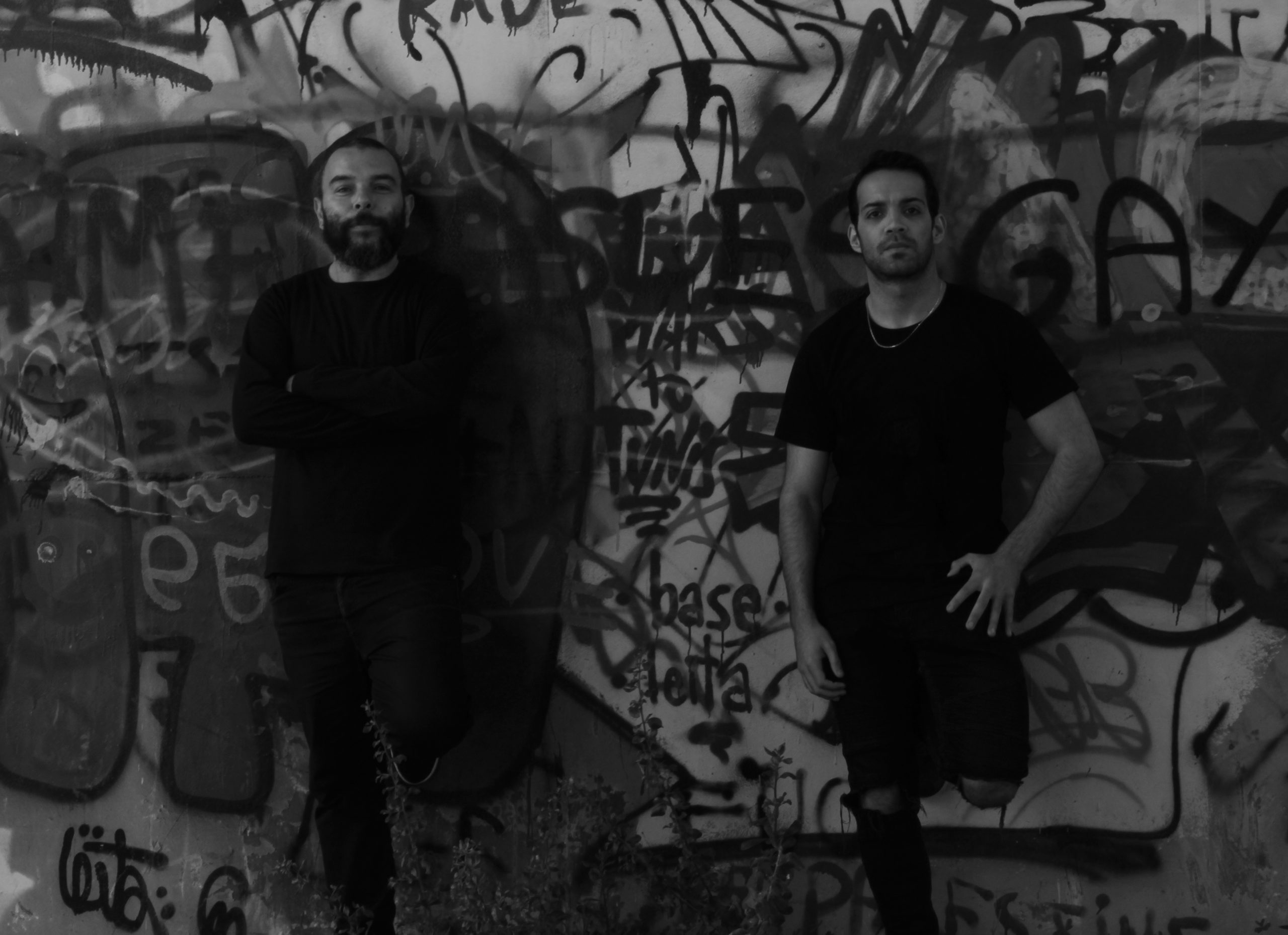
In recent years, North Africa has been producing a growing body of extreme music that deserves to be discussed on its own terms, with attention to craft, context, and intention rather than clichés. Tunisia is part of that story, and Primordial Black arrive as a case study in how contemporary blackened metal can function as both aesthetic construction and personal discharge: a record built from atmosphere, literature, and a deliberate control of tension, while remaining grounded in the practical realities of making heavy music in the Maghreb. Released through Darkside Records, Dark Matter Manifesto also brings two high profile collaborations into that framework, with Sakis Tolis (Rotting Christ) and Maxime Taccardi appearing as extensions of the album’s conceptual and sonic world, rather than distractions from it.
“The band came into being in 2022,” Yasser tells AFRICA.ROCKS. “At the time, I felt a need to express and channel a deep anger, a bitterness I had been carrying for a long time. Music naturally imposed itself as an outlet. I had left my previous project and wanted to create something that could carry all my ideas and creations.”
Those ideas come loaded with references that are not there for decoration. Yasser names the foundations plainly: the cosmic horror of H.P. Lovecraft, the “suffocating darkness” of extreme metal, and the pull of writers like John Dee, Clive Barker, John Milton, alongside the broader set of thinkers he grew up with. “From the very beginning, I had a clear vision,” he says. And when the conversation turns to sound and craft, he points to a specific record as a north star. “As a longtime fan of Celtic Frost, Monotheist has always served as a reference for me, particularly in terms of production.”
Primordial Black first laid out this world on the EP Monas Hieroglyphica, released through M&O Music. On the album, Yasser describes Dark Matter Manifesto as the next step, with the same inner engine powering it forward.
“Dark Matter Manifesto asserts itself as a continuation of the work we initiated on our first EP,” he says. The phrase “dark matter” could easily sound like sci fi window dressing, but his explanation keeps it human. “The core theme is rooted in an inner urgency, a need to resist emotional numbness, fear and the slow decay of the mind. Something we, as a species, sense in our contemporary world.”
To explain how he writes, he reaches for Arthur Rimbaud. “There’s a quote from the French poet Arthur Rimbaud: ‘Nous fixons des vertiges’,” he says, translating it as “We stare at vertigo.” For Yasser, that line is almost a method statement. “Giving words and form to sensations, emotions and ideas that are difficult to grasp, express or verbalise,” he explains. “Capturing the inexpressible, that suspended moment of instability, that inner vertigo.”
That sense of “inner vertigo” also shows up in how the band actually writes songs. Yasser does not start with riffs and then paint atmosphere on top. He starts by chasing a feeling, and he wants it to feel oppressive before it ever feels catchy.
“Black metal gives us the raw emotional spine, but the ambient and synth textures create the space where that emotion can exist and expand.”
“I’m a big fan of industrial music as well as extreme music,” he says. “Usually everything starts from an atmosphere rather than a riff. We are always looking for tension, a feeling, something oppressive or unsettling that already carries meaning on its own.” Only then do the pieces lock in: “Black metal gives us the raw emotional spine, but the ambient and synth textures create the space where that emotion can exist and expand.”
That space is helped massively by the album’s audio work. Dark Matter Manifesto was mixed and mastered by Nikola Dušmanić at Ezoterik Studio (Serbia). It sounds deliberate and immersive, which matters for a record that lives on tension, texture, and slow psychological collapse.
Then comes “Sowing Discord”, the song that will pull new listeners in on name recognition alone. Yasser is clear that the collaboration with Sakis Tolis was never meant to be a marketing moment: “Sakis’ involvement came very organically,” he says. “We had already written ‘Sowing Discord’ with a very clear vocal presence in mind, something authoritative, ancient, almost oracular. His voice felt like an obvious choice, not as a guest feature, but as a true extension of the song’s intent.”
The connection was made through Darkside Records, he adds, and once the door was open, the process stayed respectful and straightforward. “Sakis immediately understood the atmosphere we were aiming for and approached the track with a remarkable sense of restraint and purpose,” Yasser says. “He even allowed me to write his parts.”
The album’s closing track reaches for a different kind of presence. “Din of Thy Celestial Birds” features Maxime Taccardi, and Yasser explains why the finale had to feel like a threshold rather than a standard last song.
“We didn’t want a song in the traditional sense for the finale, but an experience,” he says. “Something that feels like crossing a threshold rather than reaching a conclusion.” He frames the emotional aim in one word: dissolution. “The moment where structure collapses and meaning becomes unstable,” he continues. Taccardi made sense to him because his work already sits “at the crossroads of sound, body and symbolism.” And he wanted the listener to leave the record in a particular state. “Suspended,” he says. “Stripped of certainty, as if the ritual never truly ends. The album doesn’t close a door. It abandons you in front of it.”
“The Maghreb metal scene exists in a context of constant friction.”
This tells you what Primordial Black are chasing: control, clarity, and intention, even when the music is trying to evoke collapse. And when you zoom out from the album’s themes into the reality of where this band comes from, Yasser’s tone stays grounded: “The Maghreb metal scene exists in a context of constant friction,” he says. “Creating extreme music here is not just an artistic choice. It’s an act of persistence.”
He lists what that friction looks like on the ground: “Limited infrastructure, scarce resources, social misunderstanding, and sometimes open hostility.” Then he adds the line that sums up the mentality behind this record: “Yet the drive to create remains uncompromising.” That pressure, he believes, changes the music itself. “It shapes the music, making it more visceral, more necessary.”
The partnership with Darkside Records came after the EP experience with M&O Music, and Yasser frames it in practical terms rather than industry mythology: “Working with Darkside Records felt natural,” he says. “After releasing Monas Hieroglyphica with the French label M&O Music, we knew what to expect. Darkside immediately understood the intensity and vision of Dark Matter Manifesto, and the collaboration has been built on respect rather than compromise.” The result is reach without dilution. “Thanks to them, Primordial Black has reached new listeners across borders while staying true to our identity.”
“We are near the completion of our second album.”
As for what comes next, Yasser does not sound like someone basking in a debut cycle. He sounds like someone already back in the work: “We are near the completion of our second album,” he tells AFRICA.ROCKS. “We hope to release it sometime in 2026.” There is also the live side to solve: “We’re working on consolidating our line up for live performances.”


