


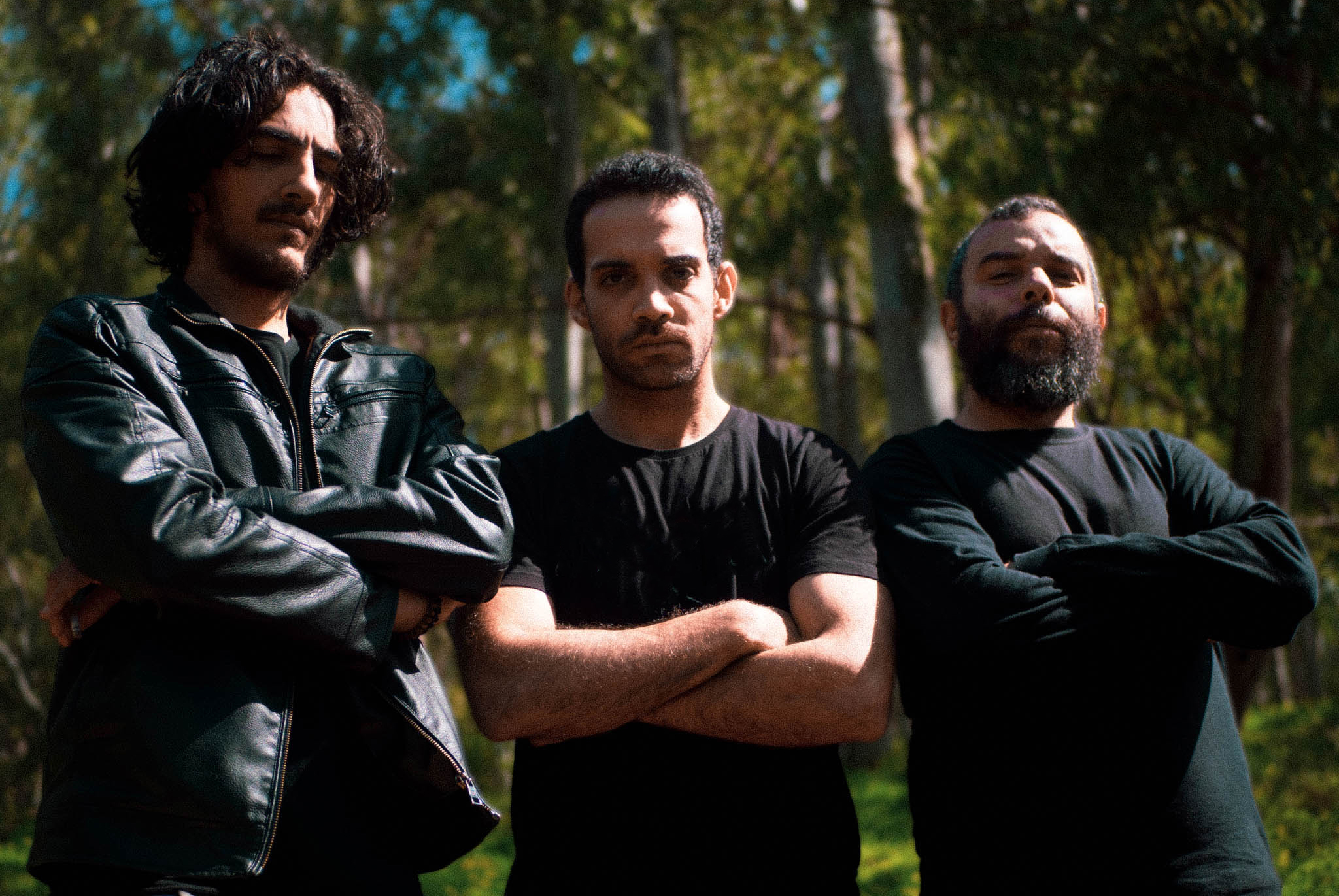
Heterotopia arrived quickly after Dark Matter Manifesto, but Yasser Mahammedi Bouzina does not see the album as a direct continuation. The two records came from the same broad period of work, but they look in different directions. Dark Matter Manifesto dealt with outside pressure. Heterotopia pulls into a more private space: solitude, disconnection, inner questioning and the kind of emotional tension that becomes hard to avoid when the noise outside is shut down.
“To be completely honest, Heterotopia emerged more unconsciously than as a planned continuation. While it follows Dark Matter Manifesto chronologically, it does not really extend it in a direct way,” Bouzina says. “Dark Matter Manifesto dealt with external traumas, the forces that surround and overwhelm us in everyday life. Heterotopia, in contrast, turns inward. It focuses on solitude, inner questioning, emotional rigidity and a sense of disconnection. Coming less than a year later was not intentional or strategic. It simply reflects how naturally this material came out of the same creative period, but from a very different emotional direction.”
“I approached this album a bit like Dostoevsky structured his novels.”
The title gave the album a way to hold different spaces at once. For Yasser, the writing process began with fragments from philosophy, cinema and literature, before those ideas were shaped into something more solid: “I do not want to sound too pretentious, but I approached this album a bit like Dostoevsky structured his novels. I started with large, visceral and often contradictory sketches, chaotic fragments drawn from philosophy, cinema and literature. Over time, I shaped them into a more coherent structure, where rage and beauty could exist side by side. Truth be told, I was not in a good place while writing these songs, and I had not been in the best state of mind since the making of Dark Matter Manifesto. The only way to deal with that was to turn inward, shut out the noise and focus entirely on the work. In that isolation, I ended up creating my own Heterotopia. Each song draws from the sources that shaped me during this period, fragments of philosophy, literature and cinema translated into sound. These references are not there for aesthetics alone. They act as coordinates within a larger space, helping build an album that extends beyond us as a band. I wanted Heterotopia to be something people could hold onto: a statement that it is possible to create art rooted in its context while still connecting to universal struggles. A stepping stone toward something greater, darker and more ambitious than what came before.”
“I did not want the song to become a straightforward political statement.”
One of the album’s most direct sources appears in “Ruines Suspendues”. The song was inspired by the image of a Palestinian girl’s corpse hanging from the ruins of her home, something Yasser Mahammedi Bouzina had already spoken about when the video was released. The track keeps that real image at its core, but moves it into a more symbolic and metaphysical space: “It was one of the more delicate parts of the writing process. The initial image was very real and very immediate, and I did not want to dilute that or turn it into something abstract just for the sake of it. At the same time, I did not want the song to become a straightforward political statement, because that can sometimes flatten the emotional and human depth of what you are actually trying to express. The challenge was to respect the reality of that source while translating it into a more symbolic and metaphysical space. I tried to focus less on commentary and more on the emotional residue it leaves behind, the sense of rupture, displacement and suspended meaning that goes beyond any single context. In the end, it became less about explaining the horror and more about carrying its weight in a different form.”
“The goal was to have him play on a track that is the complete opposite of what he is known for.”
The album also includes a guest appearance from Steve DiGiorgio on “Immaculate”. Yasser first planned to place him on the title track, but that changed once the shape of the song became clearer. “Steve was originally supposed to appear on the title track, ‘Heterotopia’. In fact, that was the first demo I sent him. But with hindsight, and especially after adding the instrumental bridge in the middle of the song, it became clear to me that his contribution would have been minimal, or even completely diluted within the track. So I composed ‘Immaculate’ from scratch. The song did not even start from a demo. It was an experiment I wanted to try, stepping completely outside my usual writing habits, using diminished chords, jazz phrasing, reversed guitar pedals and an avant-garde structure. If I had to situate its inspiration, I would say it sits at the crossroads of jazz, neo-noir, Godard, the music of Fantomas and Imperial Triumphant. The goal was to have him play on a track that is the complete opposite of what he is known for. People, upon learning of his involvement, would likely expect something in the vein of Death or a similar style. The contrast is therefore much more striking this way. The Arabic sung section just before his bass solo is a way of creating a bridge between two musical approaches, while also highlighting and giving space to our roots. It was quite challenging for me, as growling in Arabic is not the easiest thing to do. I would like to thank Darkside Records for making this feature possible and for believing in what was a rather unusual idea. They really did an outstanding job.”
“growling in Arabic is not the easiest thing to do.”
Primordial Black’s sound carries references from several places, but Yasser sees the project’s Tunisian identity as the filter that gives those references their own shape. “I think the key is not to imitate those influences, but to filter them through our own perspective. Being from Tunisia is not just a biographical detail for us. It shapes the way we perceive intensity, contrast and expression in music. That foundation stays constant, no matter what influences we draw in from literature, cinema, philosophy or extreme metal scenes from elsewhere. Everything we bring into the music is transformed by where we come from and how we experience things emotionally and culturally. So even when the references are global, the way they are expressed remains deeply personal and rooted in our own context.”
Heterotopia also closes Primordial Black’s chapter with Darkside Records. The partnership covered both Dark Matter Manifesto and the new album, and Yasser points to the label’s support in helping the project reach further than it could have done alone. “The partnership with Darkside Records played a very important role in shaping this phase of the band. Looking back at Dark Matter Manifesto and Heterotopia, it gave us the stability and support needed to fully focus on the creative side, without getting lost in the logistical and structural constraints that often come with releasing music independently. It also opened doors we would not necessarily have accessed on our own, whether in terms of visibility, distribution or collaborations. The feature with Steve DiGiorgio on ‘Immaculate’, or Sakis Tolis on ‘Sowing Discord’, for example, would not have happened without that support network. More than anything, it allowed us to push ideas further than we probably would have dared to otherwise, to take risks, experiment more freely and treat each release as a fully developed artistic statement.”
“I do not yet know where Primordial Black will go after this album.”
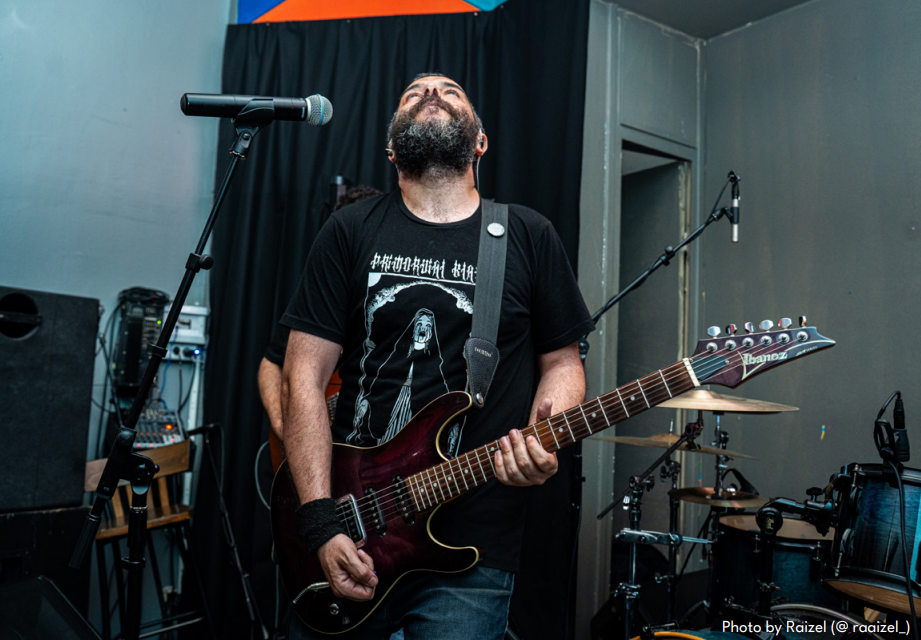
After two full-length albums in a short period, and an EP as well, Yasser does not rush to define the next step. What he does have now is a line-up he trusts, which may change how the next Primordial Black record is built. “The production phases have always been the most stimulating and, paradoxically, also the most draining periods. Going through two composition and production cycles in such a short timeframe, or even three if you include the EP, is both intense and exhausting. But that has always been my way of working. I constantly have ideas that demand to exist, texts searching for harmonies to be shaped into something tangible. My friend Mehdi often asks me if I ever sleep. I do not yet know where Primordial Black will go after this album. I do have ideas, of course, but I also finally have the opportunity to rely on a solid line-up I can trust, people I can create with, delegate to and build with. Hopefully, that will allow the next album to be less of a reflection of what is going wrong inside me.”
For Primordial Black, Heterotopia is the end of one working period and the first record after it is still unwritten. Yasser now has the chance to build with other people around him, after a phase marked by pressure, isolation and a very fast run of releases.
Buy/Stream Heterotopia on Bandcamp.
Originally published in the June 2026 issue of AFRICA.ROCKS Digital Magazine.


