



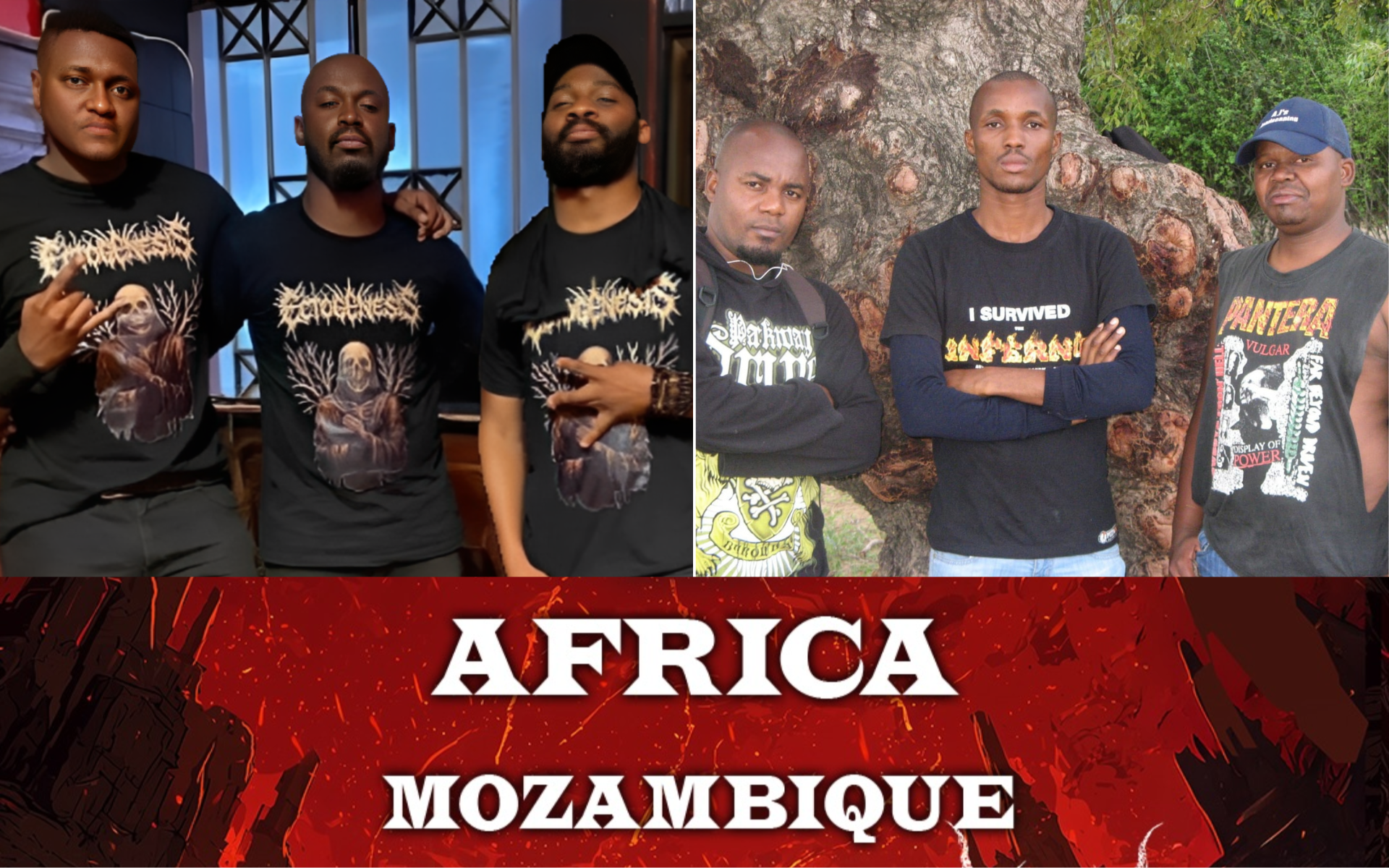
On Saturday, 28 February 2026, Wacken Metal Battle Africa’s Mozambique heat heads to Gil Vicente Café Bar in Maputo, with Ectogenesis and Dark Necropoly competing on the night. South African special guests Hilliker (2025 finalists) and Sunken State (2024 champions) are also billed on the night, with doors at 6pm and tickets available at the door.
So how does it work? Wacken Metal Battle Africa is built like a ladder. You start at the local heats. Win your city, and you move up. Those winners feed into the African finals in Johannesburg, and the band that takes that final goes through to the global stage in Hamburg, Germany.
Along the way, bands are responsible for their own travel and related costs, and that reality sits under every answer you get from a Mozambican band. The ambition is real. The maths is still the maths.
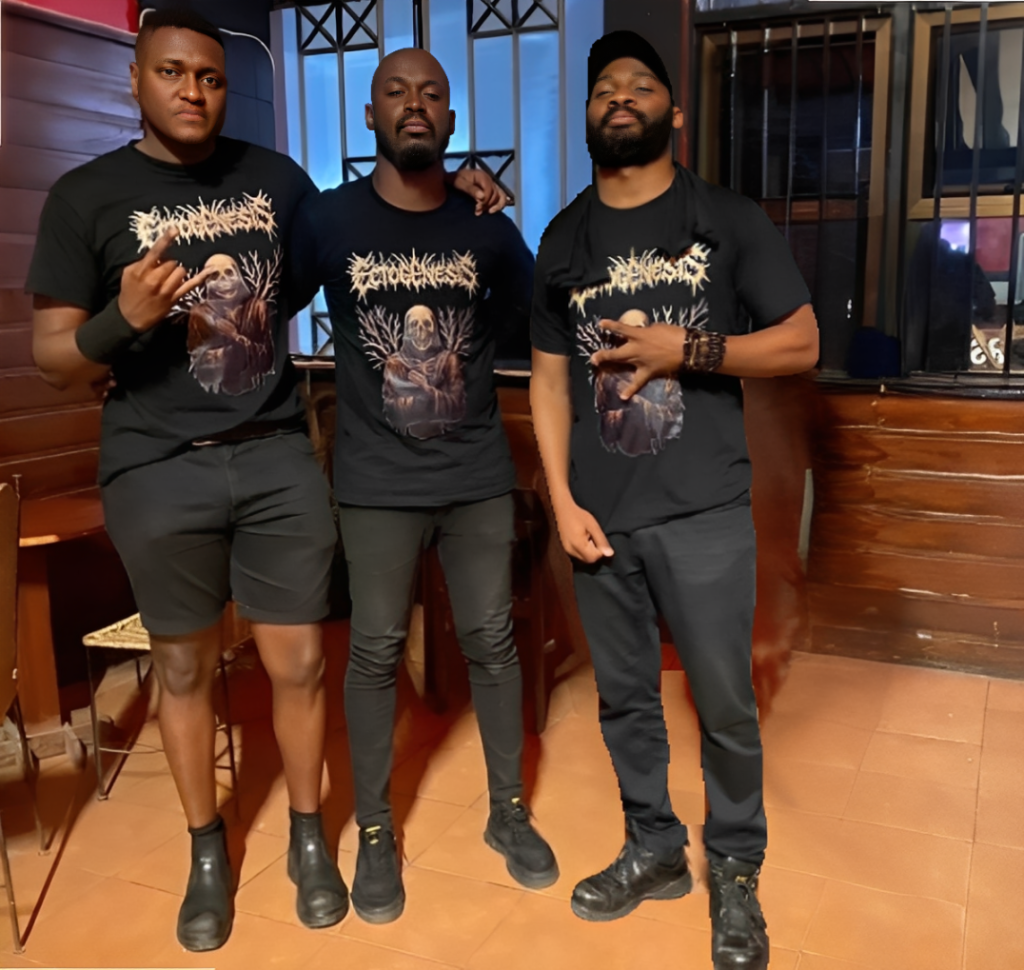
For Ectogenesis, the project starts as one person in a studio. The live version is a band, built for the stage when it needs to be. Edson “Magnus Madrugoth” Litsur, the project’s founder, composer, vocalist and drummer, describes the core of it in mechanical, pressure-focused terms.
“The sound aims to feel like an artificial organism in constant mutation.”
“The sonic identity of Ectogenesis is rooted in contemporary extreme metal, with black and death metal as reference points, but without strict loyalty to labels. The project favours dense, mechanical and ritualistic atmospheres, where repetition, dissonance and rhythmic variation create continuous tension. There is a strong conceptual and instrumental component, with a focus on building immersive experiences rather than conventional songs. The sound aims to feel like an artificial organism in constant mutation,” he tells AFRICA.ROCKS.
When the conversation turns to what Mozambique puts inside that sound, Litsur avoids the obvious, and still lands on something that feels specific to Maputo: “Mozambique influences the project mostly through its state of mind. Not in a folkloric or literal way, but through the social and urban context: the contrast between modernity and precarity, technology and abandonment, diffuse spirituality and daily survival. That reality naturally seeps into the themes, the atmosphere and the aesthetic approach, shaping a tense, dark and sometimes claustrophobic sound,” he says.
The practical side is less poetic, and more familiar to anyone making heavy music in a city without a lot of infrastructure built for it. Ectogenesis can write and record alone, but a competition demands rehearsals, bodies in a room, and time that has to be carved out of work schedules and everyday life: “For live performances, the project takes the form of a full band, working with guest musicians on guitar and bass, with specific rehearsals for the stage. Those rehearsals require constant adaptation to the local reality: limited spaces, schedules constrained by neighbours and the musicians’ professional lives, and costs covered internally. The lack of dedicated infrastructure forces a pragmatic and disciplined approach, with rehearsals planned to be objective and efficient, especially in competitive contexts like the Metal Battle,” he explains.
“The metal scene in Maputo exists, but it is fragile and intermittent.”
AFRICA.ROCKS asked where the metal scene in Maputo stands right now. Litsur keeps it straight: “The metal scene in Maputo exists, but it is fragile and intermittent. There are a few venues and promoters keeping sporadic activity going, along with a loyal core of regulars, but there is a lack of continuity and structure. Outside the capital, it is even more limited.”
“For Ectogenesis, it is an opportunity to test the project outside the local bubble and present its concept in a more demanding context.”
For Ectogenesis, the point is not a trophy story. It’s a stage that connects to something larger, and a chance to test the project in front of a crowd that did not come to politely nod along: “We entered this edition because it is one of the few structured platforms that connects the local scene to an international circuit. More than the competition, we care about the stage, the visibility, and the artistic confrontation with other bands. For Ectogenesis, it is an opportunity to test the project outside the local bubble and present its concept in a more demanding context,” Litsur says. “It forces an extremely focused approach. The setlist is designed in detail, the execution has to be precise, and the stage presence needs to be contained and effective. There is no room for excess or distraction. Each piece has to serve a clear function within the time available, which demands more discipline, cohesion, and physical and mental preparation,” he adds.
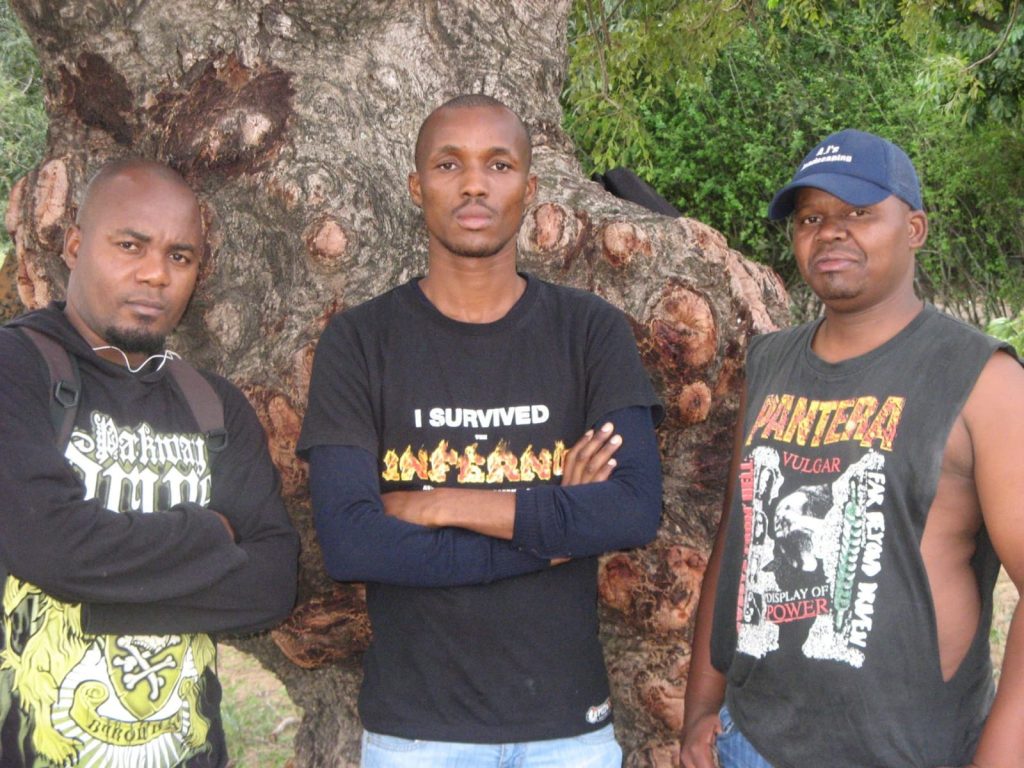
Dark Necropoly arrive at the same night from a different angle: “The band is raw, direct, and without filters. Dark Necropoly is underground Mozambican death metal: brutal, obscure, built from the reality of making extreme music here, where the genre is cultural resistance. We carry the classic death metal influence, and we write from what we live. The sound is dense, chaotic and oppressive. Low riffs, gutturals, pig squeals, and a constant atmosphere of death and decay. The local political system, the degradation, the superstition, the rot. No fantasy. Heavy nihilism, close to anyone who grows up watching things collapse and stays alive,” Magunel Sarcophagus writes to AFRICA.ROCKS on behalf of Dark Necropoly.
“Mozambique is a place of strong inequality, recurring social tension, precarity, frustration, and daily survival.”
On what Mozambique pushes into their music, Sarcophagus points to pressure and lack of resources as much as themes: “Mozambique is a place of strong inequality, recurring social tension, precarity, frustration, and daily survival. That turns into raw aggression, a dry sound, and an atmosphere that feels suffocating. There is no industry here. No specialised studios, no labels, no solid circuits. So the music becomes direct and visceral. Less polished, closer to the old school spirit, made out of need,” he continue.
“We are fighting for the music, but also for the legitimacy to exist. The neighbours feel the sound, but we think we are taking territory.”
He also touches a point that comes up across African scenes, especially outside the countries with larger touring circuits: extreme metal still reads as “strange” to a lot of people, and that changes how you move, where you can play, and how often: “Metal here is still marginal and misunderstood. People call it noise. People call it satanic. That stigma affects access to spaces, support, sponsorship, even permissions. We are fighting for the music, but also for the legitimacy to exist,” Sarcophagus writes.
Their rehearsal life is the usual story of improvisation, except the stakes feel sharper when you know you are competing in a heat that could lead to Johannesburg and beyond: “We survive through improvisation and resistance. Rehearsals move between a home setup and whatever studio is available in the city, depending on what we can afford. Time is never on our side. Two members work irregular shifts, so every rehearsal is a fight against the clock. The neighbours feel the sound, but we think we are taking territory. Lately they have been more tolerant. Maybe it is respect, maybe it is acceptance,” he adds.
Like Ectogenesis, Sarcophagus continues describes a Maputo scene that is alive, but not stable. “There are some venues, but most don’t have the right equipment, and there is still resistance to accepting metal as a real language. The extreme scene gets treated with suspicion. The crowd has dropped compared to past years. Still, the movement isn’t dead. There are faithful people who show up and keep the fire going,” he says.
“We are here to show that extreme metal has a voice in Maputo. The Metal Battle links the continent, and being part of it is saying: we exist.”
So why enter, with all the cost and risk attached? “For us it’s bigger than a competition. It’s a call between people who share the same blood, a place where the scene shows itself without concessions. We are not here for easy applause. We are here to show that extreme metal has a voice in Maputo. The Metal Battle links the continent, and being part of it is saying: we exist,” he writes.
Both bands talk about discipline when you’re timed, judged, and sharing a bill with other acts who want the same next step. Dark Necropoly describe the set like a weapon: “It forces us to sharpen everything. It’s not just plugging in and letting chaos flow. There’s pressure, there’s a clock, there are other bands who are hungry. The setlist has to be surgical. Only strong material, direct to the bone. The stage time is an attack. Get in, hit, get out. No waste.”
“We know costs are a major obstacle, and nothing is guaranteed.”
And then there’s the part nobody can ignore. If you advance, you travel. If you travel, you pay. The official rules put the responsibility on the bands. The bands feel it in the gut: “We look at it with realism and pragmatism. We know costs are a major obstacle, and nothing is guaranteed. We take each stage on its own, planning carefully, knowing what it asks from us. Any step forward depends on organisation, external support, and the ability to adapt,” Ectogenesis’ Litsur says.
“The underground survives through solidarity.”
Dark Necropoly land in the same place, with a slightly different language: “We keep our feet on the ground. If the road takes us out, it needs planning, sacrifice and creativity. Visas, transport, places to stay, instruments, logistics. All the things people don’t see from the crowd. If we go, we go as representation of the Mozambican scene, not just the band. The underground survives through solidarity,” Sarcophagus writes.
That’s the story sitting behind a single Saturday night in Maputo. A local bar, a small scene that keeps restarting itself, and two bands trying to turn one show into a next step. The Mozambique heat of Wacken Metal Battle Africa 2026 takes place on Saturday, 28 February 2026 at Gil Vicente Café Bar in Maputo, with Ectogenesis and Dark Necropoly competing, plus special guests Hilliker and Sunken State.


