


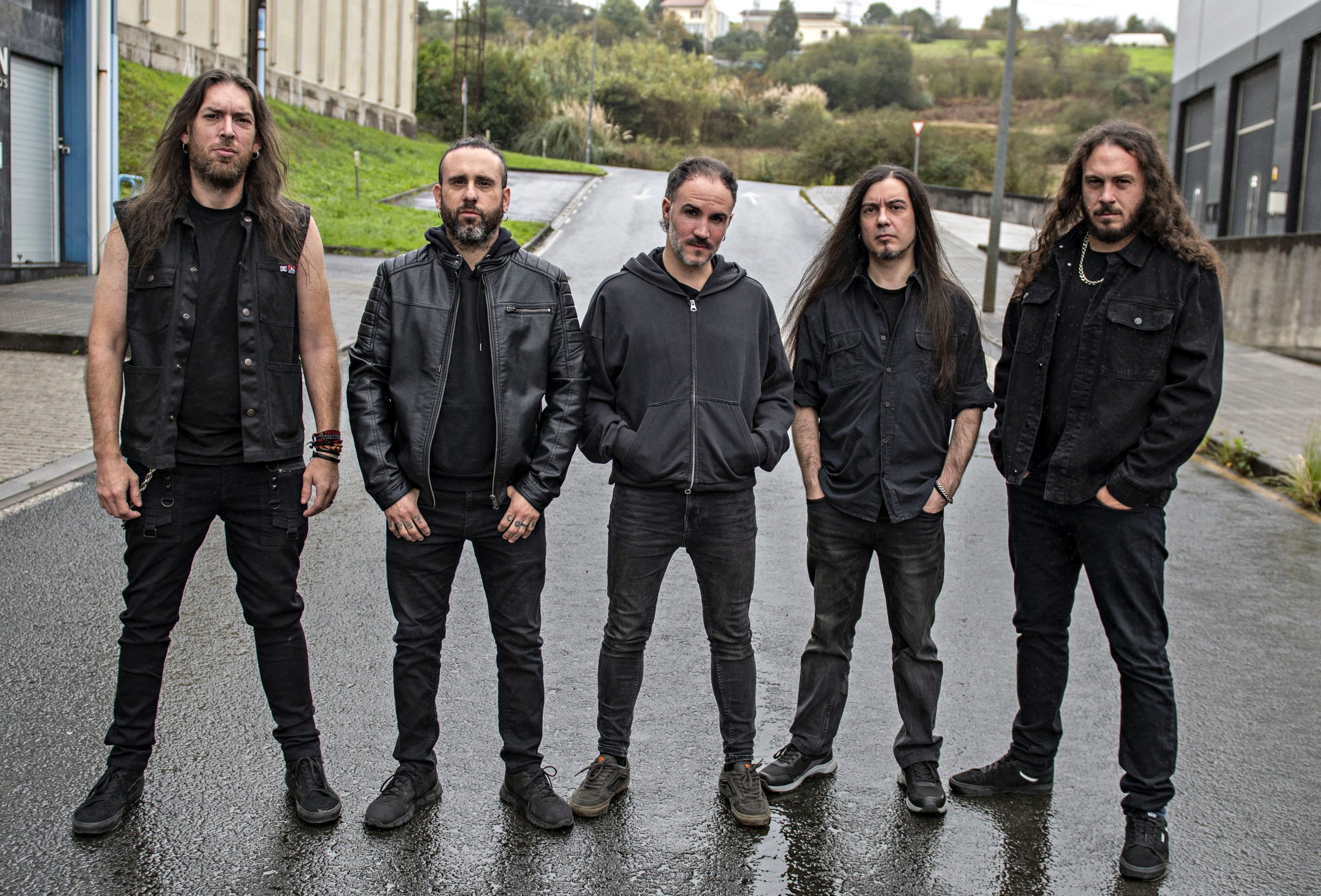
Empire of Disease don’t frame themselves as a concept band or a carefully packaged project. Pintxo Wayewta, who handles the vocals, puts it in simple terms: “We’re five metalheads who found common ground to express our thoughts and concerns through music.” The influences are all over the place, but the goal stays the same. Keep the energy high. Keep the standard high. No shortcuts.
That ethos permeates While Everything Collapses, their third LP, dropping 19 March 2026 through Xtreem Music. The group tackles tension, unstable livelihoods, the sinking sensation of a planet veering off course. No sugarcoating when there’s a point to make. And with a track titled “Hamunaptra” on the album, Egypt naturally enters the conversation. Being in Spain, just a stretch of ocean from Africa, “the opposite shore” feels tangible, never distant.
“There are things we don’t want to stay quiet about. Someone has to say how bad some of this is.”
You started in 2015, changed your name in 2018, and now you’re on your third album. What changed in your mindset between those chapters?
Pintxo Wayewta: The biggest change has been how we operate as a band. At the beginning, you’re just enjoying it and you’re curious to see where it goes. Once you feel things starting to move, you take everything more seriously. Rehearsals, planning, splitting up tasks, social media – it all adds up fast, and you have to keep up if you want it to work. It’s a lot of hours and not much sleep, but it’s worth it.
“We’re really happy with the result – it went beyond what we expected.”
While Everything Collapses is out on March 19th. What did you want this album to sound like in your head before you even recorded a single note?
We wanted to keep the intensity. We wanted energetic songs, and we didn’t want to lower the bar. If anything, we pushed ourselves harder this time. We’re really happy with the result – it went beyond what we expected.
The album title sounds like it belongs to 2026. What personal and real-world pressures coalesced into these songs?
On a personal level, some of us have had a pretty intense year. Stress and job insecurity add a lot of frustration. But a big part of it comes from outside too. Watching where the world is going – politically and socially – makes you rethink a lot. There are things we don’t want to stay quiet about. Someone has to say how bad some of this is.
You’ve already shared a video single from the album. What does that track say about the identity of this record?
It shows the effort it takes, and the obstacles you hit in the industry and in the current music scene. You run into a lot of unfair situations along the way. We fight through them because we want this band to work. We want to make it, and we want to live out what we’ve been building for years.
You’re releasing again through Xtreem Music. What does this collaboration bring that truly impacts the album’s reach and strength?
Their work is exceptional. They believe in the bands and they care about how you’re doing, not just the business side. These days – at least in our experience – it’s hard to find a label that can help you put out a truly solid album.
Your song titles aren’t hidden behind metaphors. What angered you while writing this album?
The world we live in. Society. The injustices you see around you. Wars. People not caring. Atrocities done in the name of religion. Abuse of power. All of that.
“The Art of Manipulation” seems to aim at systems, not just individuals. What was the objective?
It’s both, really. Systems and individuals, because the systems are run by individuals all over the world. They’re the ones in charge, and they act for their own benefit and their own whims. The rest of us end up like puppets – part of the machine that generates what they want, because political systems are built by people like that.
“We really believe that if you don’t take risks, you don’t reach your dreams or your goals.”
“No Risk, No Glory” sounds like something someone says right before doing something stupid. What does it mean within the album?
On the album it’s the opposite [he laughs]. Or maybe not. We really believe that if you don’t take risks, you don’t reach your dreams or your goals. Taking a risk doesn’t guarantee anything, but if you never do it, you’ll never know.
“Hamunaptra” is the obvious connection to Africa. Why Egypt? Why that reference, and what does this song convey that connects with the rest of the album?
It’s a metaphor. For us, there’s a similarity between the modern world and the idea of a “City of the Dead.” With everything that’s happened recently, you see more clearly how society can work sometimes: secrets, shady deals, conspiracies – and far too many people dying along the way.
“Africa is the heart of humanity.”
Spain is so close to Africa that much of the world forgets it. What does “the other side of the water” mean to you culturally, politically, musically, as someone from Bilbao?
Africa is the heart of humanity. The culture is huge and incredibly diverse. Musically it’s amazing – so much folk music, and you can feel how important music is in everyday life in so many places. Politically, to be honest, we don’t know enough to speak properly about it. What the Africans we know tell us is that there’s a lot of corruption. And in that sense, it feels like politics everywhere: being a politician seems to work the same way in a lot of countries.
How does the African metal scene look from your current perspective?
Honestly, we don’t know a lot about it. We know there are metal festivals in Morocco. We know Overthrust from Botswana have toured Europe. We know Arka’n Asrafokor from Togo, and we might be wrong, but we think they’re the best African metal band. And we know there are many more bands we haven’t discovered yet. From what we can see, it feels like it’s growing.
If an African band asked you for practical advice on breaking out of the local scene and being heard internationally, what would you tell them based on your own experience?
The same thing we’d tell anyone: take risks, work hard – small bands like us have to do everything we can – and believe in yourself and your music. Try to play as much as possible, move around the scene, and keep knocking on doors until they open.
After the release date, how do you plan to keep the album alive, and what matters most to you in that second phase of a release?
Live shows. That’s the most important thing, and the best way to keep the album moving. We want to play as much as possible, in as many places as we can, so people can discover the songs and see what we’re like on stage with this album.
While Everything Collapses lands on 19 March 2026. If you want a copy, head to Xtreem Music.


