


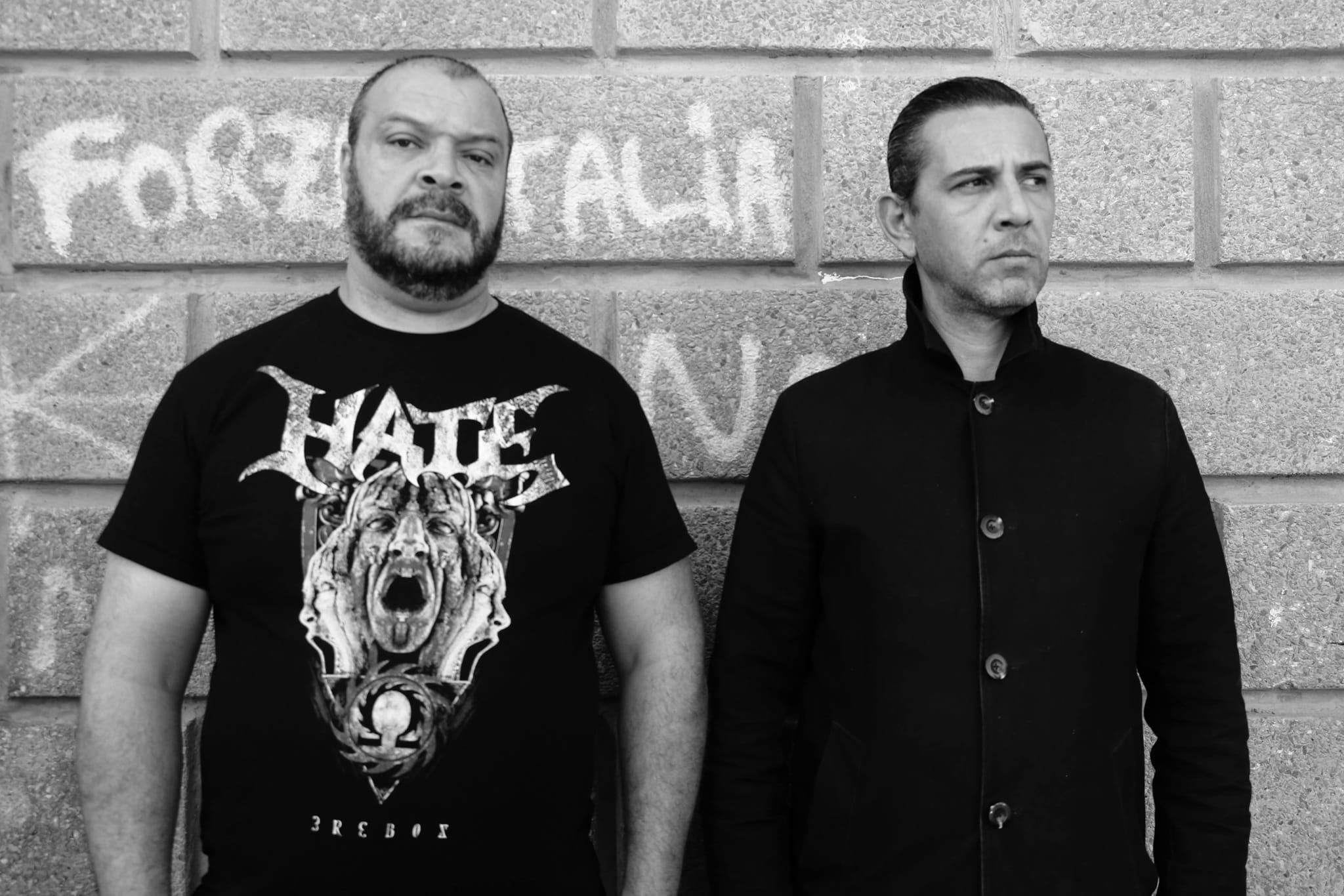
“At the beginning, Silent Obsession was very introspective and controlled, almost architectural. When other musicians joined, the music became more physical and confrontational. Ideas were challenged, tempos were pushed, and the sound gained a collective tension. It stopped being only my inner voice and became a shared reflection of frustration, pressure, and urgency.” That shift, from a closed room to a band dynamic, sits behind the way Silent Obsession has grown from a solo idea into an extreme metal name people now associate with Algeria’s technical brutal death metal underground.
Those early releases were never meant as escapism. They were a direct response to what daily life can feel like when the atmosphere is heavy but the conversation stays muted. “Growing up and living in Algeria means constantly navigating contradictions, silence, and limits. There is a strong sense of stagnation mixed with suppressed anger. The themes didn’t come from fantasy but from observing social pressure, lack of perspective, and the feeling of being trapped between hope and reality. Dystopia was already there, we just translated it into sound,” Max Marginal tells AFRICA.ROCKS.
“Even the most technical sections are written to express anxiety, violence, or collapse.”
For Marginal, the point of technicality only stays in the song if it carries meaning. “Technique is only a tool. If a part doesn’t serve the atmosphere or the message, it has no reason to exist. We always focused on tension, structure, and meaning first. Even the most technical sections are written to express anxiety, violence, or collapse, not to impress musicians. Emotion comes from intention, not speed,” he explains. It is a useful line to hold onto when people reduce this kind of death metal to riffs-per-minute, because his own description keeps returning to purpose, to structure, to that sense that aggression can still communicate something precise.
“Against the Process” brings in a voice many Algerian metal listeners already know. “Redouane Aouameur (Lelahell) is a long-time figure in the Algerian metal scene and someone I respect deeply. The collaboration happened naturally through mutual understanding and shared frustration with the system around us. His voice brought a raw, almost ritualistic intensity to the track, reinforcing its sense of resistance and confrontation,” Marginal says. The track’s release date, November 27, 2021, lines up with a period where Silent Obsession were clearly building momentum off the back of those EPs, while also pushing the project’s message further into the open.
“Metal is often misunderstood culturally and socially, which adds constant pressure.“
Yet when the conversation turns from writing to survival, his answers get even more grounded. “The hardest part is continuity. Lack of infrastructure, rehearsal spaces, shows, and long-term support slowly drains energy. Metal is often misunderstood culturally and socially, which adds constant pressure. You are always rebuilding from zero, emotionally and practically,” he comments.
If someone is coming in cold, he points them to the same place AFRICA.ROCKS would. “I would suggest starting with ‘Against the Process’. Listen beyond the aggression. Pay attention to the tension, the atmosphere, and the themes of resistance and alienation. Silent Obsession is about expressing a state of being under pressure,” he says.
The interesting part is that Marginal’s writing life does not stop at brutality. Under his own name, he moves into quieter, more atmospheric material, and he treats that contrast as a necessity, not a side quest. “The solo project lets me explore silence and fragility. Silent Obsession is collective, and it is meant to hit hard, to be confrontational. My solo work is more personal and reflective. It is less about impact and more about presence, about what remains when the noise fades,” he tells AFRICA.ROCKS. The starting point, he says, is often the same feeling, only translated differently: “Most of the time, a song starts with a feeling of suspension. A moment where time feels strange, where nothing is stable. Solitude, uncertainty, memory, these are the triggers. Sometimes it’s a specific image, sometimes it’s just awareness. From there, the sound follows naturally.”
“Inner exile is when you no longer feel aligned with the place you are in, even if you never left. It’s a psychological distance, not a geographic one.”
That same logic runs through how he explains Memories of Exile and the idea of exile without leaving. “For me, exile doesn’t always require movement. You can be surrounded by familiar streets, familiar people, and still feel exiled from meaning, from belonging. Inner exile is when you no longer feel aligned with the place you are in, even if you never left. It’s a psychological distance, not a geographic one,” he says. And with “Home Ain’t on the Map”, he leans into the choice to stay instrumental because the point is not to dictate the meaning. “The track is about the idea that home is not a destination you can locate. It is something you build, or lose, internally. Without lyrics, it becomes more open. I wanted listeners to project their own meaning and feel the journey without being guided by words.”
Outside of recording, his public-facing work also includes building platforms for conversation around Algerian creativity, including his YouTube series Café Le Boulevard, where he has filmed and published long-form talks with artists and cultural figures. Put together, it paints a picture that is less about “two sides” and more about one person using different formats to say the same thing in different volumes: Silent Obsession when frustration needs impact, solo work when the sentence needs space, and dialogue when the scene needs to hear itself speak.
In Marginal’s own words, Silent Obsession begins where pressure becomes sound, and it survives only if it can keep going.


