


Mist of the Desert takes place at Rawabet Art Space in downtown Cairo, with doors opening at 18:30 and the show beginning at 19:00. The first edition brings together three bands at very different points in their histories. MEDIC have been active for more than two decades, Veritatem Solam return with a new line-up and considerable experience behind them, while Meltdown Lullaby will play their first live show; a combination that provides a useful picture of how broad Egyptian metal has become.
For MEDIC vocalist and guitarist Ehab Khaled Fawzi, the band’s place has long existed slightly outside the more obvious divisions within Egyptian metal: “I think MEDIC has always existed somewhere slightly outside the obvious boxes of the Egyptian metal scene. We are a progressive metal band, but more than anything, we’ve always been interested in exploring music without worrying too much about where it is supposed to fit. We’ve been doing this for more than twenty years now, so we’ve seen the scene go through a lot of different phases. What we bring today is the result of all of that experience, but without trying to recreate what we were doing ten or fifteen years ago. For us, the exciting thing about a night like Mist of the Desert is exactly the contrast between the three bands. Meltdown Lullaby, MEDIC and Veritatem Solam come from very different places musically, and that makes the show much more interesting than putting three bands with the same sound on one bill. Hopefully, we bring a side of Egyptian metal that is more progressive, unpredictable and focused on the journey of the music rather than simply staying within a particular formula.”
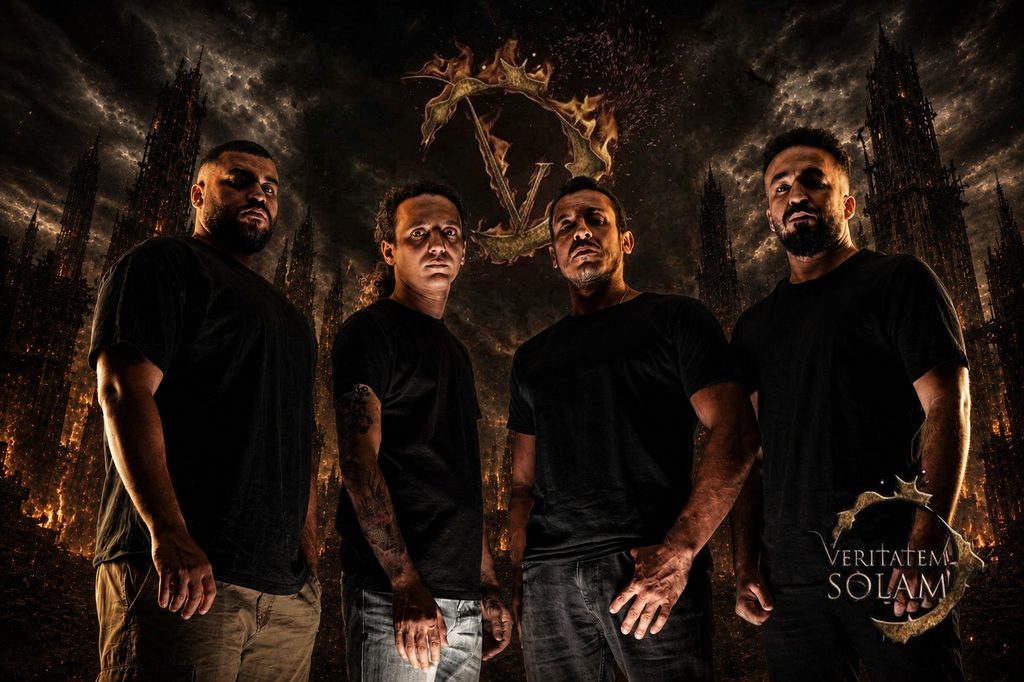
Veritatem Solam bassist and vocalist Omar Assem sees the band’s current position through the experience accumulated by its members and the return of the project with a new line-up: “I feel that Veritatem Solam today occupies a place of appreciation within the Egyptian metal scene. The new line-up is the best VS has ever had. The band’s comeback with a new line-up, combined with the experience each member has gained over the years and the spirit we are embracing while doing VS, is definitely reflected in how the audience perceives us. We are the old-timers who came back from the past, and we’re summoning our old-school brothers to rise with us. Make extreme metal present again and let it dominate the future.”
Meltdown Lullaby founder, guitarist and main songwriter Bishoy Halim approaches the same scene from the opposite end of the band’s history: “I’m one of the founders of Meltdown Lullaby, as well as the guitarist and main songwriter, and I think the band brings a slightly different groove and approach to the Egyptian metal scene. We don’t really try to fit ourselves into one specific subgenre. You’ll hear elements of groove metal, metalcore and nu metal, mixed with a thrashy, old-school feel, and you might even catch some blast beats along the way. We like taking different influences and putting them together in a way that still feels like us. I think that’s what we bring to a night like Mist of the Desert: another different sound and another perspective on what modern Egyptian metal can be.”
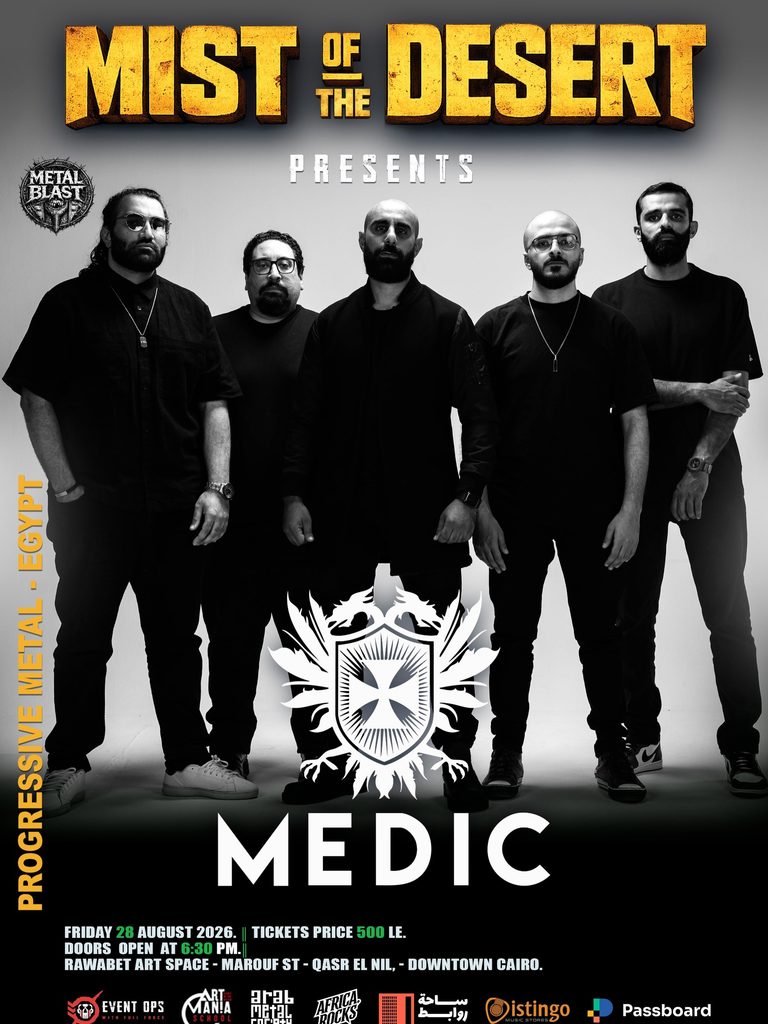
MEDIC’s current live set reflects the way the band has changed creatively in recent years. For Ehab Khaled Fawzi, the newer material is the clearest indication of where they are now. “I’d say the newer material is probably the best representation of where MEDIC is right now. There’s a very different energy to the way we approach the music today. We still have the complexity and experimentation that people associate with MEDIC, but we’re much more interested in how all of that serves the emotion and the overall experience of a song. Niflheim is a good example of that direction, and the newer material takes that idea even further. We’re not trying to prove how complicated we can make a song. We’re trying to make something that takes you somewhere. For someone seeing us for the first time, I’d say just come without expectations. There are going to be heavy parts, melodic parts, atmospheric moments and probably a few things that you won’t see coming.”
Veritatem Solam’s set will look back across the band’s history while the current line-up continues developing new material: “The live set at the upcoming event represents the legacy of Veritatem Solam, as well as its musical maturity and growth over the past couple of decades. Our current creative situation is not ready yet for a demonstration. However, I can say for sure that what is coming is going to be denser and richer than the previous releases,” says Omar Assem.
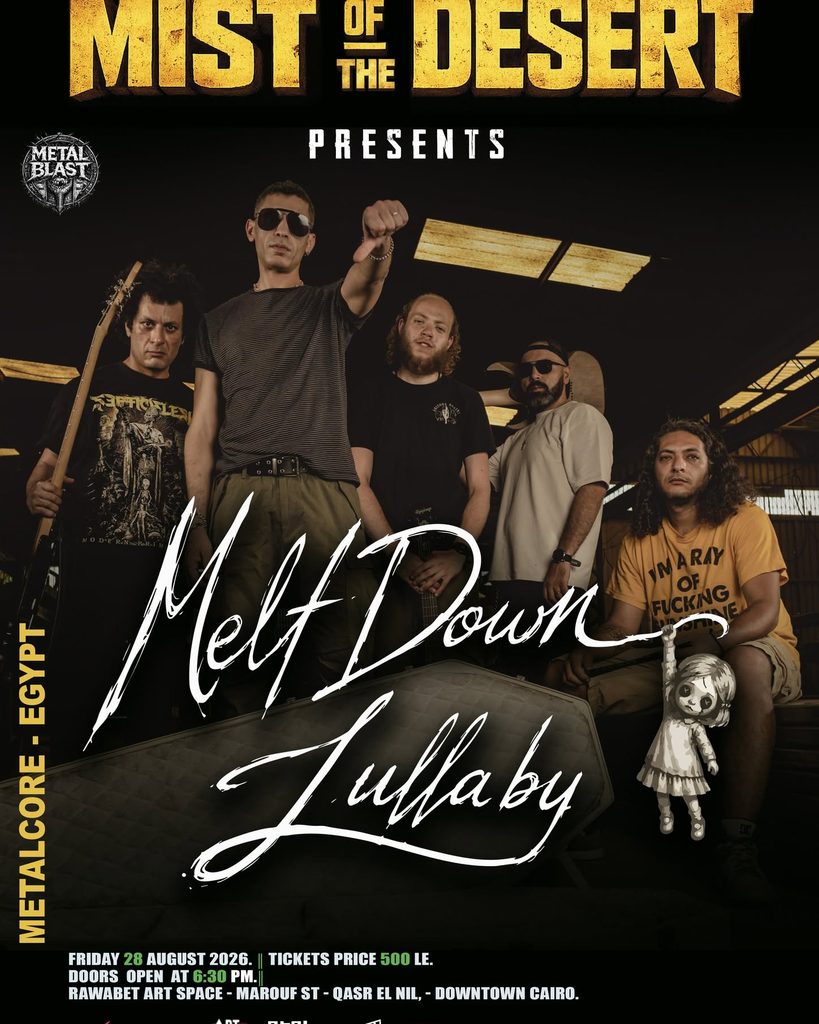
For Meltdown Lullaby, 28 August has a different significance: it will be the band’s first concert. “We’re actually playing our entire five-song debut EP, Lullabies for the Broken, so the whole set represents where Meltdown Lullaby is right now. This is our debut live show, so for us, it’s really the beginning of the journey. At the same time, we’re already working on our next album, which is taking things further with more modern elements, heavier grooves and new sounds. So the EP represents where we started, while the new material shows where we’re heading,” says Bishoy Halim.
Beyond the individual performances, Mist of the Desert is being presented by Metal Blast as the beginning of a new series of heavy metal events. All three bands see regularity and better production conditions as important for the development of the Egyptian scene.
Ehab Khaled Fawzi reduces MEDIC’s answer to one word: consistency. “I think that’s probably the biggest thing the scene needs. There are always musicians, bands and audiences who are passionate about metal in Egypt, but we need more regular opportunities for that community to come together. Shows shouldn’t feel like isolated events that happen once every few months. They should become part of a continuous ecosystem where new bands can grow, established bands can keep developing, audiences can discover new music, and everyone involved can build something together. I’d also love to see more variety in the kinds of bands being presented. Egypt has a lot of talented musicians working across very different styles of heavy music, and events like Mist of the Desert can help expose audiences to bands they might not normally go out and see. If this develops into a regular series that gives different generations and different styles of Egyptian metal a proper stage, I think that can only be good for the scene.”
Omar Assem places particular emphasis on presentation, sound and the conditions in which musicians are expected to perform: “The Egyptian scene needs the quality and capability required for a proper presentation of the skills it has among its own people. The audience pays for a ‘show’, not just good music. A good show must include talented musicians who are capable of playing good music while performing well, but they shouldn’t be expected to perform without supporting visuals or organisation, including a proper stage. Therefore, Metal Blast is expected to offer consistent opportunities for bands to perform their art on a stage with a decent lighting system and acceptable, properly constructed sound, and for audiences to attend actual concerts held with a degree of professionalism, quality and capability.”
Bishoy Halim shares a similar concern about the basic infrastructure available to heavy bands: “I think the scene needs more venues and events like this that are properly equipped for heavy music. Good sound, proper production, suitable stages and a space where metal bands can actually perform the way their music is meant to be heard. If Mist of the Desert can become the beginning of a regular series of well-organised metal shows, I think it could help create more opportunities for local bands, bring different parts of the scene together and give the Egyptian metal community something consistent to build around.”
Mist of the Desert takes place on Friday, 28 August 2026 at Rawabet Art Space, Marouf Street, Qasr El Nil, downtown Cairo. Doors open at 18:30, with the first performance scheduled for 19:00. Metal Blast has advised attendees to secure tickets in advance due to the venue’s fixed capacity.


