



“We’ve been working for some time now on our second album.”
Heavy music from Madagascar rarely gets space to explain itself on its own terms. LohArano insist on that space. Their songs start with rhythm, built for movement, then the guitars arrive and bite down harder. Their latest EP, YMAIMA – Watch out, it’s getting real!, is short and direct. Three tracks, sung in Malagasy, with stories pulled from daily life. Disappearances. Exile. The dahalo. Organ trafficking.
In conversation with AFRICA.ROCKS, LohArano break down the rhythmic idea at the heart of their sound, how they keep that pulse intact when the music turns heavier, and why they chose to document what surrounds them without filters.
“With LohArano, everything starts from rhythm before riffs,” the band tell AFRICA.ROCKS. “Our grooves are rooted in traditional Malagasy rhythms like kilalaky, which are circular, body driven, and deeply physical.” Kilalaky is often described as an energetic 6/8 dance rhythm, built to move a crowd. LohArano point to parallels that listeners outside Madagascar might recognise faster. “These rhythms share similarities with maloya from Réunion Island or séga from Mauritius, styles that are more present and accessible in Western media. If you understand those rhythmic foundations, it becomes easier to get used to the feel of Malagasy rhythms.”
YMAIMA is heavier and harsher, but it still moves like dance music under pressure.
Even when a song like “Run or Die” starts to twist, the band stay locked to that forward motion. “Even when the music becomes heavier or more aggressive, that movement never disappears, it gets thicker and more intense,” LohArano say. “In ‘Run or Die’, when things start turning darker and heavier, we keep that underlying pulse. It feels like forward motion, almost like a forced march or an escape. The metal amplifies a tension that already exists in the rhythm.”
There is a reason the tension feels lived-in. YMAIMA – Watch out, it’s getting real! is built around specific realities. Disappearances. Exile. Violence. The dahalo. Organ trafficking. The EP’s own Bandcamp description frames it as an “uncompromising” look at Madagascar’s daily life, and it breaks down what each track is facing head-on. On “Rodo (The reign of Outlaws)”, LohArano turn to the dahalo, a word that can translate loosely as “bandits” and is commonly linked to cattle raiding that, in many areas, has shifted into organised and often violent crime. They write about it the way it shows up in everyday life. You can feel the weight in the songs, and the EP keeps the language blunt. The words land as they are, with nothing added to soften the hit.
“Yes, it’s uncomfortable, but silence is far more comfortable for those who don’t want to look.”
“We chose not to hide behind metaphors because these realities are not abstract to us,” LohArano tell AFRICA.ROCKS. “They are part of everyday life. Disappearances, exile, dahalo, organ trafficking, these are not symbols, they are facts. Naming things exactly as they are was a way to refuse distance, to avoid aestheticizing suffering. Yes, it’s uncomfortable, but silence is far more comfortable for those who don’t want to look.”
That line runs through the whole release. It also shows up in the way the vocals are delivered. The performances feel close, breath-first, physical… Half sung, half shouted, as if the voice is another drum in the room: “The voice is not treated as a purely technical instrument, but as a physical presence,” the band say. “It needs to sound like it’s happening right there, in the room, among the musicians. Singing and shouting blend naturally because some emotions don’t fit into a single form. We focus more on intention, breathing, and energy than on perfection. What matters is that the voice feels real, sometimes even fragile.”
It is a choice that fits the material. You can hear it clearly on “Mpaka Taova (Organ Dealers)”, which came with an official video ahead of the EP’s release. The track title is blunt and the pacing is urgent. The delivery sounds like it is pushing through the noise because it has to.
“Singing in Malagasy allows a level of emotional precision that would be hard to achieve in another language.”
LohArano also make a clear decision on language. They sing in Malagasy, and they do not treat that as a barrier. They treat it as the only way the images can land with the right weight: “The images come from a mix of sources, stories we’ve heard, things we’ve lived or witnessed closely, and a wider collective memory shared by many Malagasy people,” the band tell AFRICA.ROCKS. “Singing in Malagasy allows a level of emotional precision that would be hard to achieve in another language. Certain words and images carry a cultural and emotional weight that can’t fully be translated. We’re not telling fiction, we’re documenting reality through our own perspective.”
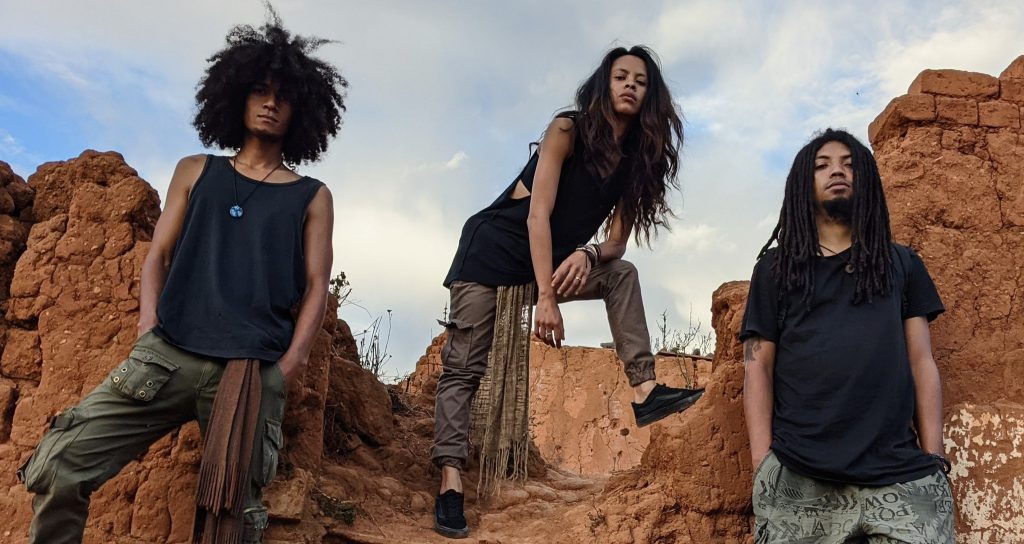
That insistence on reality also shapes how LohArano want Madagascar to be seen when they play outside the island. They have toured and performed abroad, and they have released live recordings connected to France’s Trans Musicales festival in Rennes: “When we play outside Madagascar, we’re not trying to export a postcard image of the country,” LohArano say. “We want to show a place that is alive, complex, sometimes harsh, but real. Madagascar is not just an exotic landscape, it’s also struggle, contradiction, and resilience. If people understand that, then the music has done its job.”
And it is not the end of the story. LohArano have been building the next step for a while: “We’ve been working for some time now on our second album,” the band tell AFRICA.ROCKS. “The project is still deeply connected to real life, but without repeating ourselves. The goal isn’t to recreate YMAIMA, but to keep exploring the link between heavy music and everyday reality. The form may evolve, the stories may change, but the foundation will stay the same, talking about what surrounds us, without filters.”
For now, YMAIMA – Watch out, it’s getting real! is the clearest entry point. Three tracks that move like dance rhythms under stress. “Run or Die”, “Rodo (The reign of Outlaws)”, “Mpaka Taova (Organ Dealers)”. You can stream the EP on Bandcamp and Spotify.


